
Many people struggling to manage their blood sugar believe they need to completely cut out fruits from their diet. This is one of the biggest and most dangerous myths in the metabolic health niche. The truth is that low-glycemic fruits for diabetics are packed with essential vitamins, minerals, antioxidants, and soluble fibers that your body desperately needs to heal your metabolism. The secret to enjoying nature’s sweetness without causing a dangerous spike in glucose is not total restriction, but making the right choice based on the glycemic index and glycemic load of each food. Today, you will discover the seven best options anyone with insulin resistance or diabetes can eat without fear.
The exact science of how these fruits act in your body is just as important as knowing which ones to choose. Each fruit on this list works through a specific biological mechanism — slowing digestion, improving insulin sensitivity, or reducing systemic inflammation — to create a true shield against energy spikes. Understanding this will change the way you look at your plate and give you the confidence to nourish your body without anxiety.

The Top Low-Glycemic Fruits for Diabetics: Your Complete Guide
The first fruit on our list, and one of the most powerful on the planet for metabolic control, is the blueberry. Blueberries are frequently called superfoods for an excellent reason. They have an incredibly low glycemic load, but their true secret lies in their deep blue pigments called anthocyanins. Modern clinical studies suggest that these specific antioxidants improve insulin sensitivity and accelerate glucose uptake by muscle cells. This means that instead of overloading your pancreas, blueberries help your body process sugar much more efficiently. You can safely consume an entire cup of fresh blueberries without fear. To get the maximum effect, try consuming them early in the morning or as a mid-afternoon snack, allowing the antioxidants to work in your bloodstream throughout the day.
🎁 Free 7-Day Blood Sugar Reset Guide
Enter your email below and get instant access to the exact daily habits that help stabilize blood sugar naturally — starting tomorrow morning.
The second indispensable option for your routine is the strawberry. Many people are surprised to learn that strawberries are extremely safe for diabetics, as they have a deliciously sweet flavor. However, strawberries are mainly composed of water and a massive amount of soluble fibers. When you eat strawberries, these fibers create a gel-like substance in your stomach that slows down the digestion process. As a consequence, any carbohydrate present in your meal is absorbed much more slowly and gradually by the intestine, preventing glucose from flooding your blood all at once. Additionally, strawberries are one of the greatest sources of vitamin C available, which helps combat chronic systemic inflammation — a condition that usually worsens insulin resistance. A generous portion of chopped strawberries with a spoonful of chia seeds is the perfect snack to keep your energy linear for hours.
The third fruit that deserves a prominent place on your plate is the avocado. The avocado is a unique gem in the fruit world because, unlike most, it contains almost no raw sugar. Instead, avocados are rich in heart-healthy monounsaturated fats and fiber. When we talk about metabolism, healthy fat is your greatest ally. It acts as a biological brake on digestion, meaning that when you pair avocado with any other carbohydrate-containing food, the fat slows the release of glucose into your bloodstream significantly. Half an avocado added to a salad or spread on a low-carb cracker transforms an ordinary snack into a metabolically intelligent meal that keeps blood sugar stable for hours at a time.
⚡ Complement Your Efforts with GlucoExtend
Many people combine these natural habits with GlucoExtend — a science-backed supplement formulated to support healthy blood sugar levels. Made in the USA with clinically studied ingredients.
See How GlucoExtend Works →The fourth fruit is the apple, but only when consumed the right way. Apples contain a powerful soluble fiber called pectin, which feeds beneficial gut bacteria and slows gastric emptying. The key rule here is simple: always eat apples with the skin on, since the peel contains the highest concentration of both pectin and antioxidant polyphenols. The second rule is to never drink apple juice as a replacement — juicing completely removes the fiber that makes whole apples safe and beneficial for blood sugar management. One small to medium apple eaten whole, ideally alongside a source of protein such as a handful of almonds, keeps the glycemic response minimal and the energy steady.
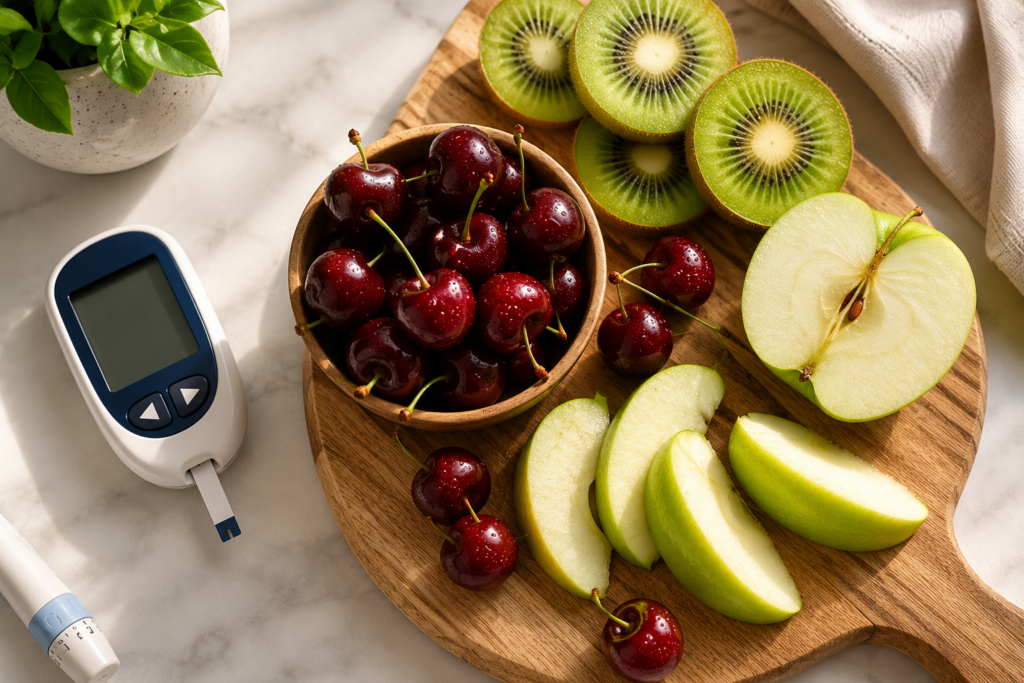
The fifth fruit is the pear, a remarkably underrated choice. Pears have a low glycemic index and deliver an impressive dose of fiber per serving — more than most common fruits. Like apples, much of their fiber is found in the skin, so eating them whole is essential. Pears also contain a compound called chlorogenic acid, which research has linked to improved insulin sensitivity. Their naturally sweet, satisfying flavor makes them an excellent dessert substitute when cravings for sugary treats strike in the evening.
Cherries rank sixth on this list and deserve far more attention than they typically receive in metabolic health conversations. Fresh cherries have one of the lowest glycemic indexes of any fruit. Beyond that, they are loaded with anthocyanins — the same class of compounds found in blueberries — that actively reduce inflammation and support healthy insulin function. Research published in nutrition journals has found associations between regular cherry consumption and lower fasting glucose levels. A small bowl of fresh or frozen cherries makes a powerful, indulgent-tasting snack that works with your metabolism rather than against it.
How to Eat Low-Glycemic Fruits for Diabetics the Right Way
The seventh and final fruit is the grapefruit, one of the most studied foods in metabolic health research. Grapefruit contains a flavonoid called naringenin, which has been shown in multiple studies to improve the body’s ability to use insulin effectively. Some research even suggests naringenin activates certain genes in the liver that help regulate blood sugar in ways similar to certain prescription medications — entirely naturally. The important caveat here is that grapefruit can interact with some common medications, so anyone currently taking prescription drugs should consult their doctor before adding it regularly to their diet. For those who can eat it freely, half a grapefruit before a meal is one of the smartest metabolic choices you can make.
Knowing which low-glycemic fruits for diabetics to choose is only half the equation. How and when you eat them matters just as much. Always pair fruit with a source of protein or healthy fat — this combination further slows digestion and blunts any potential glucose rise. Eat whole fruits rather than juices, smoothies made without fiber, or dried fruits, which concentrate sugars dramatically. Prioritize fruits earlier in the day when insulin sensitivity is naturally higher, and keep portions mindful. With these simple principles, fruit becomes one of your most powerful tools for healing your metabolism — not a food to be feared.
The bottom line is this: eliminating fruit is not the answer, and it was never supposed to be. Choosing the right low-glycemic fruits for diabetics and consuming them strategically gives your body the vitamins, fiber, and antioxidants it needs to function and heal. Blueberries, strawberries, avocados, apples, pears, cherries, and grapefruit are not threats to your blood sugar — they are allies. Start incorporating them into your daily routine with the guidelines above, and you will feel the difference in your energy, your mood, and your glucose readings.

🌿 Support Your Blood Sugar with GlucoExtend
GlucoExtend is a doctor-formulated supplement designed to help maintain healthy blood sugar levels naturally. Thousands of people use it daily alongside smart food choices to wake up with more energy and stable glucose levels.
👉 Check GlucoExtend — Official Page*Results may vary. This is an affiliate link — we may earn a commission at no extra cost to you.