

Resveratrol Benefits Anti Aging: The Real Science Behind the Hype
⚡ Quick Answer
Resveratrol is a naturally occurring polyphenol — found in red wine, grapes, and berries — that activates longevity pathways in the body, particularly the SIRT1 gene and AMPK enzyme, which regulate cellular aging, inflammation, and metabolic function. Research consistently shows that resveratrol benefits anti aging by reducing oxidative stress, protecting cardiovascular health, supporting healthy blood sugar metabolism, and slowing cellular senescence. For best results, it should be taken with a fat-containing meal to enhance absorption, ideally in a bioavailable form.
📋 Table of Contents
- What Are Resveratrol Benefits for Anti Aging — And Why Should You Care?
- The Science Behind Resveratrol’s Anti Aging Power
- How to Actually Use Resveratrol for Anti Aging Results
- Resveratrol Benefits Beyond Anti Aging: What Else It Does
- Common Mistakes That Undermine Resveratrol’s Effectiveness
- Final Thoughts: Is Resveratrol Worth It?
- ❓ Frequently Asked Questions
It started with a moment of frustration — the kind that makes you stop and completely rethink your approach. After months of following the standard advice and seeing almost no results, I decided to scrap everything and go back to the actual research. Not the headlines. Not the wellness influencer summaries. The real peer-reviewed work. And what I found about resveratrol benefits anti aging completely changed how I understood the aging process — and what we can actually do to slow it down.
What Are Resveratrol Benefits for Anti Aging — And Why Should You Care?
If you’ve been dealing with the subtle but unmistakable signs of getting older — slower recovery, less energy, skin that doesn’t bounce back the way it used to, blood sugar that feels harder to manage — you’ve probably heard resveratrol mentioned at some point. Maybe you brushed it off as another overhyped supplement. That was my first instinct too.
But here’s what most people get wrong: resveratrol isn’t a trendy wellness ingredient. It’s a compound that plants produce under stress — when they’re attacked by fungi, exposed to UV radiation, or fighting for survival. And when we consume it, something remarkable happens inside our own cells. The resveratrol benefits anti aging aren’t just cosmetic or theoretical. They operate at the level of your DNA, your mitochondria, and the core biological machinery that determines how fast you age.
Found naturally in the skin of red grapes, blueberries, peanuts, and Japanese knotweed (the most concentrated source used in supplements), resveratrol has been studied extensively since the late 1990s. What keeps researchers coming back to it isn’t just one benefit — it’s the breadth of what this compound appears to do simultaneously.
- Activates longevity genes — specifically the sirtuin pathway (SIRT1), sometimes called the “longevity switch”
- Reduces chronic inflammation — one of the primary drivers of age-related disease
- Protects cardiovascular function — improves endothelial flexibility and reduces LDL oxidation
- Supports healthy glucose metabolism — especially relevant for anyone managing metabolic health
- Neutralizes free radicals — its antioxidant capacity is well-documented across dozens of clinical trials
What makes resveratrol genuinely interesting isn’t any one of these effects in isolation. It’s that they all connect — because aging itself is not one problem. It’s a cascade. And resveratrol appears to interrupt that cascade at several points at once. But to really understand why, you need to look at the mechanism. And that’s where things get genuinely fascinating.
The Science Behind Resveratrol’s Anti Aging Power
What the research consistently shows is that aging, at its core, is a story of cellular decline. Cells accumulate damage over time. Their energy production becomes less efficient. Their ability to repair DNA degrades. And a particularly frustrating phenomenon called “cellular senescence” begins to take hold — cells that are damaged but don’t die properly just sit there, releasing inflammatory signals that accelerate aging in surrounding tissue. Scientists now call these “zombie cells,” and they’re considered one of the primary drivers of age-related deterioration.
Here’s where resveratrol benefits anti aging at a mechanistic level: it activates a protein called SIRT1 — a member of the sirtuin family of enzymes that regulate cellular stress responses, DNA repair, and metabolic efficiency. Think of SIRT1 as a master conductor that tells your cells to behave more like they did when you were younger. It triggers autophagy — the process by which cells clean out damaged components — and it suppresses the inflammatory signals that senescent cells release.
The mechanism here is actually fascinating: resveratrol mimics the effect of caloric restriction at the cellular level. Caloric restriction — drastically reducing calories while maintaining nutrition — is one of the most reliably life-extending interventions ever studied across multiple species. Resveratrol appears to flip the same biological switches without requiring you to essentially starve yourself. That’s not a small thing. That’s potentially huge.
Resveratrol also activates AMPK, an enzyme that acts as a cellular energy sensor. When AMPK is switched on, it improves mitochondrial function — the mitochondria being the powerhouses of your cells, and their decline being one of the clearest markers of biological aging. This is also why resveratrol and NAD+ anti-aging supplement science are often discussed together — both work on overlapping pathways that govern how efficiently your cells produce and use energy.
Here’s the counterintuitive part that surprises most people: resveratrol is not primarily an antioxidant in the traditional sense. Most people assume it works by simply “mopping up” free radicals the way vitamin C does. But the research tells a more nuanced story. Its anti-aging effects appear to be driven less by direct antioxidant scavenging and more by the signaling changes it triggers — activating the body’s own internal antioxidant and repair systems rather than acting as a substitute for them. You’re not patching the problem. You’re turning on the body’s own repair crew.
What I found next surprised me more than anything else in this research — and it had to do with how dramatically absorption varies depending on how and when you take it.

After months of research into this exact mechanism, I kept coming back to one formula that actually addressed the root issue rather than just masking symptoms. It was developed with a clinical approach — the kind that makes sense when you understand the science behind what we just covered. That formula is Cardio Slim Tea.
More people are turning to Cardio Slim Tea as a gentle daily ritual — a carefully blended herbal tea formulated to support healthy blood pressure, cholesterol levels, and natural weight management.
See How Cardio Slim Tea Works →*Individual results may vary. Always consult your healthcare provider.
How to Actually Use Resveratrol for Anti Aging Results
Knowing the science is one thing. Actually using resveratrol in a way that delivers results is another. And this is where most people — including many practitioners who recommend it — get tripped up. The single biggest issue with resveratrol as a supplement is bioavailability. Resveratrol is absorbed quickly but also metabolized and cleared quickly. Taken on an empty stomach in a standard capsule, a significant portion never makes it into systemic circulation where it can do its work.
Here’s what the research supports as best practice for getting real resveratrol benefits anti aging:
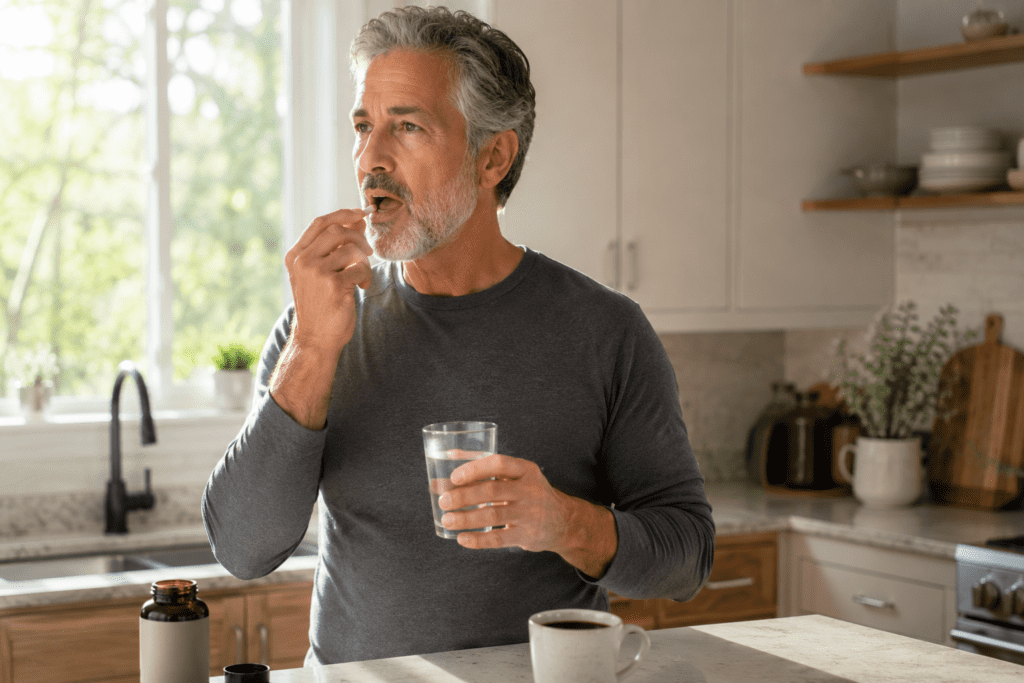
- Take it with a fat-containing meal. Resveratrol is fat-soluble. Taking it alongside dietary fat — avocado, olive oil, nuts — significantly enhances absorption. This isn’t optional if you want results.
- Choose micronized or liposomal forms. Standard resveratrol powder has inconsistent absorption. Micronized formulations or those encapsulated in liposomes show meaningfully better uptake in clinical comparisons.
- Consider timing. Some research suggests evening dosing aligns better with the body’s natural circadian repair cycles, though morning use with breakfast is also supported. Consistency matters more than the hour.
- Look for trans-resveratrol specifically. Resveratrol exists in two structural forms — trans and cis. The trans form is biologically active. Most quality supplements specify this, but it’s worth checking the label.
- Pair it with quercetin or piperine. Both have been shown to extend resveratrol’s circulation time in the body. Quercetin in particular works synergistically with resveratrol on overlapping pathways — making the combination more effective than either alone.
- Be patient and consistent. The longevity-related pathways resveratrol activates respond to sustained exposure. Most meaningful research uses supplementation periods of 12 weeks or longer. This isn’t a compound you try for two weeks and judge.
If you’re already exploring anti-aging supplements that actually work, resveratrol belongs on that short list — but only when used correctly. The form matters. The timing matters. The combination matters. Getting those details right is what separates people who see results from people who dismiss it as overhyped.
Resveratrol Benefits Beyond Anti Aging: What Else It Does
The conversation around resveratrol benefits anti aging tends to dominate, but it sells this compound short. The same mechanisms that slow cellular aging also produce a range of other measurable effects — and understanding them gives you a fuller picture of why this is such a consistently studied compound.
Cardiovascular protection is probably the most clinically robust secondary benefit. Resveratrol improves endothelial function — the flexibility and responsiveness of blood vessel walls — and reduces the oxidation of LDL cholesterol, which is the form that contributes to arterial plaque. It also has mild antiplatelet effects, meaning it gently reduces the tendency for blood to clot unnecessarily. These aren’t marginal effects. Clinical evidence supports meaningful improvements in blood pressure and arterial stiffness markers with consistent use.
Blood sugar and insulin sensitivity represent another well-documented area. By activating AMPK, resveratrol improves glucose uptake in muscle cells — essentially helping cells respond more efficiently to insulin. For anyone managing metabolic health or watching blood sugar trends, this is meaningful. The effect isn’t dramatic enough to replace lifestyle interventions, but as part of a broader strategy, it’s a genuinely useful piece.
Brain health is an emerging area of real excitement. Resveratrol crosses the blood-brain barrier — something many compounds can’t do — and shows promise in reducing neuroinflammation and amyloid accumulation associated with cognitive decline. If you’re interested in the broader picture of antioxidant supplements for brain health, resveratrol belongs in that conversation for this reason specifically.
But here’s where it gets interesting — and where a common myth needs busting.
Common Mistakes That Undermine Resveratrol’s Effectiveness
What if the real problem isn’t whether resveratrol works — but whether most people are taking it in a way that could ever possibly work? This is the myth I want to address head-on: the belief that drinking red wine regularly is a meaningful way to get resveratrol’s anti-aging benefits.
It isn’t. A typical glass of red wine contains somewhere between 0.2 and 2 milligrams of resveratrol. The doses used in clinical research to produce measurable biological effects range from 150 to 500 milligrams per day. You would need to drink somewhere between 75 and 2,500 glasses of wine daily to approach those levels. The French Paradox — the observation that French people had relatively low cardiovascular disease despite high fat diets — was attributed for years to red wine. But the research has since shifted. Resveratrol may play a role, but not via wine consumption. The math simply doesn’t support it.
Beyond the wine myth, here are the practical mistakes that undermine the resveratrol benefits anti aging potential most people are hoping for:
- Taking low-quality, underdosed supplements. The supplement market is inconsistent. Products labeled “resveratrol” vary wildly in actual trans-resveratrol content, particle size, and purity. Third-party tested products matter here.
- Inconsistent use. The longevity pathways resveratrol activates respond to sustained, regular exposure — not intermittent use. Skipping days frequently blunts the cumulative effect.
- Taking it on an empty stomach. As covered in the how-to section, absorption drops significantly without dietary fat present.
- Expecting it to replace foundational habits. Resveratrol amplifies a healthy baseline — sleep, movement, reduced sugar load, stress management. It doesn’t override a lifestyle that accelerates aging in other ways.
- Ignoring drug interactions. Resveratrol has mild blood-thinning effects and can interact with anticoagulant medications. If you’re on any prescription medication, a conversation with your doctor before starting is genuinely worth having — not as a formality, but as a practical safety step.
Final Thoughts: Is Resveratrol Worth It?
After diving deep into the research, my honest assessment is this: resveratrol benefits anti aging are real, well-documented, and mechanistically sound. This isn’t a compound that works by vague or hand-wavy logic. It works because it activates specific, well-understood biological pathways — pathways that govern how fast your cells age, how efficiently they produce energy, and how effectively they manage inflammation and repair damage.
Is it a magic bullet? No. Nothing is. But as part of a thoughtful approach to longevity — one that includes quality sleep, movement, metabolic awareness, and targeted supplementation — resveratrol earns its place. What makes it particularly compelling is that it addresses aging at the cellular level rather than just treating downstream symptoms. You’re not covering up the problem. You’re engaging with the process itself.
The key takeaways are straightforward: choose trans-resveratrol in a bioavailable form, take it with fat, be consistent over months rather than weeks, and layer it within a broader strategy that supports the same goals. The science backs this approach. And if you’ve been waiting for a supplement that actually makes biological sense — not just marketing sense — resveratrol is genuinely one of the strongest cases in the anti-aging conversation today.
❓ Frequently Asked Questions
Does resveratrol actually improve memory and cognitive function as you age?
Yes, resveratrol has shown meaningful cognitive benefits in clinical studies, particularly by improving cerebral blood flow and reducing neuroinflammation through SIRT1 activation. A 2014 Nutrients study found that daily resveratrol supplementation significantly improved memory performance in older adults compared to placebo.
How much resveratrol do you need to take daily to get real anti-aging effects?
Most human clinical trials showing measurable anti-aging benefits used doses between 150mg and 500mg per day, with higher doses (500mg–1g) studied for metabolic and cardiovascular outcomes. The effective dose varies by bioavailability of the formula, so a high-quality micronized or liposomal form at 250mg can outperform a cheaper 500mg standard powder.
Is resveratrol from red wine enough or do you need a supplement?
A standard glass of red wine contains only 0.3mg to 2mg of resveratrol, which is far below the 150–500mg threshold used in studies showing anti-aging benefits. Supplementation is necessary to reach therapeutic levels; relying on wine for resveratrol also adds alcohol, which offsets many of the longevity benefits.
What time of day should you take resveratrol for maximum absorption?
Resveratrol absorbs best when taken with a fat-containing meal because it is fat-soluble, and research suggests morning or midday timing aligns with the body’s natural AMPK activity rhythms. Taking it at night on an empty stomach is one of the most common reasons people report seeing no effect from supplementation.
Can resveratrol protect the brain from Alzheimer’s disease or dementia?
Preclinical and early human research suggests resveratrol can reduce amyloid-beta plaque accumulation and neuroinflammatory markers associated with Alzheimer’s progression. A 2015 randomized controlled trial published in Neurology found that resveratrol stabilized certain Alzheimer’s biomarkers in participants over 52 weeks, though larger trials are still needed to confirm protective effects.
📊 naturalbloodsugartips.com
My honest recommendation after everything I have researched
🍵 A Daily Tea Ritual for Your Heart & Waistline
Cardio Slim Tea combines traditional heart-supporting herbs in a convenient daily tea format — no pills, no harsh chemicals. Just a warm, calming ritual that works with your body’s natural processes.
👉 Yes, I Want to Try Cardio Slim Tea✓ Official website | ✓ 60-day money-back guarantee | ✓ Free shipping
⚠️ Due to high demand, stock is limited. Check availability before it sells out.
*Results may vary. This is an affiliate link — I only recommend what I have researched for my own family.

About the Author — Sarah
I am not a doctor or nutritionist — I am a daughter who has been caring for my mother since her type 2 diabetes diagnosis. That journey pushed me to research natural alternatives and evidence-based lifestyle changes. Everything I share comes from that personal mission: to help my mom live better, with more energy and less dependence on medication. Always consult your healthcare provider before making any changes to your treatment plan.
⚕️ Medical Disclaimer: I am not a medical professional. This blog reflects my personal research caring for a family member with diabetes. For informational purposes only — not medical advice. Always consult a qualified healthcare provider.
📚 Scientific References
- Baur JA, et al. Resveratrol improves health and survival of mice on a high-calorie diet. Nature. 2006;444(7117):337–342. PMID: 17086191.
- Timmers S, et al. Calorie restriction-like effects of 30 days of resveratrol supplementation on energy metabolism and metabolic profile in obese humans. Cell Metabolism. 2011;14(5):612–622. PMID: 22055504.
- Witte AV, et al. Effects of resveratrol on memory performance, hippocampal functional connectivity, and glucose metabolism in healthy older adults. Journal of Neuroscience. 2014;34(23):7862–7870. PMID: 24899709.
- Bhatt JK, et al. Resveratrol supplementation improves glycemic control in type 2 diabetes mellitus. Nutrition Research. 2012;32(7):537–541. PMID: 22901562.