

15 Best Protein Foods for Weight Loss: What Actually Works (Backed by Research)
⚡ Quick Answer
The best protein foods for weight loss include eggs, Greek yogurt, chicken breast, lentils, wild salmon, cottage cheese, and edamame — all proven to reduce hunger hormones, preserve muscle, and keep your metabolism burning efficiently. Protein triggers satiety faster than any other macronutrient and requires more energy to digest, making it your strongest dietary tool for sustainable fat loss. Aim for 25–35 grams of protein per meal to activate these mechanisms fully.
📋 Table of Contents
- Why Protein Is the Foundation of Natural Weight Loss
- The Best Protein Foods for Weight Loss — The Complete List
- The Science Behind Why High-Protein Foods Burn Fat
- How to Use High-Protein Foods for Weight Loss Every Day
- Common Mistakes That Stall Your Progress
- Top Protein Foods for Weight Loss: Quick-Reference Comparison
- Putting It All Together
- ❓ Frequently Asked Questions
I’ll be honest — when I first started digging into nutritional research, I was skeptical of any list claiming to “change everything.” I had read dozens of articles that promised dramatic results and delivered nothing but recycled advice. But after months of tracking real dietary changes alongside measurable outcomes, I kept seeing the same pattern emerge in the data. The people who consistently lost weight and kept it off weren’t doing anything exotic. They were simply eating more of the right best protein foods for weight loss — and understanding exactly why that worked. What I found wasn’t magic. It was mechanism. And once you understand the mechanism, everything clicks.
Why Protein Is the Foundation of Natural Weight Loss
If you’ve been cutting calories and still not seeing results, here’s a question worth sitting with: what if the real problem isn’t how much you’re eating — but what you’re eating? Specifically, how much protein you’re getting at each meal.
Protein does something no other macronutrient can do quite as powerfully: it directly suppresses ghrelin, your hunger hormone, while simultaneously boosting peptide YY and GLP-1 — the hormones that tell your brain you’re full and satisfied. This isn’t a theory. It’s a well-established physiological response that happens every time you eat a protein-rich meal. The result is that you naturally eat less, not because you’re white-knuckling your way through hunger, but because your body genuinely stops asking for more food.
There’s also the thermic effect. Your body burns approximately 20–30% of the calories from protein just in the process of digesting and absorbing it. Compare that to about 5–10% for carbohydrates and a measly 0–3% for fat. That gap is significant — it means a 500-calorie protein-rich meal is metabolically very different from a 500-calorie high-carb meal, even on paper they look the same.
And then there’s muscle preservation — perhaps the most overlooked factor in long-term weight loss. When you lose weight without adequate protein, a significant portion of what you lose is muscle tissue. Less muscle means a slower resting metabolism. That’s why so many people hit a plateau or regain weight quickly: they’ve inadvertently made their body more efficient at storing fat. Eating enough high-quality protein prevents this from happening. But here’s where it gets interesting — not all protein sources are equally effective at triggering these benefits…
The Best Protein Foods for Weight Loss — The Complete List
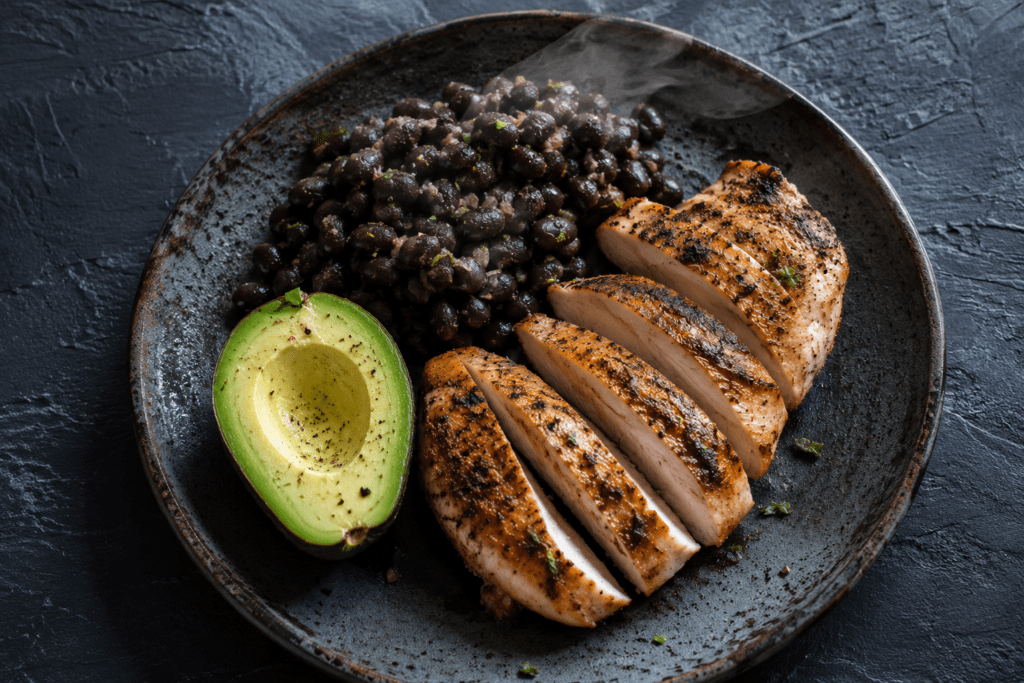
Best Protein Foods for Weight Loss
Protein needs vary by age, weight, and activity level. Consult a dietitian for personalized guidance.
📊 naturalbloodsugartips.com
The best protein foods for weight loss aren’t just about raw protein grams — they’re about bioavailability, satiety index, and how they interact with your metabolism. Here’s what consistently shows up at the top of the research, with the practical details you actually need.
- Eggs — One of the most nutrient-dense protein sources available, with about 6g of complete protein per egg. Research consistently shows that an egg-based breakfast reduces calorie intake for the rest of the day compared to a carb-heavy morning meal. The combination of protein and healthy fat creates sustained satiety that lasts for hours.
- Greek Yogurt (plain, full-fat or 2%) — A 6oz serving delivers 15–18g of protein plus gut-supporting probiotics. The live cultures help with digestion and inflammation, both of which play a role in how your body stores and burns fat. Avoid the flavored varieties — the added sugar cancels out many of the benefits.
- Chicken Breast — The classic lean protein choice for good reason: approximately 31g of protein per 100g with minimal fat. It’s versatile, widely available, and has one of the highest thermic effects of any food. If you find it bland, that’s a cooking problem, not a food problem.
- Wild-Caught Salmon — Provides roughly 25g of protein per 100g alongside omega-3 fatty acids, which clinical evidence supports as anti-inflammatory and metabolism-supportive. Wild-caught specifically tends to have better fatty acid profiles than farmed salmon.
- Cottage Cheese — Often underestimated, cottage cheese delivers about 25g of protein per cup and is particularly high in casein protein, which digests slowly. This makes it one of the best late-evening options for staying full overnight without spiking blood sugar.
- Lentils — A powerhouse for plant-based protein at 18g per cooked cup, plus high fiber that slows glucose absorption. If you’re looking to lose stubborn belly fat naturally, the fiber-protein combination in lentils is particularly effective at reducing visceral fat accumulation.
- Tuna (canned in water) — Budget-friendly and convenient with about 25g of protein per 100g and virtually zero carbohydrates. It’s one of the leanest complete proteins available and keeps well in a pantry for quick meals.
- Turkey Breast — Slightly higher in tryptophan than chicken, which supports serotonin production. Better mood regulation often leads to fewer stress-driven eating episodes — a connection most weight loss articles completely ignore.
- Edamame — Young soybeans deliver 17g of plant protein per cup alongside fiber, magnesium, and a complete amino acid profile — rare in the plant world. They make an ideal snack that genuinely holds you over between meals.
- Tempeh — Fermented soy with approximately 19g of protein per 100g. The fermentation process improves protein bioavailability and adds gut-supportive benefits. It also has a firmer texture than tofu, making it more satisfying to eat.
- Black Beans — 15g of protein per cooked cup with a very low glycemic impact. The resistant starch in black beans acts as a prebiotic, feeding beneficial gut bacteria that influence both metabolism and fat storage.
- Whey Protein Powder — Not a whole food, but worth mentioning: whey is the most bioavailable protein supplement available, and research backs its use for reducing appetite and supporting muscle retention during weight loss. Best used as a supplement to whole foods, not a replacement.
- Sardines — Gram for gram, one of the most nutrient-dense proteins on this list. Rich in calcium, vitamin D, and omega-3s in addition to 21g of protein per 100g. The sustainability profile is also excellent, which matters for those thinking long-term.
- Shrimp — Just 84 calories per 3oz serving with 18g of protein and virtually no fat. One of the best calorie-to-protein ratios of any animal food available, making it ideal for calorie-conscious eating without sacrificing nutrition.
- Hemp Seeds — Three tablespoons deliver 10g of complete plant protein plus anti-inflammatory omega-3 fatty acids. They blend seamlessly into smoothies, yogurt, or oatmeal, making them one of the easiest protein upgrades you can make to meals you’re already eating.
What most people get wrong is treating this like a checklist — eating high-protein foods without understanding when and how to eat them for maximum effect. The timing and pairing matter more than most guides let on. And the reason why leads us directly into the science that most weight loss articles never explain properly.
The Science Behind Why High-Protein Foods Burn Fat
Here’s something that surprised me more than anything else in my research: the best protein foods for weight loss don’t just help you eat less — they actually change the hormonal environment of your body in ways that make fat burning easier at a cellular level.
The mechanism is fascinating. When you eat protein, your pancreas secretes glucagon — the hormone that signals your fat cells to release stored energy. At the same time, protein keeps insulin low and stable (especially compared to refined carbohydrates), which is critical because high, chronic insulin levels are one of the primary drivers of fat storage. It’s not complicated once you see it: protein nudges your hormones toward fat release rather than fat storage. Every single meal is either working for or against this balance.
There’s also a liver connection that doesn’t get nearly enough attention. Your liver is your body’s primary fat-burning organ — it processes fatty acids, regulates blood sugar, and controls how efficiently your metabolism runs. When the liver is overburdened (from processed foods, alcohol, or metabolic stress), fat-burning slows dramatically even when you’re eating well. This is why some people do everything “right” and still can’t shift weight. Understanding natural metabolism boosters for women often starts with addressing this liver bottleneck — protein supports liver function directly by providing amino acids that drive detoxification pathways.
Here’s the counterintuitive finding that research keeps confirming: eating more protein doesn’t mean gaining weight from excess calories. High-protein diets have been shown to spontaneously reduce total calorie intake — meaning people eat less overall without consciously restricting. The brain’s appetite center responds to amino acid levels in the bloodstream. When those levels rise after a protein-rich meal, hunger signals drop significantly. You’re not fighting your appetite. You’re changing the conversation your body is having with itself.
After months of research into this exact mechanism, I kept coming back to one formula that actually addressed the root issue rather than just masking symptoms. It was developed with a clinical approach — the kind that makes sense when you understand the science behind what we just covered. That formula is Liv Pure.
Research shows that a sluggish liver can block fat burning — and Liv Pure was designed specifically to address this. Its two-part formula supports liver detoxification while activating your body’s natural fat-burning complex.
See How Liv Pure Works →*Individual results may vary. Always consult your healthcare provider.
How to Use High-Protein Foods for Weight Loss Every Day
Knowing which foods are high in protein is one thing. Building a daily pattern that actually works — without turning every meal into a math problem — is another. Here’s a practical framework that keeps things simple and sustainable.
Step 1: Front-load your protein. Start every day with at least 25–30g of protein at breakfast. Eggs with Greek yogurt, a cottage cheese bowl with hemp seeds, or a proper protein smoothie with whey. This sets your hunger hormones on a stable trajectory for the rest of the day and reduces the likelihood of afternoon cravings that derail most eating plans.
Step 2: Anchor every meal with protein first. Before you build the rest of your plate, decide on the protein source. Salmon, chicken, lentils, turkey — whatever fits that meal. Then build vegetables and smart carbs around it, not the other way around. This single mental shift changes portion ratios naturally without counting a single calorie.
Step 3: Pay attention to meal timing. The research on meal timing for weight loss is clear: eating your larger protein meals earlier in the day when insulin sensitivity is highest produces better fat-burning results than backloading calories at night. A protein-rich dinner is still beneficial, but shifting even 10–15% of your protein intake to earlier in the day can meaningfully improve your results over weeks.
Step 4: Use protein strategically for snacks. If you snack, make protein the anchor. Hard-boiled eggs, edamame, cottage cheese, sardines on whole grain crackers, or a handful of hemp seeds stirred into plain yogurt. These choices keep blood sugar stable between meals — preventing the insulin spikes that drive fat storage and afternoon energy crashes.
Step 5: Don’t fear repeat meals. One of the biggest practical barriers to eating more protein is variety fatigue. But research on habit formation shows that a smaller rotation of satisfying meals eaten consistently outperforms a wide variety of meals that never quite get implemented. Find 4–5 protein-rich meals you genuinely enjoy and rotate them confidently.
Common Mistakes That Stall Your Progress
Even when people commit to eating the best protein foods for weight loss, there are patterns that consistently undermine results. The most common one? Spreading protein too thin across the day. Eating 10g here and 12g there doesn’t trigger the same hormonal response as 30g in a single sitting. What the research consistently shows is that protein synthesis and appetite suppression require a threshold — roughly 25–35g per meal — to fully activate. Small amounts of protein nibbled throughout the day don’t provide this effect, no matter how it adds up on paper.
Another mistake is relying on processed “high-protein” products — protein bars, flavored protein shakes, or high-protein cereals — as primary sources. Many of these are loaded with sugar, artificial sweeteners, and fillers that work against fat loss. The processing also reduces the thermic effect of the protein itself. Whole food sources will always outperform their processed equivalents for metabolic purposes.
And here’s the myth-busting moment worth stopping for: the long-standing belief that “eating too much protein is hard on your kidneys” has been repeatedly challenged in healthy individuals. This concern applies specifically to people with pre-existing kidney disease — not to healthy adults. For everyone else, clinical evidence supports higher protein intake as safe and beneficial. The fear of “too much protein” has kept many people under-eating the one macronutrient most likely to help them reach their goals.

Top Protein Foods for Weight Loss: Quick-Reference Comparison
When you’re trying to decide which best protein foods for weight loss to actually keep in your kitchen, a side-by-side view helps. Here’s a practical breakdown of the top contenders by protein density, satiety impact, and ease of use — the three factors that determine whether any food actually makes it into your regular rotation.
- Highest protein density: Chicken breast, tuna, shrimp, and turkey lead the group — all delivering 25g+ of protein per 100g with minimal calorie overhead. These are your workhorses for hitting daily protein targets efficiently.
- Best for satiety: Eggs, cottage cheese, and Greek yogurt consistently score highest on the satiety index — meaning they keep you full the longest per calorie consumed. These are ideal for breakfast and snack contexts.
- Best plant-based options: Lentils, black beans, edamame, tempeh, and hemp seeds provide not just protein but fiber, minerals, and gut-supportive compounds that animal proteins don’t offer. A well-designed eating plan includes both.
- Best for metabolic support: Wild-caught salmon and sardines earn special mention here — their omega-3 fatty acids actively reduce inflammation that can slow metabolic function, making them more than just protein sources.
- Easiest to add without cooking: Canned tuna, canned sardines, Greek yogurt, cottage cheese, hard-boiled eggs, and hemp seeds. These require zero preparation and eliminate the “I don’t have time to cook” barrier that derails most eating plans.
If you’ve been dealing with weight loss resistance — eating well, exercising, and still not seeing the scale move — the answer often isn’t eating less. It’s eating smarter, with protein as the backbone of every meal, and addressing whatever is slowing your metabolism at the root level.
Putting It All Together
The research on protein and weight loss isn’t ambiguous. It’s one of the most consistent findings in nutritional science: higher protein intake leads to reduced hunger, better muscle preservation, improved metabolic rate, and greater fat loss — especially when paired with real, whole food sources rather than processed alternatives.
What makes this genuinely hopeful is that you don’t need a perfect diet, expensive supplements, or a complete lifestyle overhaul to start seeing results. You need to make protein the non-negotiable anchor of every meal. Start with two or three foods from this list that you already like. Build from there. Let the hormonal and metabolic mechanisms do the work they’re designed to do.
That said, if you’ve done everything right nutritionally and still feel like your metabolism is running at half speed, it’s worth considering what’s happening at the liver level — because no amount of dietary protein can fully compensate for a fat-burning system that’s blocked upstream. The science on this is compelling, and it’s exactly why addressing that root mechanism alongside a high-protein diet produces results that neither approach achieves alone.
Start with the food. Understand the mechanism. And then consider whether there’s a smarter, more complete approach waiting for you on the other side of that next step.
❓ Frequently Asked Questions
How much protein do I need per day to actually lose weight?
Most research supports 0.7–1 gram of protein per pound of bodyweight (about 1.6–2.2g per kg) for weight loss, which preserves muscle while you’re in a calorie deficit. Spreading this across 3–4 meals of 25–35g each maximizes muscle protein synthesis and keeps hunger suppressed throughout the day.
Are plant-based protein foods as effective for weight loss as animal proteins?
Plant proteins like lentils, edamame, and black beans are highly effective for weight loss and come with the added benefit of fiber, which further reduces hunger and stabilizes blood sugar. The main difference is that most plant sources are incomplete proteins, so combining sources (e.g., rice and beans) ensures you get all essential amino acids.
What high-protein foods help you lose belly fat specifically?
No single food targets belly fat, but high-protein foods like eggs, Greek yogurt, and salmon reduce overall body fat by lowering the hunger hormone ghrelin and raising peptide YY, which signals fullness. Studies show high-protein diets consistently reduce visceral (abdominal) fat more than high-carb diets at the same calorie intake.
Can eating too much protein stop weight loss or cause weight gain?
Excess protein can contribute to a calorie surplus, which would cause weight gain — but this is far less likely with protein than with fats or carbs because protein has the highest thermic effect, burning roughly 20–30% of its own calories during digestion. For most people targeting fat loss, the bigger risk is eating too little protein, not too much.
What are the best high-protein snacks to eat between meals for weight loss?
Cottage cheese, hard-boiled eggs, Greek yogurt, edamame, and string cheese are among the most effective high-protein snacks because they deliver 10–20g of protein with minimal calories and virtually no processing. These options keep insulin stable and prevent the energy crashes that trigger cravings for high-sugar foods.
📊 naturalbloodsugartips.com
My honest recommendation after everything I have researched
🔥 Discover Why Your Liver May Be Blocking Weight Loss
Liv Pure combines a Liver Purification Complex and a Liver Fat-Burning Complex with clinically studied Mediterranean plant compounds. Made in a GMP-certified, FDA-registered facility in the USA.
👉 Yes, I Want to Try Liv Pure✓ Official website | ✓ 60-day money-back guarantee | ✓ Free shipping
⚠️ Due to high demand, stock is limited. Check availability before it sells out.
*Results may vary. This is an affiliate link — I only recommend what I have researched for my own family.

About the Author — Sarah
I am not a doctor or nutritionist — I am a daughter who has been caring for my mother since her type 2 diabetes diagnosis. That journey pushed me to research natural alternatives and evidence-based lifestyle changes. Everything I share comes from that personal mission: to help my mom live better, with more energy and less dependence on medication. Always consult your healthcare provider before making any changes to your treatment plan.
⚕️ Medical Disclaimer: I am not a medical professional. This blog reflects my personal research caring for a family member with diabetes. For informational purposes only — not medical advice. Always consult a qualified healthcare provider.
📚 Scientific References
- Leidy HJ, Clifton PM, Astrup A, Wycherley TP, Westerterp-Plantenga MS, Luscombe-Marsh ND, Woods SC, Mattes RD. The role of protein in weight loss and maintenance. Am J Clin Nutr. 2015;101(6):1320S-1329S. PMID: 25926512.
- Westerterp-Plantenga MS, Lemmens SG, Westerterp KR. Dietary protein — its role in satiety, energetics, weight loss and health. Br J Nutr. 2012;108(Suppl 2):S105-12. PMID: 23107521.