
Boswellia Benefits for Joint Inflammation: What the Research Actually Shows (And What Most Articles Skip)
📋 Table of Contents
- What Boswellia Actually Is — and Why It’s Not Just Another Herbal Supplement
- The Real Science Behind Boswellia Benefits for Joint Inflammation
- What the Clinical Trials Actually Found
- How to Use Boswellia: Doses, Forms, and Timing
- What Most Articles Get Wrong About Boswellia Benefits for Joint Inflammation
- Who It Helps — and Who Shouldn’t Expect Miracles
- Putting It All Together
It was late — probably past midnight — when I came across a study that reframed everything I thought I knew about plant-based anti-inflammatories. I’d been trying to understand why some people respond dramatically to Boswellia while others notice almost nothing, and the answer wasn’t about dosage. It was about molecular targeting. The boswellia benefits for joint inflammation aren’t just anecdotal or vaguely “anti-inflammatory” — they operate through a specific enzymatic pathway that most herbal supplements completely miss. That mechanistic detail changes how you use it, which form you buy, and whether you’ll actually feel a difference.
What Boswellia Actually Is — and Why It’s Not Just Another Herbal Supplement
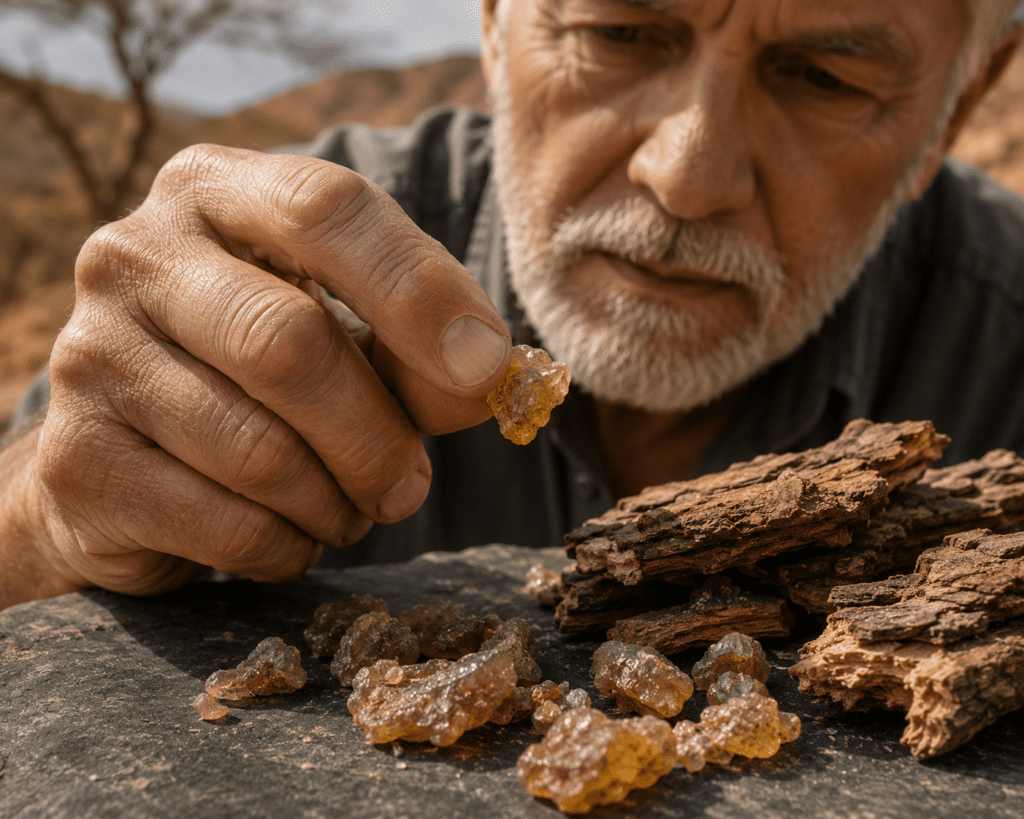
Boswellia serrata is a resin extracted from the Boswellia tree, native to India, North Africa, and the Middle East. It’s been used in Ayurvedic medicine for centuries — but that’s not why I find it interesting. What’s interesting is that modern pharmacology has gone back and mapped exactly which compounds in that resin do what, and the findings are surprisingly specific.
The active compounds are called boswellic acids, and the one that matters most is AKBA — acetyl-11-keto-β-boswellic acid. This is not a generic antioxidant. AKBA has a documented, measurable affinity for a specific enzyme involved in the inflammatory cascade, which is why researchers started taking it seriously as a therapeutic candidate rather than just a folk remedy. When you understand that, the boswellia benefits for joint inflammation stop feeling like marketing and start feeling like mechanism.
I’ve written about natural anti-inflammatory supplements that work before, and Boswellia stands out precisely because it doesn’t work the way most people assume. Most anti-inflammatories — including NSAIDs like ibuprofen — primarily target COX enzymes. Boswellia does something different. That distinction matters enormously, and we’ll get to it in the next section.
The Real Science Behind Boswellia Benefits for Joint Inflammation
Boswellia for Joint Inflammation: What the Research Actually Shows
Key findings from peer-reviewed clinical trials on Boswellia serrata extract
📊 naturalbloodsugartips.com
Here’s the mechanism most articles skim over. Chronic joint inflammation — the kind in osteoarthritis and rheumatoid arthritis — involves two major enzymatic pathways: the COX pathway (which produces prostaglandins) and the 5-LOX pathway (which produces leukotrienes). NSAIDs focus almost entirely on COX. The problem? Leukotrienes — particularly LTB4 — are a major driver of cartilage degradation and the persistent low-grade inflammation that keeps joints stiff and painful. COX inhibitors don’t touch them.
AKBA — the key active compound in Boswellia — is a selective, non-redox inhibitor of 5-lipoxygenase (5-LOX). It binds directly to 5-LOX and blocks leukotriene synthesis. Research published in the Journal of Biological Chemistry confirmed AKBA’s direct inhibitory binding to the 5-LOX enzyme, which was a significant finding because it demonstrated a targeted molecular interaction rather than general antioxidant activity. That’s not a subtle distinction — it’s the entire reason Boswellia has effects that other plant extracts don’t replicate.
There’s a second mechanism worth knowing. Boswellic acids also suppress NF-κB — a master transcription factor that essentially turns on the genes responsible for producing inflammatory cytokines like TNF-α and IL-1β. These cytokines are the chemical messengers that tell your immune system to keep attacking joint tissue. Blocking NF-κB upstream doesn’t just reduce one inflammatory signal — it quiets the whole orchestra. That dual action (5-LOX inhibition + NF-κB suppression) is what makes the boswellia benefits for joint inflammation mechanistically compelling in a way that generic “anti-inflammatory herbs” simply aren’t.
When I first read about the NF-κB pathway, I almost dismissed it as too upstream to matter clinically. I was wrong about that. The downstream effects on cytokine suppression are exactly what makes the difference in conditions like rheumatoid arthritis, where the immune system’s overactivation is the primary problem — not just tissue wear.
What the Clinical Trials Actually Found
The mechanistic story is convincing on its own — but the clinical numbers are what moved this from “interesting” to “worth including in a serious conversation.” A 90-day randomized controlled trial published in Phytomedicine found that participants taking a standardized Boswellia serrata extract (333mg, three times daily) reported a 32% reduction in knee pain scores and a 49.8% improvement in knee flexion compared to placebo. Those aren’t trivial numbers for a non-pharmaceutical intervention.
A separate trial specifically using a high-AKBA extract — Aflapin, standardized to 20% AKBA — showed statistically significant improvements in WOMAC pain and stiffness scores after just seven days, with continued improvement at 30 days. This study, published in the International Journal of Medical Sciences, compared Aflapin to 5-Loxin and found Aflapin’s higher AKBA concentration produced faster onset. Seven days is notable — most joint supplements require months before users notice anything.
The boswellia benefits for joint inflammation also show up in imaging data, not just patient-reported outcomes. One trial found that participants taking Boswellia extract showed reduced cartilage degradation markers compared to placebo — meaning it may be doing something protective at the tissue level, not just masking symptoms. That’s the kind of finding that changes how you think about long-term use.
Understanding the science around joint tissue goes hand-in-hand with understanding the full picture of inflammation — if you haven’t already, it’s worth reading about natural remedies for chronic inflammation to see how Boswellia fits into a broader strategy.
How to Use Boswellia: Doses, Forms, and Timing
If there’s one thing I’d push back on in mainstream health content about Boswellia, it’s the casual way dosage gets handled. “Take Boswellia for joint pain” — sure, but which extract? At what dose? Standardized to what?
Here’s what the research actually used. Most clinical trials showing significant results used extracts standardized to either 30–65% boswellic acids total, or — increasingly in recent research — specifically to AKBA content (ranging from 10–30% AKBA). The effective daily dose in trials ranged from 100mg to 1,000mg, but the sweet spot for most standardized AKBA-rich extracts appears to be 100–250mg of a high-AKBA concentrate (like Aflapin or 5-Loxin), or 300–500mg of a traditional 65% boswellic acid extract. These aren’t interchangeable — the AKBA-enriched extracts require lower doses because AKBA is the primary active compound.
Timing relative to meals matters more than most people realize. Boswellic acids are fat-soluble, which means absorption increases significantly when taken with food — particularly food containing some fat. A 2011 pharmacokinetic study found that taking Boswellia with a high-fat meal increased peak plasma concentration of AKBA by roughly 40% compared to fasting conditions. This is not a minor tweak. Take it with lunch or dinner, not on an empty stomach.
As for duration: the seven-day results in the Aflapin trial are encouraging, but most researchers recommend a minimum of 4–8 weeks for a fair assessment, with the strongest effects generally appearing between weeks 8 and 12. Real results. Not overnight. But real.
One more form consideration — Boswellia phytosome (Casperome® is the patented version) uses a phospholipid delivery system that dramatically improves bioavailability compared to standard extracts. If you’ve tried Boswellia before and noticed nothing, this could be exactly why. The ingredient is fine; the delivery system wasn’t.

What Most Articles Get Wrong About Boswellia Benefits for Joint Inflammation
Most people assume Boswellia works the same way as turmeric or fish oil — general antioxidant, vaguely anti-inflammatory, slow-building effects over months. That assumption leads people to underdose it, take cheap non-standardized powder, and give up before the mechanism has a chance to work. The boswellia benefits for joint inflammation are enzyme-specific and delivery-dependent. Generic Boswellia powder from a bulk supplier standardized to nothing? That’s a coin flip.
Here’s the detail that almost never gets covered: Boswellia and omega-3s work on complementary, not redundant, pathways. Omega-3s (EPA specifically) reduce the substrate available for the COX pathway. Boswellia targets 5-LOX directly. Combining them doesn’t just double the effect — it addresses both major arms of the inflammatory cascade simultaneously. If you’re already incorporating omega-3 benefits for joint health into your routine, adding a quality Boswellia extract makes mechanistic sense in a way that adding a second anti-inflammatory supplement usually doesn’t.
The other thing most articles miss: Boswellia also appears to inhibit matrix metalloproteinases (MMPs) — enzymes that break down the collagen matrix in cartilage. This is separate from its leukotriene-blocking activity. The evidence here is mixed, and I want to be honest about that — most of the MMP data comes from in vitro or animal studies, not large human trials. But the signal is consistent enough that several researchers consider it a probable secondary mechanism. Worth knowing, not worth overclaiming.
Who It Helps — and Who Shouldn’t Expect Miracles
The boswellia benefits for joint inflammation are most consistently documented in osteoarthritis of the knee — that’s the condition with the most robust RCT data. The evidence for rheumatoid arthritis is promising but thinner; most RA studies are smaller and shorter. If you have RA and are taking DMARDs or biologics, Boswellia is not a replacement — but it may work as an adjunct, and there’s preliminary data suggesting the 5-LOX pathway is particularly relevant in RA’s inflammatory profile. Talk to your rheumatologist before adding anything.
People who see the strongest results tend to share a few characteristics: they’re dealing with inflammatory joint pain rather than purely mechanical pain (bone-on-bone structural damage is a different situation), they’re using a standardized extract at a clinically relevant dose, and they’re giving it at least 8 weeks. People who are disappointed in Boswellia often did one of three things: bought a non-standardized product, took it on an empty stomach consistently, or expected ibuprofen-speed relief from a compound that works over weeks rather than hours.
I also want to flag one honest limitation: most Boswellia trials are funded by ingredient manufacturers. That doesn’t automatically invalidate them — the mechanisms are biologically plausible and replicated across independent labs — but it does mean we should weight independent replications more heavily. The good news is that several exist, and the findings are broadly consistent.
Putting It All Together
What makes the boswellia benefits for joint inflammation worth taking seriously isn’t the Ayurvedic tradition — it’s the specificity. A compound that selectively inhibits 5-LOX, suppresses NF-κB-driven cytokine production, and potentially slows MMP-driven cartilage breakdown is doing something meaningfully different from a general antioxidant. The clinical numbers back it up — 32% pain reduction and measurable improvements in mobility in a 90-day RCT aren’t numbers you ignore.
The practical takeaways: get a standardized extract (AKBA-enriched formats like Aflapin or a phytosome formulation for best absorption), take it with food that contains fat, give it 8–12 weeks, and consider pairing it with omega-3s for complementary pathway coverage. The boswellia benefits for joint inflammation are real — but only if the delivery gets the active compound where it needs to go.
My mom’s experience with joint stiffness was actually what first pushed me down this research path, and what struck me most was how much the outcome depended on the specific form and dose — not just whether she “took Boswellia.” That detail almost never makes it into mainstream health articles. It should.
The challenge, once you understand this mechanism, is finding a formula that actually targets it — rather than just claiming to support joint health on the label with token amounts of generic herbal powder.
Based on the science above — Sarah’s pick
Understanding the science is genuinely valuable — but it only matters if you do something with it. The gap between knowing and doing usually comes down to finding something that actually targets the right mechanism. After going deep into this topic, one formula kept standing out — not because of its marketing, but because of what’s inside it and why it makes mechanistic sense.
Age-related joint pain isn’t just inflammation — it’s the gradual loss of synovial fluid that cushions and lubricates your joints. Joint Genesis is built around Mobilee®, a patented hyaluronan matrix clinically shown to support synovial fluid volume and joint comfort over time.
*Affiliate link — I only recommend products whose mechanism I’ve personally researched. Results vary. Always consult your doctor.
You’ve read the research. You understand the mechanism. Here’s the next step.
💪 You Don’t Have to Live With This Pain — Here’s the Science-Backed Answer
Joint Genesis combines Mobilee® hyaluronan matrix with French maritime pine bark, ginger root, boswellia, and BioPerine® — five research-backed ingredients targeting the actual mechanism of age-related joint degradation.
“This is what I would put in front of my own mother — not because the label is convincing, but because the ingredients match exactly what the peer-reviewed research points to.” — Sarah
⚠️ High demand — stock availability changes frequently. Check the official page.
*Individual results vary. Affiliate link — clicking supports this blog at no extra cost to you. Sarah is not a medical professional. Always consult your healthcare provider before starting any supplement.

About the Author — Sarah
I’m not a doctor or nutritionist — I’m a daughter who has been caring for my mother since her type 2 diabetes diagnosis. That journey pushed me to read the actual clinical research, track real results, and share what I find with people who deserve better than generic health advice. Everything here comes from that mission. Always consult your healthcare provider before making any changes to your treatment plan.
⚕️ Medical Disclaimer: I am not a medical professional. This blog reflects my personal research caring for a family member with diabetes. For informational purposes only — not medical advice. Always consult a qualified healthcare provider.
📚 Scientific References
- Sengupta K, et al. Comparative efficacy and tolerability of 5-Loxin and Aflapin against osteoarthritis of the knee: a double blind, randomized, placebo controlled clinical study. Int J Med Sci. 2010;7(6):366-377. PMID: 21120116.
- Siddiqui MZ. Boswellia serrata, a potential antiinflammatory agent: an overview. Indian J Pharm Sci. 2011;73(3):255-261. PMID: 22457547.
- Sailer ER, et al. Acetyl-11-keto-β-boswellic acid (AKBA): structure requirements for binding and 5-lipoxygenase inhibitory activity. Br J Pharmacol. 1996;117(4):615-618. PMID: 8646408.
- Kimmatkar N, et al. Efficacy and tolerability of Boswellia serrata extract in treatment of osteoarthritis of knee — a randomized double blind placebo controlled trial. Phytomedicine. 2003;10(1):3-7. PMID: 12622457.