
Reversing Prediabetes Naturally: What Actually Works — and What I Wish I’d Known Sooner
📋 Table of Contents
My Mom’s Wake-Up Call — and Mine
I still remember the afternoon my mom called me. Her voice was quieter than usual, and before she even finished the sentence, I could tell something had scared her.
Her doctor had used the word “prediabetes.” She wasn’t diabetic yet, but she was standing close to the edge. Her fasting glucose had been creeping up, her A1C was 6.1%, and the only real advice she received was a short pamphlet and the phrase, “Watch what you eat.”
That was it.
No clear plan. No real explanation. No step-by-step guidance for what to do next.
I remember feeling frustrated for her — and honestly, a little scared too. That was the moment I started researching how people can lower blood sugar naturally, improve insulin sensitivity, and possibly turn prediabetes around before it becomes something more serious.
I want to be clear right away: I’m not a doctor. I’m a daughter who spent a lot of time reading studies, asking questions, talking to people with experience, and watching what helped my own mom in real life.
This article is not medical advice. It’s simply the honest account of what we learned, what actually helped, and what I wish someone had explained to us earlier.
The encouraging part is this: prediabetes can often be improved with the right lifestyle changes. Not overnight. Not perfectly. But steadily. And for many people, that window of opportunity is very real.
Food Changes That Actually Stick
The first thing I learned surprised me: my mom didn’t need to eat perfectly to see progress.
At first, we thought everything had to change at once. No bread. No rice. No treats. No mistakes. But that kind of pressure only made her feel overwhelmed.
What worked better was focusing on the few changes that had the biggest impact on her daily blood sugar readings — and making those habits repeatable.
Here’s what helped the most:
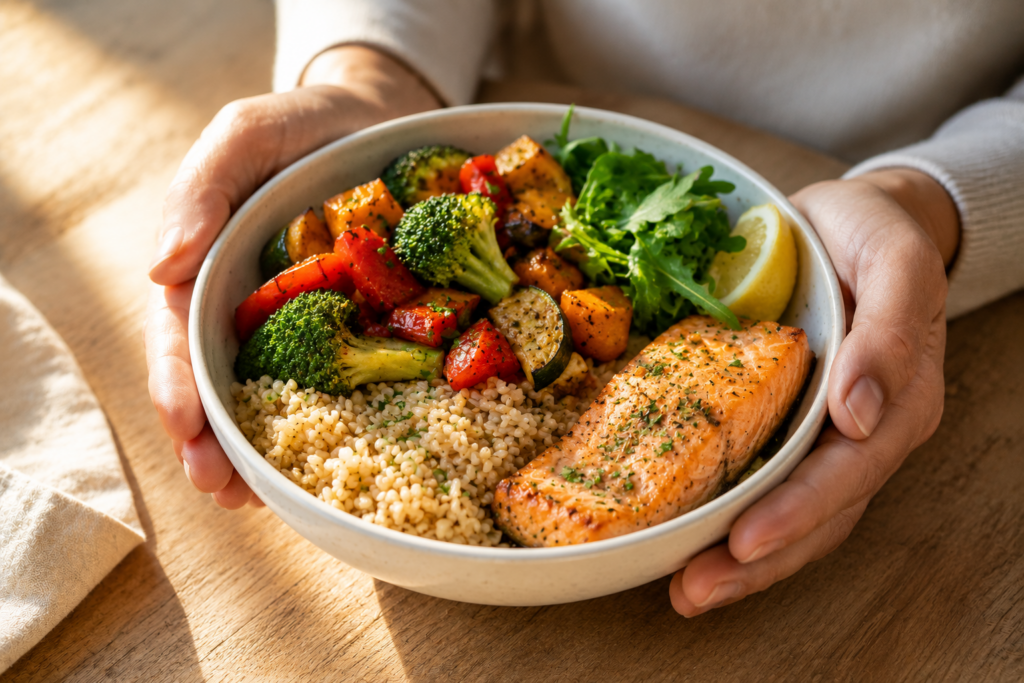
- Cutting back on refined carbs and added sugars first. White bread, white rice, sugary drinks, pastries, and packaged snacks were the biggest blood sugar triggers. We didn’t remove carbs completely, but we started replacing refined carbs with more filling options like lentils, beans, quinoa, vegetables, and sweet potatoes.
- Eating food in a smarter order. This was one of the simplest changes. My mom started eating vegetables and protein before the higher-carb part of the meal. It felt almost too easy, but her post-meal readings often looked better when she did this consistently.
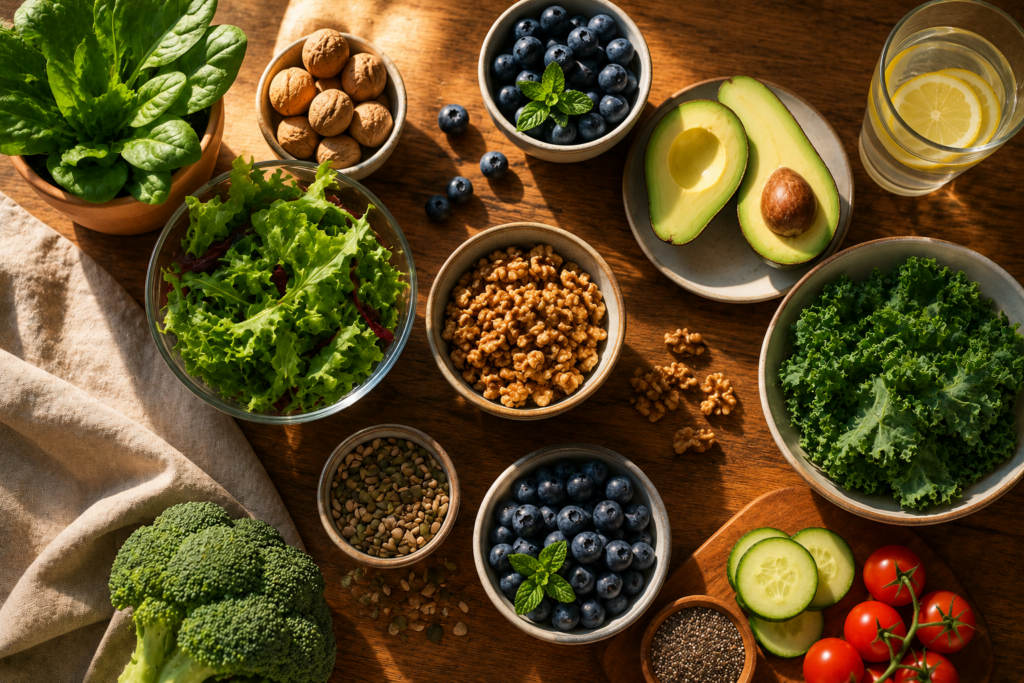
- Adding more fiber from real foods. Fiber slows down how quickly glucose enters the bloodstream. Chia seeds, oats, beans, broccoli, berries, and leafy greens became regular staples. We aimed for progress, not perfection.
- Reducing portions without obsessing over calories. Smaller plates, slower meals, and stopping before feeling overly full helped her feel more in control without feeling punished.
- Choosing healthier fats. Olive oil, avocado, nuts, and seeds helped make meals more satisfying. This also made it easier for her to avoid constant snacking later.
One thing I noticed is that the emotional side matters too. My mom didn’t want to feel like her diagnosis had taken all joy out of food. So instead of building a strict “diet,” we built better meals around foods she already liked.
That made the changes feel possible.
🎁 Free 7-Day Blood Sugar Reset Guide
If you want a simple place to start, you can grab the free 7-day guide with practical daily habits that support healthier blood sugar levels naturally.
Movement Matters More Than You Think
I’ll be honest — in the beginning, I thought food was everything.
Exercise felt like a bonus. Helpful, yes, but not essential.
I was wrong.
Movement turned out to be one of the most powerful tools for improving blood sugar. When your muscles contract, they use glucose from the bloodstream for energy. That means even a short walk after eating can help reduce the blood sugar spike that often happens after meals.

My mom started with 10-to-15-minute walks after lunch and dinner. Nothing intense. No gym. No complicated plan.
But the difference in her readings was noticeable.
- Post-meal walking helped the most. Even 10 minutes made a difference when she stayed consistent.
- Strength training helped over time. She started with light resistance bands and simple bodyweight exercises twice a week. Building muscle supports better insulin sensitivity.
- Breaking up sitting time mattered. Instead of sitting for hours, she started standing up and moving for a few minutes throughout the day.
The biggest lesson here was that movement doesn’t have to be dramatic to be effective. It just has to happen regularly.
The Role of Sleep and Stress
This was the part I didn’t expect to matter as much as it did.
My mom was changing her meals. She was walking. She was trying. But for a while, her numbers still weren’t moving as much as we hoped.
That was discouraging for her.
Then I started reading more about sleep, stress, cortisol, and blood sugar — and suddenly, a lot of things made sense.
Poor sleep can affect hormones that influence glucose control. Chronic stress can also keep cortisol elevated, which may make blood sugar harder to manage. For many people, especially women in midlife and beyond, this is the part nobody talks about enough.

Here’s what helped her:
- A more consistent bedtime routine. She started turning off screens earlier, drinking calming tea, and keeping her room cooler.
- Gentle stress reduction. Not anything complicated — just quiet reading, deep breathing, short walks, and a few minutes of stillness in the evening.
- Less caffeine later in the day. Cutting caffeine after noon helped her fall asleep more easily and wake up feeling better.
This was when we really understood that blood sugar is not only about food. The body is a system. Sleep, stress, movement, meals, hormones, and daily routines all work together.
⚡ Additional Support for Healthy Blood Sugar
Some people also look for plant-based support alongside lifestyle changes. One option readers often ask about is Sugar Defender, a liquid formula designed to support healthy blood sugar levels and natural energy. It should not replace medical care, medication, or healthy habits.
Learn More →Small Steps, Real Results
Over time, my mom’s A1C went from 6.1% back into the normal range.
It didn’t happen because she followed a perfect plan. It happened because she made small changes and kept returning to them, even after imperfect days.
And yes, there were imperfect days.
There were days when she ate something that spiked her blood sugar. Days when she skipped the walk. Days when she felt frustrated because progress seemed slow.
But she didn’t quit. She adjusted.
That may be the biggest lesson I took from this entire experience: improving prediabetes naturally is not about becoming a completely different person overnight. It’s about building a lifestyle your body can respond to — one habit at a time.
Start with one meal. Take one short walk. Go to bed a little earlier. Add more fiber. Drink water instead of something sweet. These may sound small, but small things become powerful when they are repeated.
If you or someone you love has been told they have prediabetes, I hope this gives you a little more clarity and a lot more hope.
You are not powerless. And you do not have to figure everything out in one day.
Start where you are. Then build from there.
🩸 Support Healthy Blood Sugar with Sugar Defender
Sugar Defender is a plant-based liquid formula created to support healthy glucose metabolism, balanced energy, and daily wellness. It is best used alongside healthy meals, regular movement, quality sleep, and guidance from a healthcare professional.
👉 See Official Page*Results may vary. Affiliate link.
About the Author
I’m not a doctor or nutritionist. I’m a daughter who began researching blood sugar, nutrition, and lifestyle changes after my mother’s diagnosis. What I share here comes from personal experience, careful research, and the desire to help others feel less lost at the beginning of this journey. Always consult your healthcare provider before making changes to your diet, lifestyle, supplements, or medication.
⚕️ Medical Disclaimer: I am not a medical professional. This blog reflects personal research and family experience. It is for educational and informational purposes only and should not be taken as medical advice. Always consult a qualified healthcare provider before making changes to your treatment plan, diet, medication, or supplement routine.
📚 Scientific References
- Knowler WC, Barrett-Connor E, Fowler SE, et al. Reduction in the incidence of type 2 diabetes with lifestyle intervention or metformin. N Engl J Med. 2002;346(6):393-403. doi:10.1056/NEJMoa012512. PMID: 11832527.
- Colberg SR, Sigal RJ, Yardley JE, et al. Physical activity/exercise and diabetes: a position statement of the American Diabetes Association. Diabetes Care. 2016;39(11):2065-2079. doi:10.2337/dc16-1728. PMID: 27926890.
- Spiegel K, Tasali E, Penev P, Van Cauter E. Brief communication: sleep curtailment in healthy young men is associated with decreased leptin levels, elevated ghrelin levels, and increased hunger and appetite. Ann Intern Med. 2004;141(11):846-850. doi:10.7326/0003-4819-141-11-200412070-00008. PMID: 15583226.
- Weickert MO, Pfeiffer AFH. Impact of dietary fiber consumption on insulin resistance and the prevention of type 2 diabetes. J Nutr. 2018;148(1):7-12. doi:10.1093/jn/nxx008. PMID: 29378044.