
Ayurvedic Medicine for Diabetes: What Science Actually Says (From a Daughter Who Researched Everything)
📋 Table of Contents
- My Mom’s Diagnosis and How I Found Ayurveda
- What Is Ayurvedic Medicine for Diabetes Type 2?
- The Key Ayurvedic Herbs Backed by Science
- How to Use Ayurvedic Medicine for Diabetes Naturally at Home
- What Science Says About Ayurvedic Medicine for Diabetes — And Where It Gets Complicated
- Our Takeaway After Two Years
When my mom was diagnosed with type 2 diabetes three years ago, I went into full research mode. I’m talking late nights, browser tabs stacked ten deep, and more medical journals than I ever expected to read. That’s when I first stumbled into the world of ayurvedic medicine for diabetes — and honestly, I didn’t know what to make of it at first. Was it ancient wisdom worth exploring, or just wishful thinking? What I found surprised me enough that I kept going, and I want to share everything I’ve learned with you today.
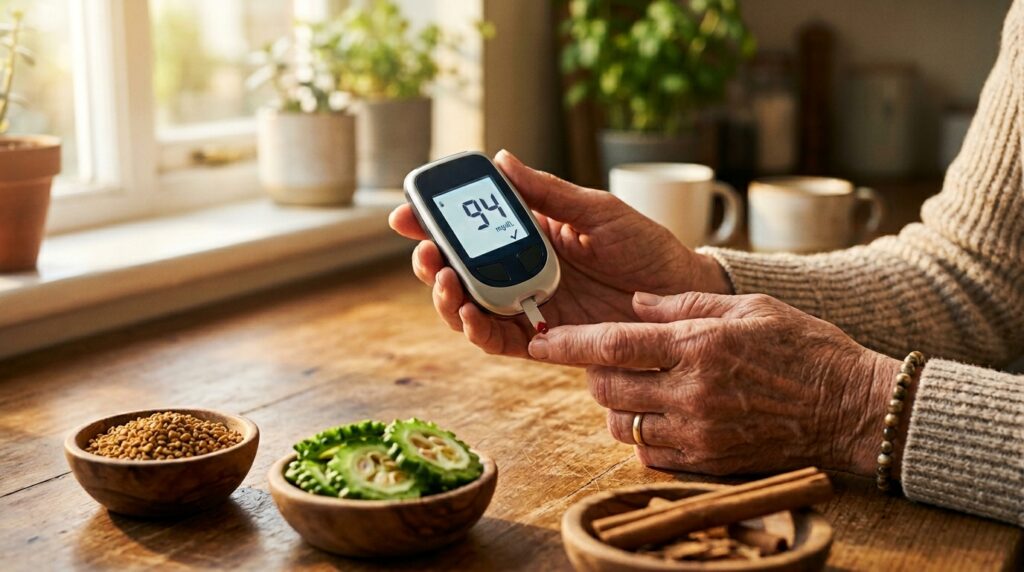
My mom was 64, otherwise pretty healthy, and deeply reluctant to go straight to medication if there were meaningful lifestyle alternatives worth trying first. Her doctor was supportive of a supervised natural approach alongside her standard care, which gave us the green light to explore. I want to be upfront — we never replaced her medical treatment. But we did supplement it thoughtfully, and the results have been genuinely encouraging.
My Mom’s Diagnosis and How I Found Ayurveda
The word “Ayurveda” felt intimidating at first — almost mystical. But the more I read, the more I realized it’s an incredibly detailed, 5,000-year-old system of medicine from India that treats the whole body, not just isolated symptoms. When it came to blood sugar specifically, I was surprised to find there was actually a growing body of clinical research behind many of the herbs and practices Ayurveda recommends. That wasn’t what I expected at all.
What also struck me was how many of these herbs overlap with what Western researchers are now calling promising candidates for metabolic health. I’d already been reading about herbs that lower blood sugar, and seeing those same plants appear in Ayurvedic texts centuries before modern pharmacology was a real lightbulb moment for me.
⚡ Balance Your Blood Sugar with Sugar Defender
Thousands of people are combining these habits with Sugar Defender — a plant-based liquid formula designed to support healthy blood sugar levels and natural energy, without stimulants.
Check Availability Inside the US →What Is Ayurvedic Medicine for Diabetes Type 2?
Ayurvedic medicine for diabetes type 2 doesn’t treat blood sugar as a single isolated problem. In Ayurveda, the condition most closely associated with diabetes is called “Madhumeha,” which roughly translates to “honey urine” — a description that actually aligns with the classical symptom of glucose appearing in urine. Ayurvedic practitioners look at digestive health, metabolic fire (called “Agni”), and lifestyle factors all together, rather than just one number on a lab report.
This whole-body philosophy is part of what drew me in. It considers diet, sleep, stress, movement, and herbal support as interconnected levers. And from what I’ve read in both traditional texts and modern research, this integrated approach lines up surprisingly well with what functional medicine doctors are now recommending for metabolic conditions.
The Key Ayurvedic Herbs Backed by Science
This is the part I get most excited about — because the science here is genuinely interesting. Not all Ayurvedic herbs have strong clinical backing, but several do have published human trials worth knowing about. Here are the ones I researched most deeply for my mom:
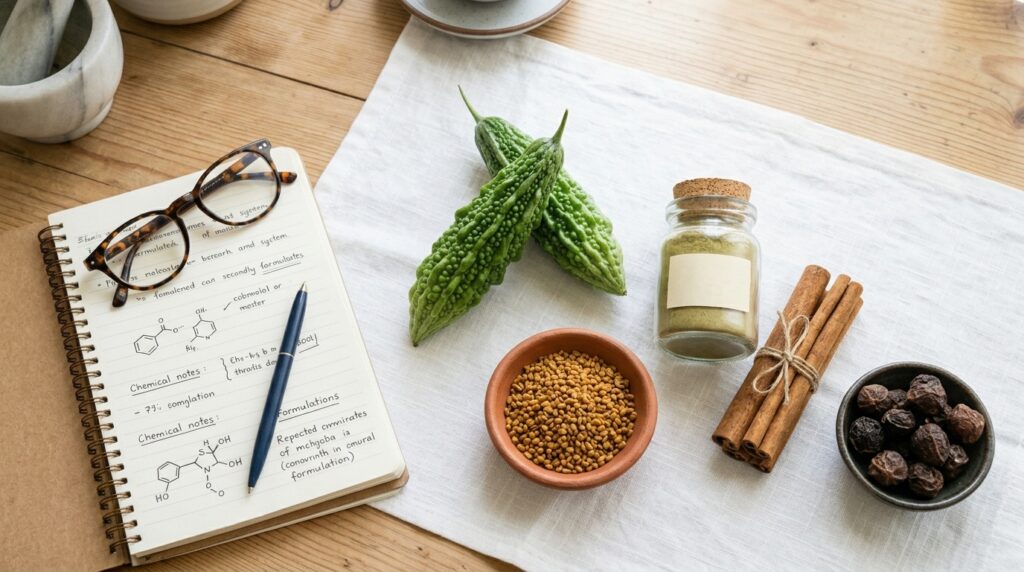
- Bitter Melon (Karela): One of the most studied Ayurvedic plants for blood sugar. Some research suggests it may help improve glucose uptake in cells and has compounds that mimic insulin activity. Results in clinical trials have been mixed, but enough positive signals exist to make it worth knowing about.
- Berberine-containing plants (like Daruharidra): Berberine has been so heavily studied that some researchers compare its effects to metformin. Multiple randomized controlled trials show it may help reduce fasting blood glucose and HbA1c. This one genuinely impressed me.
- Fenugreek (Methi): A staple in Indian cooking and Ayurvedic medicine. Its seeds are high in soluble fiber, which slows glucose absorption. Several small studies show meaningful reductions in post-meal blood sugar spikes.
- Gymnema Sylvestre: Called “sugar destroyer” in Sanskrit, and I found that name fascinating. It may reduce sugar absorption in the gut and support pancreatic function. Some studies show it can help lower HbA1c over time.
- Turmeric (Curcumin): Anti-inflammatory powerhouse. Chronic inflammation is closely tied to insulin resistance, and curcumin research — though often limited by bioavailability issues — is genuinely promising for metabolic health.
If you’re curious about building a broader daily routine around these kinds of plants, I found a really helpful guide on Ayurvedic herbs for daily wellness that goes beyond just blood sugar into energy and mental clarity too — which honestly matters when you’re managing a chronic condition every single day.
How to Use Ayurvedic Medicine for Diabetes Naturally at Home
One thing I appreciated about the Ayurvedic approach is that so much of it starts in the kitchen. Using ayurvedic medicine for diabetes naturally doesn’t necessarily mean buying expensive supplements right away — a lot of it begins with food. Here’s what we actually implemented at home:
- Adding fenugreek seeds to morning smoothies or soaking them overnight and drinking the water first thing — this became a daily ritual for my mom.
- Cooking regularly with turmeric, ginger, and cinnamon, which have both culinary and metabolic benefits.
- Incorporating bitter melon into stir-fries a few times a week — yes, it’s an acquired taste, but my mom actually grew to like it.
- Using Gymnema Sylvestre as a tea between meals, which anecdotally seemed to help reduce her sweet cravings.
- Following an Ayurvedic meal rhythm — eating the largest meal at midday when digestive fire is strongest, and keeping dinner light and early.
Approaching ayurvedic medicine for diabetes naturally also meant looking at stress and sleep — two things that dramatically affect blood sugar but often get overlooked. Ayurveda has structured practices like Abhyanga (self-massage) and Pranayama (breathwork) that we explored for stress reduction, and I was surprised how much these seemed to help with my mom’s overall sense of wellbeing.

For those looking to go deeper on supplementation, understanding natural supplements for insulin sensitivity is a really smart next step — because insulin sensitivity is often the root of the problem with type 2 diabetes, not just blood sugar levels themselves.
What Science Says About Ayurvedic Medicine for Diabetes — And Where It Gets Complicated
I want to be real with you here, because I think honesty matters more than hype. The science on ayurvedic medicine for diabetes is genuinely promising in several areas, but it’s also incomplete. Most clinical trials are small, short in duration, or lack strong controls. The quality of herbal preparations varies enormously between products, and standardization is a real challenge in this field.
That said, researchers at institutions like the All India Institute of Medical Sciences and various US universities are increasingly publishing peer-reviewed work on these herbs. The NIH’s National Center for Complementary and Integrative Health has funded studies in this space. This isn’t fringe science anymore — it’s an emerging area of legitimate inquiry.
Using ayurvedic medicine for diabetes naturally also comes with important safety considerations. Some herbs interact with diabetes medications — Gymnema and berberine, for example, can enhance the glucose-lowering effect of metformin or insulin, potentially causing hypoglycemia if not monitored. This is exactly why my mom’s doctor stayed involved throughout the whole process. Please don’t skip that step.
Our Takeaway After Two Years
Two years in, my mom’s A1C has improved, her energy is better, and she feels more in control of her health than she did the day of her diagnosis. Is that entirely because of Ayurveda? No — she also changed her diet, walks every day, and works closely with her doctor. But I genuinely believe the Ayurvedic practices and herbs we added have been a meaningful piece of that puzzle.
Using ayurvedic medicine for diabetes naturally isn’t a replacement for medical care — I want to say that clearly. But as a complement to it, with good information and medical supervision, it opened up a whole toolkit we hadn’t considered before. If you’re in a similar place — researching for yourself or someone you love — I hope this gives you a solid, grounded starting point. Keep asking questions, keep reading the research, and always loop in your healthcare provider before making changes.
You deserve real information, not just hope. And from what I’ve seen with my own mom, sometimes the two aren’t as far apart as you’d think.
🩸 Support Healthy Blood Sugar with Sugar Defender
Sugar Defender combines 8 carefully selected plant-based ingredients to support glucose metabolism, reduce cravings, and boost energy naturally. FTC-compliant, made in a GMP-certified facility.
👉 Claim Your Supply With Free Shipping Today⚠️ Update: Due to high demand, stock is limited. Check availability now.
*Results may vary. Affiliate link.

About the Author — Sarah
I’m not a doctor or nutritionist — I’m a daughter who has been caring for my mother since her type 2 diabetes diagnosis. That journey pushed me to research natural alternatives and evidence-based lifestyle changes. Everything I share comes from that personal mission: to help my mom live better, with more energy and less dependence on medication. Always consult your healthcare provider before making any changes to your treatment plan.
⚕️ Medical Disclaimer: I am not a medical professional. This blog reflects my personal research caring for a family member with diabetes. For informational purposes only — not medical advice. Always consult a qualified healthcare provider.
📚 Scientific References
- Sridharan K, Mohan R, Ramaratnam S, Panneerselvam D. Ayurvedic treatments for diabetes mellitus. Cochrane Database of Systematic Reviews. 2011;(12):CD008288. PMID: 22161426.
- Yin J, Xing H, Ye J. Efficacy of berberine in patients with type 2 diabetes mellitus. Metabolism. 2008;57(5):712-717. PMID: 18442638.
- Leach MJ, Kumar S. The clinical efficacy of Gymnema sylvestre supplementation in type 2 diabetes: a systematic review. Complementary Therapies in Clinical Practice. 2012;18(4):220-225. PMID: 23059441.
- Neelakantan N, Narayanan M, de Souza RJ, van Dam RM. Effect of fenugreek (Trigonella foenum-graecum L.) intake on glycemia: a meta-analysis of clinical trials. Nutrition Journal. 2014;13:7. PMID: 24438170.