
Top 6 Herbal Supplements for Blood Pressure Support You Should Know About
📋 Table of Contents
Why I Started Looking Into Herbal Supplements
A few years ago, my mom’s doctor casually mentioned that her blood pressure was “creeping up” alongside her type 2 diabetes. That one phrase sent me down a months-long research rabbit hole that completely changed how our family thinks about wellness. I started reading everything I could about herbal supplements for blood pressure — not to replace her doctor’s advice, but to understand what nature might offer alongside her existing care. What I found genuinely surprised me, and I’ve been eager to share it ever since.
I want to be upfront: I’m not a doctor or nutritionist. I’m just a daughter who loves her mom and took a deep dive into peer-reviewed studies, herbal medicine books, and conversations with integrative health communities online. Everything here comes from that personal research journey, and I always encourage anyone to loop in their healthcare provider before adding anything new.
What drew me in was discovering how many cultures around the world have relied on plant-based remedies for heart and circulatory health for centuries. Modern research is now starting to catch up, and some of the findings are genuinely exciting. If you’re curious about natural ways to lower blood pressure and want to explore the herbal side of things, keep reading — this one’s for you.
Exploring herbal supplements for blood pressure naturally became almost like a hobby for me. I’d spend weekend mornings with coffee and medical abstracts, cross-referencing traditional uses with emerging science. It felt empowering — like I was actively doing something helpful rather than just worrying.
Before I get into the list, one thing I noticed early on is that no single herb works in isolation. Cardiovascular health is deeply connected to diet, sleep, stress, and movement. Herbs seem to work best as one supportive layer in a broader lifestyle approach — and that framing helped me set realistic expectations from the start.
❤️ Support Your Heart Naturally with Cardio Slim Tea
More people are turning to Cardio Slim Tea as a gentle daily ritual — a carefully blended herbal tea formulated to support healthy blood pressure, cholesterol levels, and natural weight management.
Check Availability Inside the US →The Best Herbal Supplements for Blood Pressure Support
Top Herbal Supplements for Healthy Blood Pressure
These supplements are not a substitute for medical treatment. Consult your doctor before use.
📊 naturalbloodsugartips.com
After months of reading, these are the six herbs that kept appearing in credible sources and showed the most consistent evidence for cardiovascular and blood pressure support. I was genuinely surprised by how much variety there is — some of these I’d never even heard of before starting this journey.
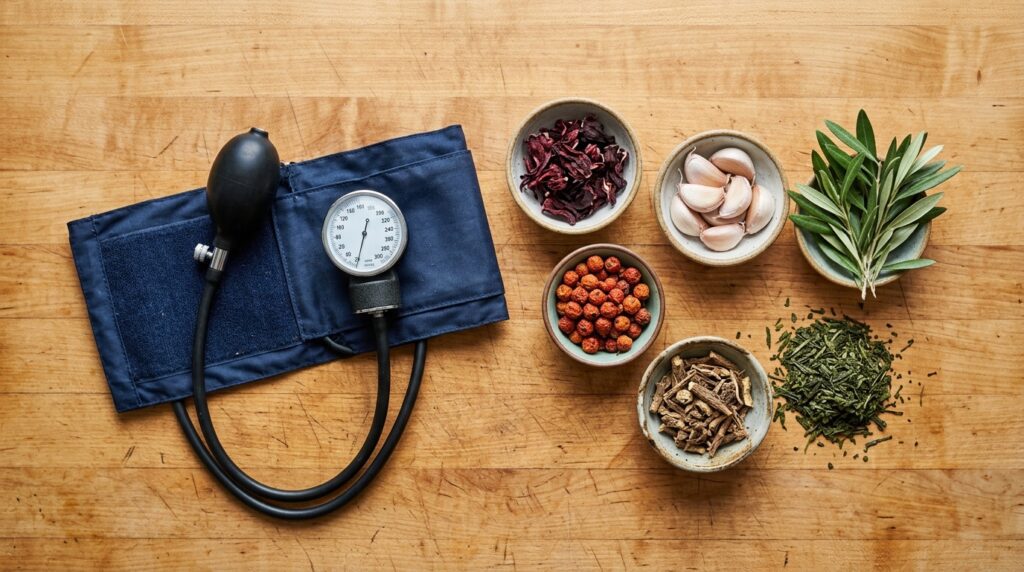
- Hibiscus (Hibiscus sabdariffa): This was one of the first herbs I came across, and the research on it is probably the most robust of anything on this list. Multiple studies have looked at hibiscus tea and its potential to support healthy systolic and diastolic numbers. It’s rich in anthocyanins — those deep red pigments that act as antioxidants — and has been used traditionally in West Africa and Latin America for heart health. We actually swapped out Mom’s afternoon black tea for hibiscus, and she loves the tart flavor.
- Garlic (Allium sativum): I know, I know — garlic is so ordinary it almost feels too simple. But the evidence behind aged garlic extract, in particular, is surprisingly impressive. Researchers believe compounds like allicin may support relaxation of blood vessels and healthy circulation. Aged garlic extract supplements are a good option for people who don’t want the breath side effects of raw garlic.
- Olive Leaf Extract: This one was a discovery that made me sit up straight. The Mediterranean diet connection to heart health is well-established, and it turns out olive leaves contain oleuropein — a polyphenol that has been studied for its potential to support blood pressure levels. It was one of the herbal remedies for blood health I hadn’t expected to find so compelling.
- Hawthorn (Crataegus monogyna): Hawthorn berries have been used in European folk medicine for heart and circulatory support for hundreds of years. Modern research has begun examining how hawthorn flavonoids might help support healthy vascular tone. I found it fascinating that something so old-world has this much scientific attention today.
- Berberine: Technically derived from several plants including goldenseal and barberry, berberine has become one of the most researched plant compounds for metabolic and cardiovascular health. Because Mom also manages blood sugar, I was especially intrigued to find it appearing in research related to both areas simultaneously.
- Ginger (Zingiber officinale): Ginger is another herb that felt almost too familiar to take seriously — until I actually looked at the research. Beyond its anti-inflammatory properties, some studies suggest ginger may support healthy circulation and vascular function. It’s easy to incorporate into daily life through teas, cooking, or supplements, which made it a natural fit for us.
How to Use These Herbs Safely and Effectively
One of the most important things I learned is that using herbal supplements for blood pressure naturally doesn’t mean using them carelessly. Some herbs can interact with medications — and for someone already managing a chronic condition, that matters a lot. Here are the practical principles that guide our approach:
- Start one at a time. When Mom and I decided to try hibiscus first, it was deliberately strategic. If anything changed — good or bad — we’d know what to attribute it to. Layering multiple new supplements at once makes it nearly impossible to understand what’s actually doing what.
- Choose quality products. The supplement industry in the US is loosely regulated compared to pharmaceuticals, so third-party testing matters. We look for products with USP, NSF, or ConsumerLab verification when available.
- Keep your doctor in the loop. This is non-negotiable for us. Mom’s doctor knows everything she’s taking, and we share updates at every appointment. Some herbs, like berberine, can genuinely affect blood sugar and blood pressure readings, so her doctor needs that context.
- Be patient and consistent. Herbal approaches tend to work gradually. We gave each supplement at least 6–8 weeks before evaluating whether it seemed to be making a difference for her overall wellness routine.
Natural Herbal Supplements for Blood Pressure — What the Research Suggests
I want to be honest about what the research actually says, because I think it’s important not to oversell this. Most studies on these herbs are promising but still limited — many involve small sample sizes, short durations, or are conducted in populations outside the US. That said, the consistency of findings across independent studies for herbs like hibiscus and garlic is genuinely encouraging.
What stood out to me most was how these plants often work through multiple pathways at once — antioxidant activity, anti-inflammatory effects, vasodilation support — rather than a single mechanism. That’s actually quite different from how most pharmaceutical interventions work, and it might explain why they seem to complement overall wellness rather than just targeting one number. For anyone exploring natural supplements for cardiovascular support, this multi-pathway quality is worth understanding.
I also found it meaningful that many of these herbs have been used safely for generations across diverse cultures. That long history of traditional use doesn’t replace clinical evidence, but it does add context that I personally find reassuring when evaluating something new for my mom’s routine. Using herbal supplements for blood pressure naturally, with informed awareness, feels like a responsible middle ground between doing nothing and making major unguided changes.
Building a Sustainable Routine Around These Herbs
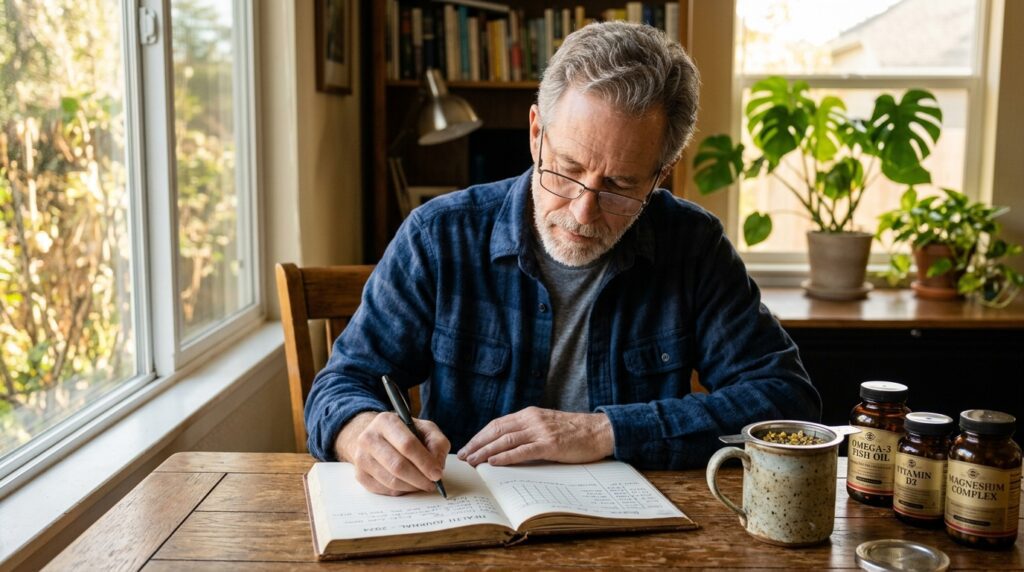
The biggest shift in our thinking was moving away from the idea of a “magic bullet” and toward building a layered, consistent routine. Using herbal supplements for blood pressure naturally works best when it’s part of a broader picture that includes good sleep, stress management, regular movement, and a whole-food diet. The herbs feel like they amplify the lifestyle work rather than replace it.
For Mom, a typical day now might include hibiscus tea in the afternoon, a garlic supplement with dinner, and hawthorn capsules that her integrative-minded physician helped her choose. It sounds like a lot written out, but woven into her daily routine it feels completely natural — and she genuinely enjoys the ritual of it. I think that’s part of why it’s stuck: it doesn’t feel like medicine, it feels like self-care.
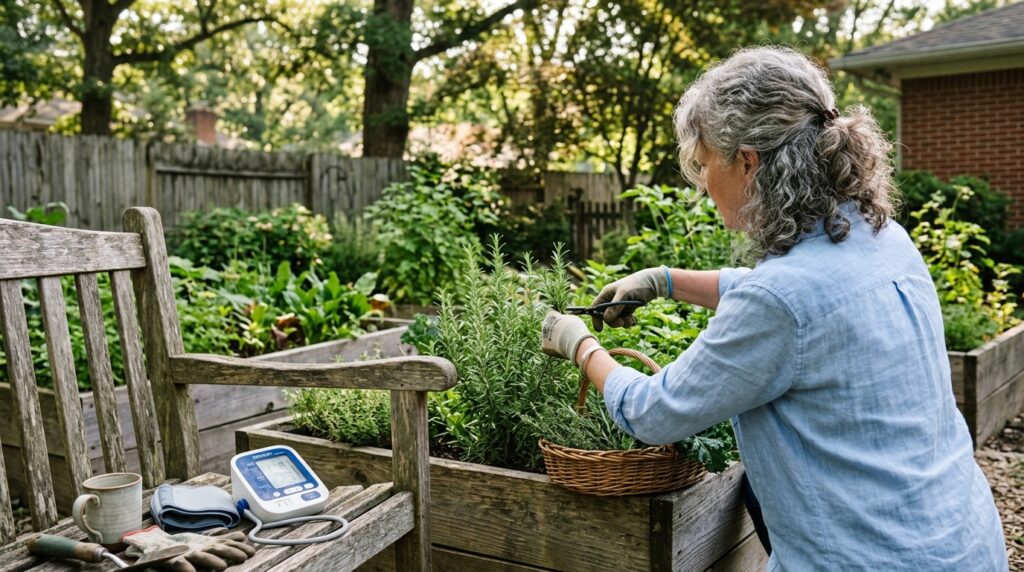
If you’re just starting to explore this space, I’d suggest beginning with hibiscus tea simply because it’s accessible, enjoyable, well-researched, and easy to monitor. From there, let your curiosity and your healthcare provider’s guidance lead you. Every person’s body is different, and what’s worked for our family may need to be adapted for yours. But I genuinely hope this gives you a helpful starting point — the way I wish something like this had found me a few years ago when I was first overwhelmed and searching for answers.
Understanding how to incorporate herbal supplements for blood pressure support into daily life has been one of the most rewarding parts of this caregiving journey for me. It turned anxiety into action, and worry into knowledge. Whatever your situation, I hope it does the same for you.
🍵 A Daily Tea Ritual for Your Heart & Waistline
Cardio Slim Tea combines traditional heart-supporting herbs in a convenient daily tea format — no pills, no harsh chemicals. Just a warm, calming ritual that works with your body’s natural processes.
👉 Claim Your Supply With Free Shipping Today⚠️ Update: Due to high demand, stock is limited. Check availability now.
*Results may vary. Affiliate link.

About the Author — Sarah
I’m not a doctor or nutritionist — I’m a daughter who has been caring for my mother since her type 2 diabetes diagnosis. That journey pushed me to research natural alternatives and evidence-based lifestyle changes. Everything I share comes from that personal mission: to help my mom live better, with more energy and less dependence on medication. Always consult your healthcare provider before making any changes to your treatment plan.
⚕️ Medical Disclaimer: I am not a medical professional. This blog reflects my personal research caring for a family member with diabetes. For informational purposes only — not medical advice. Always consult a qualified healthcare provider.
📚 Scientific References
- Serban C, Sahebkar A, Ursoniu S, Andrica F, Banach M. Effect of sour tea (Hibiscus sabdariffa L.) on arterial hypertension: a systematic review and meta-analysis of randomized controlled trials. Journal of Hypertension. 2015;33(6):1119-1127. PMID: 25875025.
- Ried K, Travica N, Sali A. The effect of aged garlic extract on blood pressure and other cardiovascular risk factors in uncontrolled hypertensives: the AGE at Heart trial. Integrated Blood Pressure Control. 2016;9:9-21. PMID: 26869811.
- Susalit E, Agus N, Effendi I, et al. Olive (Olea europaea) leaf extract effective in patients with stage-1 hypertension: comparison with Captopril. Phytomedicine. 2011;18(4):251-258. PMID: 21036583.
- Thandapilly SJ, Wojciechowski P, Behbahani J, et al. Resveratrol prevents the rise in systolic and diastolic blood pressure in spontaneously hypertensive rats. Canadian Journal of Physiology and Pharmacology. 2010;88(12):1145-1151. PMID: 21186380.