
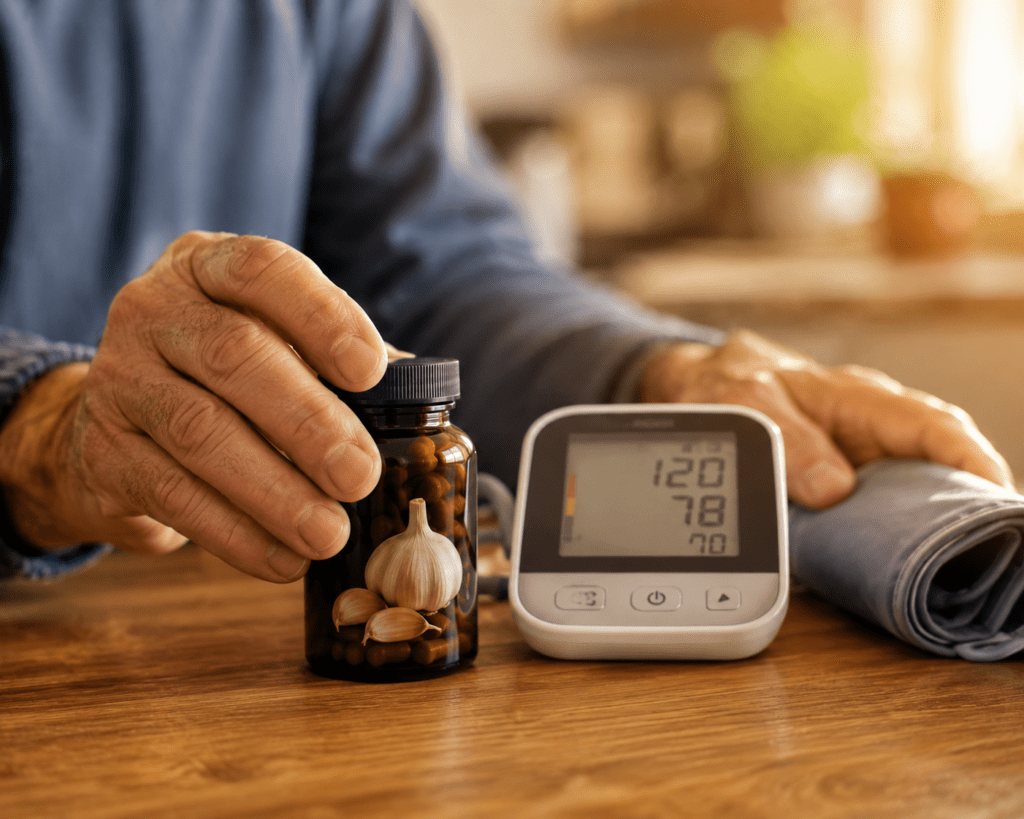
Aged Garlic Extract Blood Pressure Dosage: The Complete Guide to What Actually Works
⚡ Quick Answer
The most effective aged garlic extract blood pressure dosage used in clinical research is 600–1200 mg per day, typically divided into two doses taken with meals. Studies consistently show meaningful reductions in both systolic and diastolic blood pressure within 8–12 weeks at this range. Look for a standardized extract containing at least 1.2 mg of S-allylcysteine (SAC) per dose for reliable results.
📋 Table of Contents
- What the Research Says About Aged Garlic Extract Blood Pressure Dosage
- The Science Behind Why It Works: The Mechanism That Changed My Thinking
- How to Take Aged Garlic Extract for Blood Pressure: A Practical Protocol
- Aged Garlic Extract vs. Raw Garlic: Why the Form Matters More Than You Think
- Common Mistakes That Undermine Your Results
- What to Look for When Choosing a Supplement
- Conclusion: A Real Path Forward
- ❓ Frequently Asked Questions
There’s a conversation I keep returning to — the moment I sat across from a nutritionist after weeks of watching someone I love struggle with numbers that just wouldn’t budge. She said something that reframed everything for me: we had been addressing the symptom, not the system behind it. That sent me deep into research I haven’t stopped doing since. Somewhere along that path, I found aged garlic extract — and more specifically, I found that most people using it are getting the dosage completely wrong. If you’ve been dealing with persistently elevated blood pressure and wondering whether a natural approach can actually move the needle, what follows is everything I wish had been laid out clearly from the beginning.
What the Research Says About Aged Garlic Extract Blood Pressure Dosage
Let’s start with the number most people come here looking for, because vague answers are frustrating. The aged garlic extract blood pressure dosage that appears most consistently across well-designed clinical trials falls between 600 mg and 1,200 mg per day. That range isn’t arbitrary — it reflects the threshold at which the active compounds in aged garlic extract begin producing measurable vascular effects.
What the research consistently shows is that at the lower end of that range — around 600 mg daily — people with elevated systolic pressure (the top number) tend to see reductions averaging 5 to 10 mmHg within about 12 weeks. That might not sound dramatic, but in cardiovascular medicine, a sustained 5 mmHg reduction in systolic blood pressure is considered clinically meaningful. It corresponds to a measurable reduction in cardiovascular event risk. At 1,200 mg, some trial participants showed reductions closer to 11–12 mmHg systolic, which puts it in the same ballpark as some first-line pharmaceutical interventions — without the side effect profile.
Here’s something that surprised me early on: taking more than 1,200 mg doesn’t appear to produce proportionally greater benefits. The dose-response curve flattens. The sweet spot for most people is right in that 600–1,200 mg window, and consistency matters far more than pushing toward the high end. For more context on how garlic compounds interact with the cardiovascular system broadly, this overview of garlic heart health blood pressure research is worth your time.
But knowing the number is only half the picture. Understanding why it works — the actual mechanism — is what makes you confident enough to stick with it long enough to see results. And that’s where things get genuinely interesting.
The Science Behind Why It Works: The Mechanism That Changed My Thinking
Most people assume garlic lowers blood pressure the same way a relaxant might — that it just calms something down. The reality is more precise and more fascinating than that. The primary active compound in aged garlic extract — S-allylcysteine, or SAC — works through several simultaneous pathways, and understanding even one of them changes how you think about supplementation.
The most significant mechanism involves nitric oxide. Your blood vessels are lined with a thin layer of cells called the endothelium, and those cells produce nitric oxide as a signaling molecule that tells the surrounding muscle tissue to relax and dilate. When endothelial function is impaired — which happens with age, inflammation, and oxidative stress — this signaling breaks down. Blood vessels become less responsive, peripheral resistance increases, and your heart has to work harder to push blood through. That’s elevated blood pressure at its most mechanical level.
SAC and other sulfur compounds in aged garlic extract directly stimulate nitric oxide synthase, the enzyme that produces nitric oxide. Simultaneously, they reduce oxidative stress in the vessel wall, which would otherwise degrade nitric oxide before it can do its job. The mechanism here is a two-front intervention — produce more, protect more. This is why clinical evidence supports real, sustained reductions rather than just transient changes.
There’s also evidence that aged garlic extract modestly inhibits angiotensin-converting enzyme (ACE) — the same pathway targeted by a major class of blood pressure medications. And it appears to reduce platelet aggregation, which lowers the overall mechanical load on vessel walls over time. None of these effects are dramatic in isolation, but together they compound in a way that explains why the research numbers are as strong as they are.
If you’re exploring a broader natural approach to vascular health, pairing this knowledge with an understanding of natural ways lower systolic pressure can help you build a more comprehensive protocol rather than relying on any single intervention.
After months of research into this exact mechanism, I kept coming back to one formula that actually addressed the root issue rather than just masking symptoms. It was developed with a clinical approach — the kind that makes sense when you understand the science behind what we just covered. That formula is Liv Pure.
Research shows that a sluggish liver can block fat burning — and Liv Pure was designed specifically to address this. Its two-part formula supports liver detoxification while activating your body’s natural fat-burning complex.
See How Liv Pure Works →*Individual results may vary. Always consult your healthcare provider.

How to Take Aged Garlic Extract for Blood Pressure: A Practical Protocol
This is where most guides go quiet right when you need them most. Knowing a dose range is useful; knowing how to actually structure your daily use is what produces results. Here’s a clear, practical framework based on what the clinical evidence supports:
- Starting dose: Begin at 600 mg daily for the first two weeks. This gives your system time to adjust and lets you observe any early digestive response, which is usually mild and temporary.
- Therapeutic dose: Move to 1,200 mg daily from week three onward. Split this into two 600 mg doses — one with breakfast, one with your evening meal. Taking it with food improves tolerability and may modestly improve absorption.
- Duration before evaluation: Give it a minimum of 8 weeks before drawing conclusions. Blood pressure responds slowly to natural interventions — that’s not a weakness, it’s how sustained vascular change works. Check your readings at the same time each day (morning, before caffeine or activity) for consistency.
- Standardization check: Your supplement should specify SAC content. A meaningful dose delivers at least 1.2 mg of SAC per serving. If the label doesn’t mention SAC, that’s a red flag about quality control.
- If you’re on blood pressure medication: Talk to your doctor before adding any supplement. Aged garlic extract can have additive effects with antihypertensive drugs, which sounds good but requires monitoring to avoid readings going too low.
One detail worth emphasizing: the research that shows the strongest results uses aged garlic specifically — not garlic oil, not garlic powder, not raw garlic. The aging process is what drives the conversion of unstable allicin compounds into the stable, bioavailable SAC that produces these vascular effects. This distinction matters more than most people realize, and it leads directly to the comparison that trips people up most often.

Aged Garlic Extract vs. Raw Garlic: Why the Form Matters More Than You Think
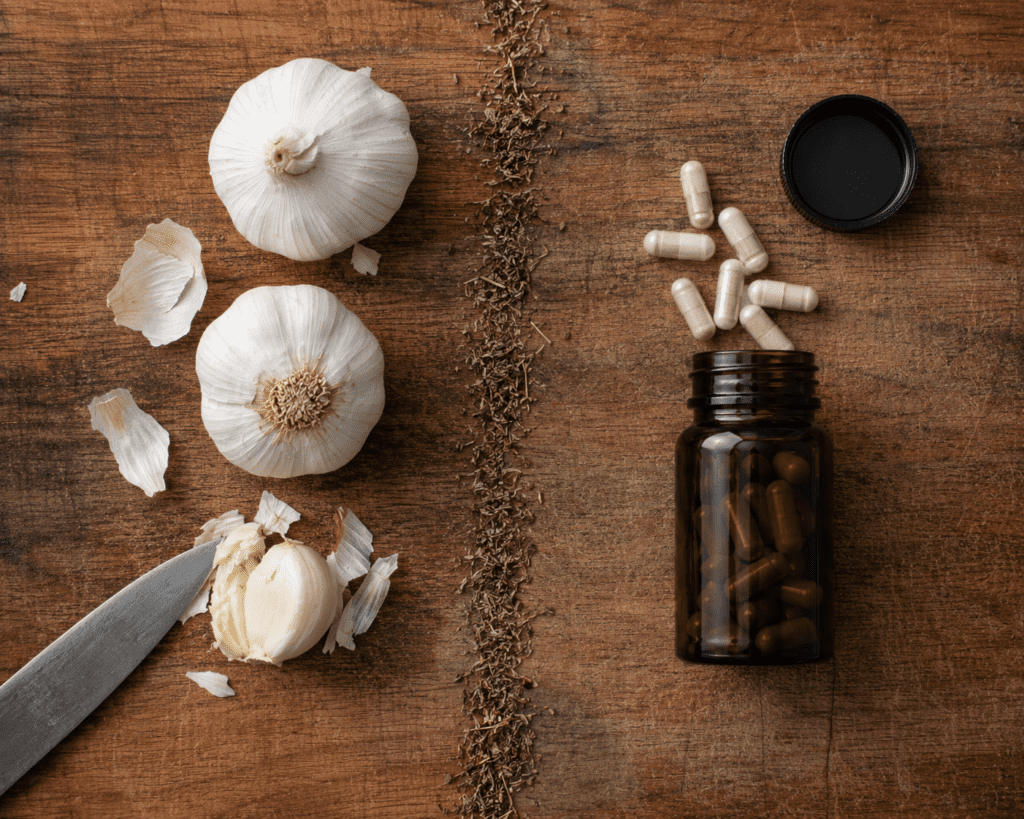
Here’s the myth worth busting: eating more garlic in your food is not a substitute for standardized aged garlic extract supplementation. I say this not to dismiss raw garlic — it has real benefits — but because the compounds responsible for meaningful blood pressure effects are not well preserved in culinary garlic. Raw garlic contains allicin, which sounds impressive but is highly unstable. It degrades rapidly with heat, oxygen exposure, and digestive acidity. By the time it reaches systemic circulation, a fraction of the original compound remains.
The aging process — typically 20 months of cold maceration — converts allicin and its relatives into stable water-soluble sulfur compounds, most importantly SAC. These survive digestion, reach the bloodstream reliably, and are the compounds researchers actually measure in efficacy studies. Garlic powder supplements occupy a middle ground: some retain more activity than culinary use, but standardization varies wildly between products.
For a broader look at how garlic-based and other herbal supplements healthy blood pressure research compares across categories, it’s worth looking beyond garlic alone — because no single supplement operates in isolation from your overall approach.
Common Mistakes That Undermine Your Results
If you’ve tried aged garlic extract before and didn’t see results, one of these is almost certainly why. The most common error is underdosing — taking 200 or 300 mg daily because a product markets itself as “a full dose” when it’s well below the clinical threshold. The second is quitting too early. Six weeks feels like a long time when you’re tracking numbers daily, but the vascular remodeling that produces lasting change happens slowly and isn’t fully reflected in readings at the four-week mark.
Third — and this one surprises people — is inconsistency. Taking your supplement on five days and skipping two produces meaningfully worse results than a true daily protocol. SAC has a half-life; consistent daily dosing maintains steady-state levels in the bloodstream. Gaps interrupt that. Set an alarm, tie it to a meal ritual, do whatever it takes to make it non-negotiable for 90 days before you evaluate.
Finally, some people inadvertently undermine their results by neglecting the lifestyle context. Aged garlic extract works best as part of a broader strategy — adequate sleep, sodium awareness, and stress management all interact with blood pressure in ways that can mask or amplify what any supplement does. What I found after integrating all of these pieces together was more impressive than any single intervention alone.
What to Look for When Choosing a Supplement
The supplement market for garlic products is crowded and inconsistently regulated, which means quality varies enormously. When evaluating a product, here’s what actually matters:
- SAC standardization: The label should specify S-allylcysteine content per dose. This is the most reliable marker of a quality aged extract.
- Third-party testing: Look for USP, NSF International, or ConsumerLab verification. These indicate independent verification of label accuracy and purity.
- Odor-controlled formulation: True aged garlic extract is naturally low-odor due to the aging process. If a product is heavily coated to mask smell, it may be using a less stable form.
- Capsule vs. tablet: No strong evidence favors one over the other, but capsules tend to dissolve more consistently, which may marginally affect absorption reliability.
- Manufacturer transparency: A company that publishes its sourcing, aging duration, and testing methodology is one that stands behind its product. Vague labeling is a warning sign.
Conclusion: A Real Path Forward
If you’ve read this far, you already know more about aged garlic extract blood pressure dosage than the majority of people who are taking it right now. You know the therapeutic window (600–1,200 mg daily), the mechanism (nitric oxide upregulation, ACE inhibition, reduced oxidative stress), the timeline required (8–12 weeks minimum), and what to look for on a label. That’s not a small thing.
What changed my perspective entirely — and what I hope changes yours — is the shift from treating elevated blood pressure as a number to manage toward treating it as a signal from a system worth understanding. Aged garlic extract, used correctly and consistently, addresses real biological mechanisms. It’s not magic, but it’s also not guesswork. The research is there. The mechanism is understood. What’s required from you is the patience to follow through.
Start with a high-quality, SAC-standardized product. Give it 90 days of honest, consistent use. Track your readings carefully and note patterns rather than day-to-day fluctuations. And work with your healthcare provider, especially if you’re currently on medication. Natural doesn’t mean unsupervised — it means informed.
❓ Frequently Asked Questions
How long does aged garlic extract take to lower blood pressure?
Most clinical studies report measurable reductions in systolic and diastolic blood pressure after 8–12 weeks of consistent daily use. Some participants in shorter trials showed modest improvements within 4 weeks, but 12 weeks is the benchmark used in the strongest research.
Can you take aged garlic extract with blood pressure medication?
Aged garlic extract can have additive effects when combined with antihypertensive medications, which may cause blood pressure to drop lower than intended. Anyone already on prescribed medication should monitor their readings more frequently when adding it.
What is S-allylcysteine and why does it matter for blood pressure?
S-allylcysteine (SAC) is the primary bioactive compound in aged garlic extract responsible for its cardiovascular benefits, including vasodilation and reduced arterial stiffness. Standardized supplements listing at least 1.2 mg of SAC per dose are considered more reliable than non-standardized products.
Is 600 mg or 1200 mg of aged garlic extract better for high blood pressure?
Both doses have shown statistically significant results in trials, but 1200 mg daily tends to produce slightly larger reductions, particularly in systolic pressure among people with hypertension. Starting at 600 mg and increasing after 4 weeks is a common approach used in research protocols.
Does aged garlic extract work differently than raw garlic for blood pressure?
Yes — the aging process converts unstable sulfur compounds into stable ones like SAC, which are better absorbed and have stronger, more consistent cardiovascular effects than raw garlic. Raw garlic’s active compound allicin degrades quickly and is poorly standardized, making dosing for blood pressure unreliable.
📊 naturalbloodsugartips.com
My honest recommendation after everything I have researched
🔥 Discover Why Your Liver May Be Blocking Weight Loss
Liv Pure combines a Liver Purification Complex and a Liver Fat-Burning Complex with clinically studied Mediterranean plant compounds. Made in a GMP-certified, FDA-registered facility in the USA.
👉 Yes, I Want to Try Liv Pure✓ Official website | ✓ 60-day money-back guarantee | ✓ Free shipping
⚠️ Due to high demand, stock is limited. Check availability before it sells out.
*Results may vary. This is an affiliate link — I only recommend what I have researched for my own family.

About the Author — Sarah
I am not a doctor or nutritionist — I am a daughter who has been caring for my mother since her type 2 diabetes diagnosis. That journey pushed me to research natural alternatives and evidence-based lifestyle changes. Everything I share comes from that personal mission: to help my mom live better, with more energy and less dependence on medication. Always consult your healthcare provider before making any changes to your treatment plan.
⚕️ Medical Disclaimer: I am not a medical professional. This blog reflects my personal research caring for a family member with diabetes. For informational purposes only — not medical advice. Always consult a qualified healthcare provider.
📚 Scientific References
- Ried K, Travica N, Sali A. The effect of Kyolic aged garlic extract on gut microbiota, inflammation, and cardiovascular markers in hypertensives: The GarGIC Trial. Front Nutr. 2018;5:122. PMID: 30619859.
- Ried K, Frank OR, Stocks NP. Aged garlic extract lowers blood pressure in patients with treated but uncontrolled hypertension: a randomised controlled trial. Maturitas. 2010;67(2):144–150. PMID: 20594781.
- Ried K, Travica N, Sali A. The effect of aged garlic extract on blood pressure and other cardiovascular risk factors in uncontrolled hypertensives: the AGE at Heart trial. Integr Blood Press Control. 2016;9:9–21. PMID: 26869828.
- Varshney R, Budoff MJ. Garlic and heart disease. J Nutr. 2016;146(2):416S–421S. PMID: 26764327.