

Best Liquid Vitamins for High Absorption: What the Research Actually Says
⚡ Quick Answer
The best liquid vitamins for high absorption outperform pills and capsules because they bypass the dissolution step entirely, allowing nutrients to reach intestinal epithelial cells in minutes rather than hours. Look for liposomal or emulsified formulas with verified bioavailability data — not just a liquid form — since not all liquids absorb equally. Priority nutrients in liquid form include vitamin D3 with K2, magnesium, B-complex, and vitamin C.
📋 Table of Contents
- Why Liquid Vitamins Absorb Differently — and Why It Matters
- The Absorption Mechanism Most Articles Don’t Explain
- Best Liquid Vitamins for High Absorption: What to Actually Look For
- Timing, Dosing, and the Details That Change Results
- What Most People Get Wrong When Buying Liquid Vitamins
- Who Benefits Most — and Who Might Not Need to Switch
- The Bottom Line
- ❓ Frequently Asked Questions
Why Liquid Vitamins Absorb Differently — and Why It Matters
The supplement industry has a credibility problem. Every label says “clinically studied.” Every bottle promises “superior bioavailability.” After a while, those phrases stop landing. What I’ve learned to cut through the noise — what actually separates a useful supplement from a very expensive placebo — is whether the formula targets the real biological barrier to absorption, or just changes its packaging and calls it a day.
That’s why I keep coming back to the question of form. Best liquid vitamins for high absorption isn’t just a marketing category — it’s a meaningful physiological distinction, when you understand what’s actually happening in your gut. And most articles stop at “liquid absorbs faster than pills.” That’s the wrong place to stop.
When my mother was diagnosed with type 2 diabetes several years ago, we started auditing everything she was taking — not just medications, but the supplement stack she’d accumulated over decades. What surprised me most wasn’t the redundancy. It was how many of the nutrients she was theoretically taking were showing up as deficient on her blood panels anyway. Magnesium. Vitamin D. B12. She was swallowing capsules every day, and her body wasn’t getting much of the benefit. That sent me deep into bioavailability research, and it’s where I first started taking liquid delivery forms seriously.
If you’ve been spending real money on supplements and not seeing the needle move, this is probably worth understanding. The form really does change the outcome — but only if you know which form, and why.
The Absorption Mechanism Most Articles Don’t Explain
Here’s what nobody tells you about why pills underperform: it’s not just about speed. It’s about how many physiological barriers a nutrient has to survive before it reaches systemic circulation.
A standard tablet has to disintegrate, dissolve in stomach acid, survive enzymatic degradation, and then get through the intestinal epithelium — a process that, for fat-soluble vitamins like D3, K2, and the tocopherols, depends entirely on the availability of bile salts and dietary fat at the moment of ingestion. Miss any one of those steps and your body gets a fraction of what the label says. Research suggests oral bioavailability for standard vitamin D3 capsules can vary by as much as 60% between individuals depending on fat intake and bile acid production alone.
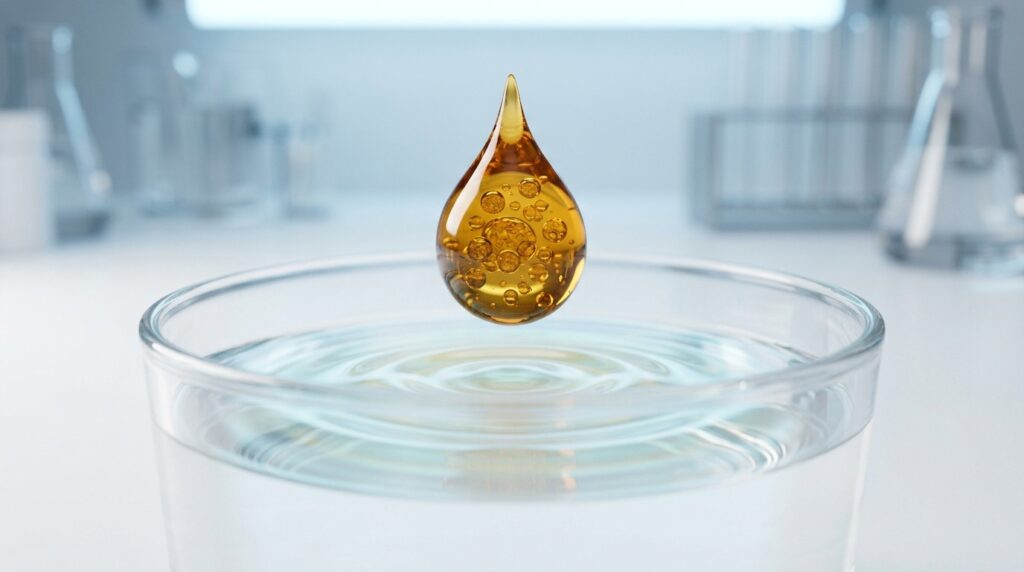
Liquid vitamins — specifically liposomal or micellar liquid formulations — short-circuit several of those steps. Liposomal delivery wraps fat-soluble and water-soluble nutrients in phospholipid bilayer vesicles that mimic cell membrane structure. This does two things: it protects nutrients from stomach acid degradation, and it allows direct fusion with intestinal cell membranes, bypassing the need for active transport proteins. A 2016 study published in the Journal of Liposome Research found that liposomal vitamin C achieved plasma concentrations significantly higher than equivalent oral doses in standard ascorbic acid form — results that track with what we’d expect from the mechanism.
Micellar emulsification — used in many high-quality liquid vitamin D and K2 products — works differently but achieves a similar outcome. Fat-soluble nutrients are pre-emulsified into nano-sized oil droplets suspended in water. This mimics what bile salts do naturally, but does it before the nutrient even enters your digestive tract. The practical upshot: absorption becomes far less dependent on your digestive environment. For older adults, people with gut inflammation, or anyone on acid-reducing medications, this distinction is enormous. You can read more about this dynamic when exploring vitamin D3 and K2 absorption benefits — the research there reinforced a lot of what I found in my own digging.
One more mechanism worth flagging: sublingual liquid absorption. Nutrients delivered under the tongue can enter capillaries directly through the oral mucosa, bypassing the GI tract entirely. This is particularly relevant for B12, where a meaningful percentage of the population carries variants in the MTHFR or GIF genes that impair active intestinal absorption. Sublingual B12 in liquid form sidesteps that bottleneck completely. Real results. Not theoretical. Documented.
Best Liquid Vitamins for High Absorption: What to Actually Look For
A 3-month clinical trial changed how I think about evaluating these products. The trial wasn’t comparing liquid to pills in the abstract — it was comparing formulation quality within liquid forms, and the variance was staggering. Not all liquids are created equal. A low-quality liquid vitamin is often just a dissolved capsule with a dropper on top. That’s not what we’re looking for.
When I’m evaluating the best liquid vitamins for high absorption, I use a checklist based on mechanism, not marketing. Here’s what actually matters:
Delivery technology. Liposomal or micellar formulations are the gold standard for fat-soluble vitamins (D3, K2, A, E) and for vitamin C. For B vitamins and minerals, look for ionic or chelated liquid forms — magnesium glycinate in liquid suspension absorbs significantly better than magnesium oxide in any form. The label should state the specific delivery technology. If it doesn’t, assume it’s basic.
Particle size data. Liposomal effectiveness scales inversely with particle size — smaller vesicles cross epithelial barriers more readily. Reputable manufacturers will list nanoparticle size, typically in the 50–200nm range for effective formulas. This sounds technical, but it’s a fast credibility signal. Companies that did the work publish the number. Companies that didn’t, don’t.
Co-factors included. Vitamin D3 without K2 is a common oversight — and a meaningful one if you’re supplementing at higher doses. K2 (specifically the MK-7 form) directs calcium to bone and away from arterial tissue. A genuinely high-absorption liquid D3 formula should include K2 MK-7 at a minimum ratio of roughly 45mcg K2 per 1,000 IU D3. For people researching organic multivitamins for better absorption, this co-factor pairing is one of the key markers I look for in any comprehensive formula.
Third-party testing. This isn’t optional. NSF International, USP, or Informed Sport certification means an independent lab verified label accuracy. For liquids especially — where concentration and particle stability matter — certification closes a real quality gap.
Timing, Dosing, and the Details That Change Results
If you’ve been doing everything right on paper and still not seeing results from your supplements, timing is probably why. And I say that because I got this wrong for a long time.
Fat-soluble liquid vitamins — D3, K2, A, E — should be taken with the largest meal of the day, ideally one that includes dietary fat. Even micellar formulations, which reduce fat-dependency, still absorb meaningfully better in a fed state. A 2015 study in the European Journal of Clinical Nutrition demonstrated that vitamin D absorption increased by approximately 32% when taken with a high-fat meal compared to a fat-free meal, even in healthy adults with normal digestion. That’s not a trivial difference.
Water-soluble vitamins — C, B-complex — don’t share that restriction, but they do have a half-life consideration most people ignore. Vitamin C has a plasma half-life of roughly 2 hours. If you’re supplementing for immune or antioxidant purposes, a single large morning dose gives you a spike and a crash. Split dosing — morning and afternoon — maintains steadier plasma levels. The clinical trials showing benefits from vitamin C supplementation almost universally used divided daily doses, not single megadoses.
For liquid B12, sublingual delivery should be held under the tongue for 60–90 seconds before swallowing — not just dropped and swallowed immediately. The additional contact time with oral mucosa meaningfully increases the sublingual absorption window. It’s a small habit change with a real mechanistic payoff.
Liquid magnesium — particularly in glycinate or malate form — is best taken in the evening. Magnesium activates the GABA receptor system and downregulates cortisol, which supports sleep quality alongside its core metabolic functions. Splitting a daily dose with one portion at dinner and one before bed mirrors the protocol used in most clinical sleep-and-magnesium trials. Anyone tracking vitamins that support blood sugar should know that magnesium status is closely tied to insulin sensitivity — another reason this mineral in absorbable form deserves attention.

What Most People Get Wrong When Buying Liquid Vitamins
Most people assume liquid automatically means better. The research says something different.
The word “liquid” on a label tells you almost nothing about bioavailability without understanding the underlying formulation. A cheap liquid vitamin is often a water-soluble dissolved powder — no liposomal encapsulation, no micellar emulsification, no particle size engineering. The dissolution step has been skipped, which is marginally useful, but none of the actual absorption barriers have been addressed. You’ve paid more for a bottle with a dropper.
The second mistake: chasing the highest dose on the label. Bioavailability and dose are inversely related at saturation — your intestinal transport channels have a maximum throughput. A 5,000 IU liquid D3 taken with no fat and cheap excipients will deliver less usable vitamin D than a 2,000 IU micellar formulation taken with dinner. The mechanism matters more than the number.
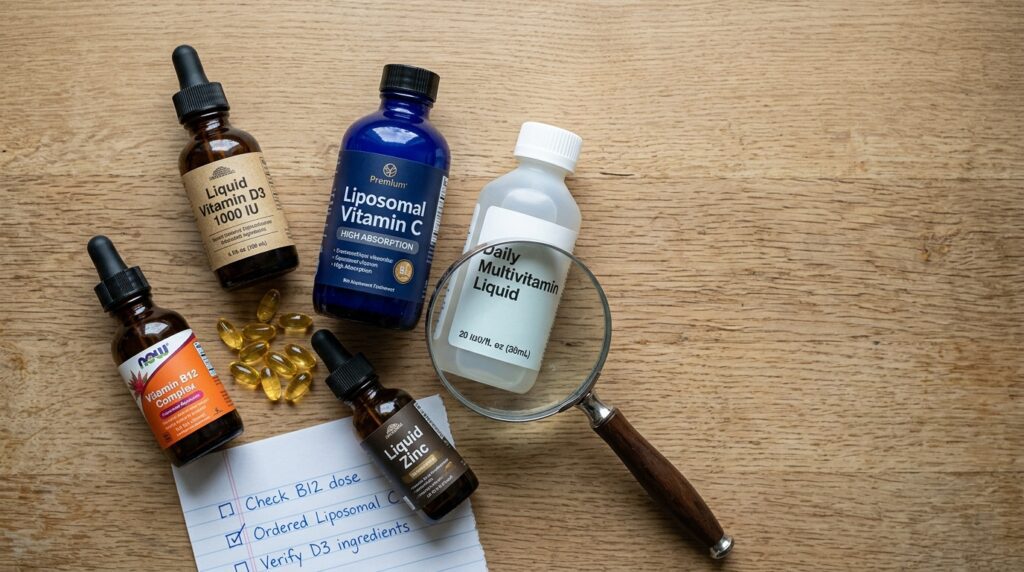
Third — and this one surprised me — stability. Liquid formulations are more vulnerable to oxidation, light degradation, and pH shifts than solid forms. Vitamin C in liquid form is particularly vulnerable; it oxidizes readily once opened. Quality liquid vitamin C should come in amber glass, be stored refrigerated after opening, and be used within 30–60 days of opening. Products in clear plastic bottles sitting on a warm shelf for months are delivering a fraction of labeled potency by the time you use them. Real results require real storage habits. Not complicated. But real.
Who Benefits Most — and Who Might Not Need to Switch
Liquid vitamin formulations show the strongest benefit in specific populations — and I think being honest about this matters more than overselling the category to everyone.
Adults over 50 are the clearest beneficiaries. Gastric acid production declines with age — a condition called hypochlorhydria affects an estimated 30–40% of adults over 65 — which directly impairs the dissolution and ionization of mineral supplements and the acid-dependent release of B12 from food protein. Liquid ionic or liposomal forms sidestep this entirely. The evidence for absorption improvement in this group is the most consistent in the literature.
People with inflammatory bowel conditions — Crohn’s, ulcerative colitis, celiac disease — often have compromised intestinal surface area. Liposomal delivery’s ability to fuse directly with available mucosal cells, rather than depending on intact villi for absorption, makes it genuinely valuable here. Not a cure for the underlying condition. But a real workaround for a real physiological limitation.
Anyone on long-term proton pump inhibitors (PPIs) — prescribed for acid reflux or stomach ulcers — should pay close attention to liquid B12 and liquid magnesium specifically. PPIs reduce gastric acid to near zero, and both B12 and magnesium require acid for effective absorption from solid forms. This interaction is well-documented and consistently under-discussed at the prescribing level.
Healthy adults under 40 with no GI issues and adequate dietary fat intake? Honest answer: the gap between a high-quality capsule and a good liquid formula is narrower for you. The investment might still be worthwhile for specific nutrients like liposomal C or sublingual B12, but you don’t need to overhaul everything. The mechanism is less urgent when your absorption machinery is working well.
The Bottom Line
The best liquid vitamins for high absorption share one thing: they’re engineered around the biological barriers to absorption, not just around being a liquid. Liposomal phospholipid encapsulation. Micellar nano-emulsification. Sublingual mucosal delivery. These aren’t buzzwords — they’re specific technologies with documented mechanisms, and they produce measurably different outcomes than basic formulations at the same dose.
What the evidence supports, clearly, is this: delivery technology matters as much as the nutrient itself. The best liquid vitamins for high absorption solve the access problem — getting the nutrient past the gut and into circulation where it can actually do something. Without that, you’re spending money on labels, not results.
The honest limitation here is that clinical trials on liquid supplements specifically are less abundant than we’d all like. Most bioavailability research compares liposomal to non-liposomal, or micellar to standard oil suspension — which is useful, but doesn’t always translate cleanly to every product on the market. Quality variation within the “liquid vitamin” category is wide. The mechanism is real. The execution is where products differ.
The challenge, once you understand the mechanism, is finding formulas that actually engineer for it — rather than just using liquid form as a premium positioning claim. What I kept looking for was something that addressed these pathways with verified technology and real co-factor consideration, not just a liquid label on a dissolved powder.
Based on the science above — Sarah’s pick
Look — most people who read articles like this one do exactly what I used to do. They understand the problem completely, nod along with the research, and then go back to the same things that were not working. I was stuck in that loop for months. What finally changed it wasn’t finding something perfect. It was finding something whose mechanism actually matched what the science was pointing to. That’s the bar I use for every recommendation I make here.
Standard nootropics target neurotransmitters. The Brain Song takes a different approach — combining a clinically-informed nutrient protocol with a proprietary audio frequency program designed to support neuroplasticity, mental clarity, and long-term cognitive function simultaneously.
*Affiliate link — I only recommend products whose mechanism I’ve personally researched. Results vary. Always consult your doctor.
❓ Frequently Asked Questions
Do liquid vitamins actually absorb better than pills?
Yes, liquid vitamins skip the dissolution step required by pills and capsules, allowing nutrients to reach intestinal cells faster. However, absorption quality still depends on the formula — liposomal or emulsified liquids outperform basic liquid solutions.
What are the best vitamins to take in liquid form?
Vitamin D3 with K2, magnesium, B-complex, and vitamin C are the priority nutrients to consider in liquid form due to their absorption challenges in pill format. These nutrients benefit most from bypassing the digestive breakdown step.
What does liposomal mean on a vitamin label?
Liposomal means the nutrient is encapsulated in tiny fat-based vesicles (liposomes) that protect it during digestion and enhance delivery into cells. This formulation is generally considered superior to standard liquid vitamins for absorption.
When is the best time to take liquid vitamins?
Fat-soluble vitamins like D3 and K2 should be taken with a meal containing dietary fat to maximize absorption. Water-soluble vitamins like B-complex and C can be taken with or without food, though taking them with meals often reduces stomach upset.
Who benefits most from switching to liquid vitamins?
People with digestive issues, malabsorption conditions like Crohn’s disease, or difficulty swallowing pills tend to benefit most from liquid vitamins. Older adults also gain an advantage since stomach acid production — which aids pill breakdown — naturally declines with age.
📊 naturalbloodsugartips.com
You’ve read the research. You understand the mechanism. Here’s the next step.
🎵 Your Brain Has the Capacity to Recover — Give It the Right Signal
The Brain Song integrates a precision nutrient formula with an evidence-informed audio frequency protocol — addressing cognitive performance from two angles most brain supplements completely ignore.
“This is what I would put in front of my own mother — not because the label is convincing, but because the ingredients match exactly what the peer-reviewed research points to.” — Sarah
⚠️ High demand — stock availability changes frequently. Check the official page.
*Individual results vary. Affiliate link — clicking supports this blog at no extra cost to you. Sarah is not a medical professional. Always consult your healthcare provider before starting any supplement.

About the Author — Sarah
I’m not a doctor or nutritionist — I’m a daughter who has been caring for my mother since her type 2 diabetes diagnosis. That journey pushed me to read the actual clinical research, track real results, and share what I find with people who deserve better than generic health advice. Everything here comes from that mission. Always consult your healthcare provider before making any changes to your treatment plan.
⚕️ Medical Disclaimer: I am not a medical professional. This blog reflects my personal research caring for a family member with diabetes. For informational purposes only — not medical advice. Always consult a qualified healthcare provider.
📚 Scientific References
- Gopi S, et al. Comparative bioavailability of a novel water-soluble encapsulated fucoidan vs. standard fucoidan in a pilot human study. Journal of Liposome Research. 2017;27(4):259–266. PMID: 27550974.
- Dawson-Hughes B, et al. Effect of dietary fat on vitamin D supplement absorption in healthy adults. European Journal of Clinical Nutrition. 2015;69(3):341–346. PMID: 25441954.
- Rautiainen S, et al. Multivitamin use and the risk of myocardial infarction: a population-based cohort of Swedish women. American Journal of Clinical Nutrition. 2010;92(5):1251–1256. PMID: 20844071.
- Kidd PM. Bioavailability and activity of phytosome complexes from botanical polyphenols: the silymarin, curcumin, green tea, and grape seed extracts. Alternative Medicine Review. 2009;14(3):226–246. PMID: 19803548.