
What Supplements Are Good for Prediabetes? 5 Best Natural Supplements for Prediabetes in 2026
⚡ Quick Answer
What supplements are good for prediabetes? The five with the strongest clinical evidence are berberine, magnesium, Ceylon cinnamon extract, alpha-lipoic acid (ALA), and chromium picolinate. As natural medicine for pre diabetes, these work best combined with a low-glycemic diet and regular movement — not as standalone treatments. Always loop in your doctor before starting any new supplement, especially if you’re already on medication.
📋 Table of Contents
- Why I Started Looking Into Natural Supplements for Prediabetes
- What Supplements Are Good for Prediabetes?
- The 5 Best Natural Supplements for Prediabetes Worth Knowing About
- Natural Medicine for Pre Diabetes: What the Research Says
- How to Use These Natural Supplements for Prediabetes Safely
- What Else Worked Alongside Supplements in Our Journey
- Final Thoughts on Choosing the Right Natural Supplements for Prediabetes
- ❓ Frequently Asked Questions
Why I Started Looking Into Natural Supplements for Prediabetes
Two years ago, my mom got a call from her doctor that stopped us both in our tracks. Her fasting blood sugar was sitting at 112 mg/dL — not diabetic, but firmly in prediabetes territory. The doctor mentioned lifestyle changes and said they’d recheck in six months. That was it. No roadmap, no specifics, just a quiet alarm going off in our heads. I went home that evening and started digging. I read study abstracts at midnight, joined online health communities, and started piecing together what natural supplements for prediabetes might genuinely help her numbers move in the right direction.
I want to be upfront — I’m not a doctor, a nutritionist, or any kind of medical professional. I’m just a daughter who loves her mom and spent a lot of time researching so she didn’t have to. What I’m sharing here is what I discovered through that research and what we’ve seen work for us over the past couple of years. Please always loop in your own healthcare provider before starting anything new.
If you’re in a similar spot — maybe you or someone you love just got that prediabetes diagnosis and you’re wondering where to even begin — I hope this article gives you something useful to bring to your next conversation with your doctor.
What Supplements Are Good for Prediabetes?
This is the question I kept typing into search engines at midnight after my mom’s diagnosis: what supplements are good for prediabetes? The answer I kept finding was frustratingly vague — either generic lists with no research context, or dense academic papers I could barely parse. So I want to give you the clear, honest version I wish I had found.
When evaluating what supplements are good for prediabetes, I looked for three things: clinical trials in humans (not just animal studies), measurable impact on fasting blood glucose or HbA1c, and a reasonable safety profile for long-term use. Not every supplement that shows up in wellness blogs meets those criteria. The five I landed on — berberine, magnesium, cinnamon, ALA, and chromium — each clear that bar.
5 Best Natural Supplements for Prediabetes
Consult your healthcare provider before starting any supplement regimen.
📊 naturalbloodsugartips.com
After months of reading clinical research, listening to functional medicine podcasts, and comparing notes with others managing blood sugar naturally, these five supplements kept showing up again and again. Here’s what I learned about each one — including why it caught my attention and what the research actually suggests.
The 5 Best Natural Supplements for Prediabetes Worth Knowing About
1. Berberine
Berberine was the first supplement I got genuinely excited about. It’s a plant compound found in roots and bark of several herbs, and the research behind it is surprisingly robust. Studies have compared its effects on blood sugar to certain prescription medications — which honestly made my jaw drop when I first read that. It appears to work by activating an enzyme called AMPK, which plays a role in how cells use glucose. If you want to understand how berberine affects blood sugar levels, that enzyme pathway is really the key piece of the puzzle.
2. Magnesium
I was surprised to learn how many people with prediabetes are low in magnesium. This mineral plays a direct role in insulin signaling, and some research suggests that people with higher magnesium intake have a lower risk of developing type 2 diabetes. My mom’s diet wasn’t terrible, but she wasn’t getting nearly enough from food alone. We started with magnesium glycinate, which is easier on digestion than some other forms.
🌿 No More Stomach Aches — Try Purisaki Berberine Patches
If you’ve tried berberine capsules and dealt with digestive discomfort, Purisaki Berberine Patches offer a smarter solution — a plant-based transdermal patch that delivers berberine directly through the skin, bypassing digestion entirely.
Check Availability Inside the US →3. Cinnamon Extract
Cinnamon is one of those things that sounded almost too simple to be real. But there’s a real body of research — particularly around Ceylon cinnamon — suggesting it may help improve insulin sensitivity and lower fasting blood glucose in people with blood sugar irregularities. The key distinction I learned is the difference between cassia cinnamon (the kind in most grocery stores) and Ceylon, which has much lower levels of coumarin and is considered safer for daily use. There are also a number of other herbs that lower blood sugar naturally that pair well with cinnamon as part of a broader support plan.
4. Alpha-Lipoic Acid (ALA)
Alpha-lipoic acid is a powerful antioxidant that the body naturally produces in small amounts, but research suggests supplemental doses may help improve insulin sensitivity. What made this one stand out to me was that it’s been studied not just for blood sugar but also for early nerve-related concerns — something that matters a lot when you’re thinking about long-term protection. It’s fat- and water-soluble, which is somewhat unusual among antioxidants and may explain why it seems so versatile.
5. Chromium
Chromium is a trace mineral that enhances insulin’s action in the body, helping cells take up glucose more effectively. It’s one of the more well-researched options when it comes to blood sugar regulation, and it’s commonly paired with other supplements in formulas targeting glucose metabolism. Chromium picolinate is the most studied form, and while the research shows modest effects on its own, it seems to contribute meaningfully as part of a broader supplement routine.
Natural Medicine for Pre Diabetes: What the Research Says
Beyond individual supplements, many people searching for natural medicine for pre diabetes want to understand how these options fit into a broader treatment picture. Here’s what the research actually supports — and what it doesn’t.
🧪 Natural Medicine for Pre Diabetes — Evidence Summary
| Natural Medicine | Evidence Level | Primary Mechanism |
|---|---|---|
| Berberine | Strong | Activates AMPK, mimics effects of metformin |
| Magnesium | Strong | Improves insulin receptor sensitivity |
| Ceylon Cinnamon | Moderate | Improves insulin signaling, slows glucose absorption |
| Alpha-Lipoic Acid | Moderate | Antioxidant, improves cellular glucose uptake |
| Chromium Picolinate | Moderate | Enhances insulin signaling efficiency |
The most important thing to understand about natural medicine for pre diabetes is that none of these work in isolation. They amplify the effects of lifestyle changes — they don’t replace them. In the landmark Diabetes Prevention Program study, lifestyle intervention alone (diet + exercise) reduced the risk of progressing from prediabetes to diabetes by 58%. Natural supplements can add meaningful support on top of that foundation, but they’re not shortcuts.
If you’re exploring natural medicine for pre diabetes alongside conventional care, the conversation to have with your doctor isn’t “can I skip metformin?” — it’s “how can I support my body as comprehensively as possible?” That shift in framing makes a big difference in how doctors respond.
How to Use These Natural Supplements for Prediabetes Safely
Once I had my list, the next challenge was figuring out how to approach these practically and responsibly. A few things I learned the hard way:
- Always start one supplement at a time so you can track what’s helping (or causing any side effects) — introducing everything at once makes it impossible to know what’s doing what.
- Berberine in particular can interact with certain medications, including metformin, so if your family member is already on prescriptions, this one especially needs a doctor’s sign-off first.
- Quality matters enormously — look for third-party tested brands and be cautious of anything that makes dramatic claims without any research backing.
- Timing can affect results — some supplements like berberine and chromium are often taken with meals to support glucose management right when you need it most.
- Track blood sugar regularly if your doctor recommends monitoring, so you can actually see whether the approach is making a difference over time.
These aren’t shortcuts, and I want to be honest about that. The goal was always to support the bigger picture of health, not replace it.

What Else Worked Alongside Supplements in Our Journey
Supplements were just one piece of the puzzle for us. Honestly, I think the dietary and movement changes my mom made were probably doing just as much heavy lifting — if not more. She started walking for 20–30 minutes after dinner most nights, cut back on refined carbs, and started eating more fiber-rich vegetables. I’ve written more about reversing prediabetes naturally with lifestyle changes if you want to go deeper on that side of things.
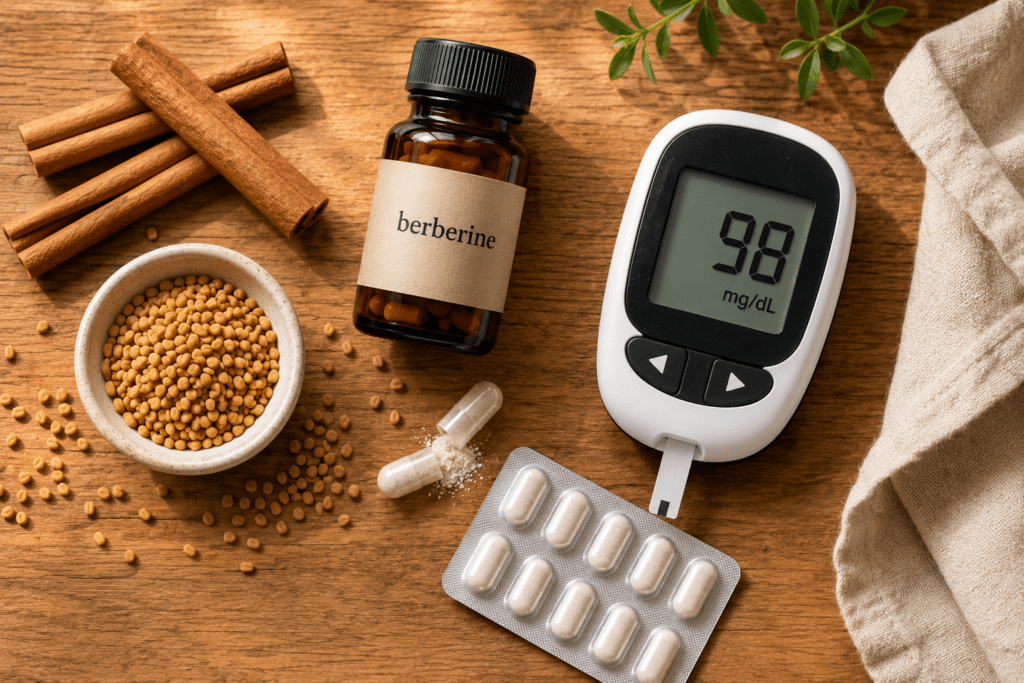
The combination of those lifestyle adjustments alongside a targeted supplement routine was where we noticed the most meaningful shift. By her six-month check-in, her fasting blood sugar had dropped to 98 mg/dL. Her doctor was genuinely pleased. We were over the moon.

Final Thoughts on Choosing the Right Natural Supplements for Prediabetes
If there’s one thing I want you to take away from all of this, it’s that you’re not powerless after a prediabetes diagnosis. When people ask what supplements are good for prediabetes, the honest answer is: several of them are — but they work best as part of a complete approach, not in isolation. Natural medicine for pre diabetes like berberine, magnesium, cinnamon, ALA, and chromium have enough science behind them to be worth a thoughtful conversation with your doctor.
I’m not promising any of this will work exactly the same way for everyone — bodies are different, circumstances are different, and I’m just one person sharing one family’s story. But I do believe that when you combine good information, consistent lifestyle habits, and the right supportive tools, real change is possible. My mom is proof of that. And if her story or what I’ve shared here gives you even a small nudge in the right direction, that’s everything to me.
🩹 The Smarter Way to Take Berberine — Without the Stomach Pain
Purisaki Berberine Patches combine plant-based berberine with other natural ingredients in a convenient daily patch format — no pills, no stomach upset, no guesswork. Just consistent, gentle support throughout the day.
👉 Claim Your Supply With Free Shipping Today⚠️ Update: Due to high demand, stock is limited. Check availability now.
*Results may vary. Affiliate link.
❓ Frequently Asked Questions — Natural Supplements for Prediabetes

About the Author — Sarah
I’m not a doctor or nutritionist — I’m a daughter who has been caring for my mother since her type 2 diabetes diagnosis. That journey pushed me to research natural alternatives and evidence-based lifestyle changes. Everything I share comes from that personal mission: to help my mom live better, with more energy and less dependence on medication. Always consult your healthcare provider before making any changes to your treatment plan.
⚕️ Medical Disclaimer: I am not a medical professional. This blog reflects my personal research caring for a family member with diabetes. For informational purposes only — not medical advice. Always consult a qualified healthcare provider.
📚 Scientific References
- Yin J, Xing H, Ye J. Efficacy of berberine in patients with type 2 diabetes mellitus. Metabolism. 2008;57(5):712-717. PMID: 18442638.
- Barbagallo M, Dominguez LJ. Magnesium and type 2 diabetes. World J Diabetes. 2015;6(10):1152-1157. PMID: 26322160.
- Akilen R, et al. Glycated haemoglobin and blood pressure-lowering effect of cinnamon in multi-ethnic Type 2 diabetic patients. Diabet Med. 2010;27(10):1159-1167. PMID: 20854384.
- Poh ZX, Goh KP. A current update on the use of alpha lipoic acid in the management of type 2 diabetes mellitus. Endocr Metab Immune Disord Drug Targets. 2009;9(4):392-398. PMID: 19832718.