
Cold Water Therapy Benefits: What Science Actually Says (And Why I Became a Believer)
⚡ Quick Answer
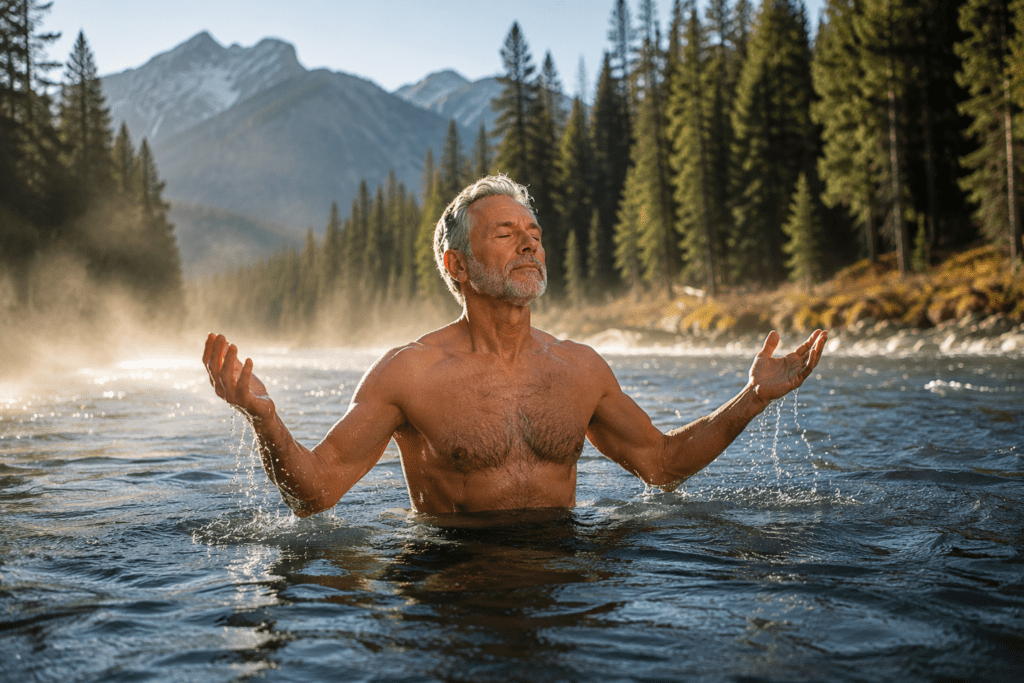
Cold water therapy benefits include reduced inflammation, improved circulation, faster muscle recovery, enhanced mood through norepinephrine release, and potential support for metabolic function. Clinical research confirms that brief cold water immersion — as short as 2–3 minutes at temperatures between 50–59°F (10–15°C) — can trigger measurable physiological responses that support both physical and mental health. It is not a cure-all, but the evidence supporting its core mechanisms is more solid than most people realize.
📋 Table of Contents
- What Are the Cold Water Therapy Benefits — Really?
- The Science Behind Cold Water Therapy Benefits
- How to Start Cold Water Therapy Safely
- The Counterintuitive Truth About Cold Water Therapy Benefits and Metabolism
- Common Mistakes (And What to Do Instead)
- Cold Water Therapy Benefits for Mental Health: The Part Nobody Talks About
- Final Thoughts: Is Cold Water Therapy Worth It?
- ❓ Frequently Asked Questions
Let me be straight with you: I didn’t come to cold water therapy as a convert. I came to it as a skeptic with a notebook and a bad habit of reading clinical abstracts at midnight. I’d seen too many wellness trends rise and fall — each one promising transformation and delivering little more than expensive supplements and vague instructions. So when I started seeing serious researchers publishing on cold immersion, I didn’t reach for the ice bucket. I reached for the data. And after months of tracking, reading, and eventually testing, I started to see a pattern that the research actually confirmed. That’s what this article is about — not hype, not biohacker mythology, but what the science genuinely supports and how you can apply it without making the mistakes most people do.
What Are the Cold Water Therapy Benefits — Really?
The phrase gets thrown around a lot, but let’s get specific. Cold water therapy benefits are not a single effect — they’re a cascade of interconnected physiological responses that happen when your body is exposed to cold water below roughly 60°F (15°C). Understanding this distinction matters because it explains why cold showers and full immersion produce different outcomes, and why the duration and temperature both count.
Here’s what the evidence consistently shows cold exposure can do:
- Reduce systemic inflammation — Cold triggers vasoconstriction followed by vasodilation, which helps flush inflammatory byproducts out of tissue. This is why athletes have used ice baths for decades.
- Accelerate muscle recovery — Post-exercise soreness (DOMS) is measurably reduced with cold water immersion, even at just 10–15 minutes of exposure. Research backs this up across multiple athletic populations.
- Elevate mood and reduce anxiety — Cold exposure causes a rapid, significant spike in norepinephrine — sometimes as much as 300%. That’s a neurochemical shift you can actually feel.
- Improve insulin sensitivity — This one surprises people, but exposure to cold activates brown adipose tissue (brown fat), which is metabolically active and plays a role in glucose regulation.
- Strengthen the immune response over time — Regular cold water exposure has been linked to increased white blood cell count and greater immune system resilience.
That’s a meaningful list. But the real question isn’t what it does in theory — it’s why it works, and whether those mechanisms hold up under scrutiny. That’s where it gets genuinely interesting.
The Science Behind Cold Water Therapy Benefits
The mechanism here is actually fascinating — and it starts with something your body treats as a controlled emergency. When cold water hits your skin, your nervous system reads it as a stressor. Your sympathetic system fires. Blood moves away from your extremities and toward your core to protect your vital organs. Your heart rate changes. Hormones shift. It’s a survival response — and that’s exactly why it produces real, measurable changes.
What the research consistently shows is that this stress response, when brief and controlled, functions almost like a training stimulus for your physiology. Your body adapts. Inflammatory markers go down. Antioxidant defenses improve. Brown adipose tissue — the metabolically active “good” fat that burns calories to generate heat — becomes more active with repeated cold exposure.
The norepinephrine piece deserves its own moment. This neurotransmitter and hormone is involved in mood, focus, and pain modulation. A foundational study published in the European Journal of Applied Physiology documented norepinephrine increases of up to 300% following cold water immersion — a magnitude that rivals what some pharmaceutical interventions achieve. That’s not a minor effect.
There’s also a significant relationship between cold exposure and inflammation — and if you’re someone dealing with joint discomfort, brain fog, or unexplained fatigue, this connection matters. Chronic low-grade inflammation underlies most of the conditions modern people struggle with. Cold exposure, when practiced consistently, can help suppress pro-inflammatory cytokines while supporting the body’s natural anti-inflammatory pathways. If you’re already exploring natural remedies for inflammation fatigue, cold water therapy belongs in that conversation.
And here’s something I want to flag because it’s often overlooked: the benefits don’t require extreme cold or extreme duration. Research suggests that temperatures between 50–59°F (10–15°C) for 2–5 minutes are sufficient to trigger the core physiological responses. You don’t need to be a polar bear to make this work.
After months of research into this exact mechanism, I kept coming back to one formula that actually addressed the root issue rather than just masking symptoms. It was developed with a clinical approach — the kind that makes sense when you understand the science behind what we just covered. That formula is Cardio Slim Tea.
More people are turning to Cardio Slim Tea as a gentle daily ritual — a carefully blended herbal tea formulated to support healthy blood pressure, cholesterol levels, and natural weight management.
See How Cardio Slim Tea Works →*Individual results may vary. Always consult your healthcare provider.
How to Start Cold Water Therapy Safely
If you’ve been dealing with inflammation, sluggish energy, or just general blahness that you can’t seem to shake, cold water therapy is one of the most accessible interventions you can try — because the barrier to entry is genuinely low. Here’s how to do it in a way that’s both effective and safe.
Step 1: Start with contrast showers. End your regular shower with 30–60 seconds of cold water. This isn’t dramatic, but it’s real exposure. Alternate warm and cold 2–3 times. Your body will begin adapting within the first week.
Step 2: Progress to cold-only showers. Once 60 seconds feels manageable, push to 2–3 minutes of cold water. Keep the temperature as low as your shower allows. The key is controlled breathing — don’t hold your breath. Slow, deliberate exhales tell your nervous system it’s safe.
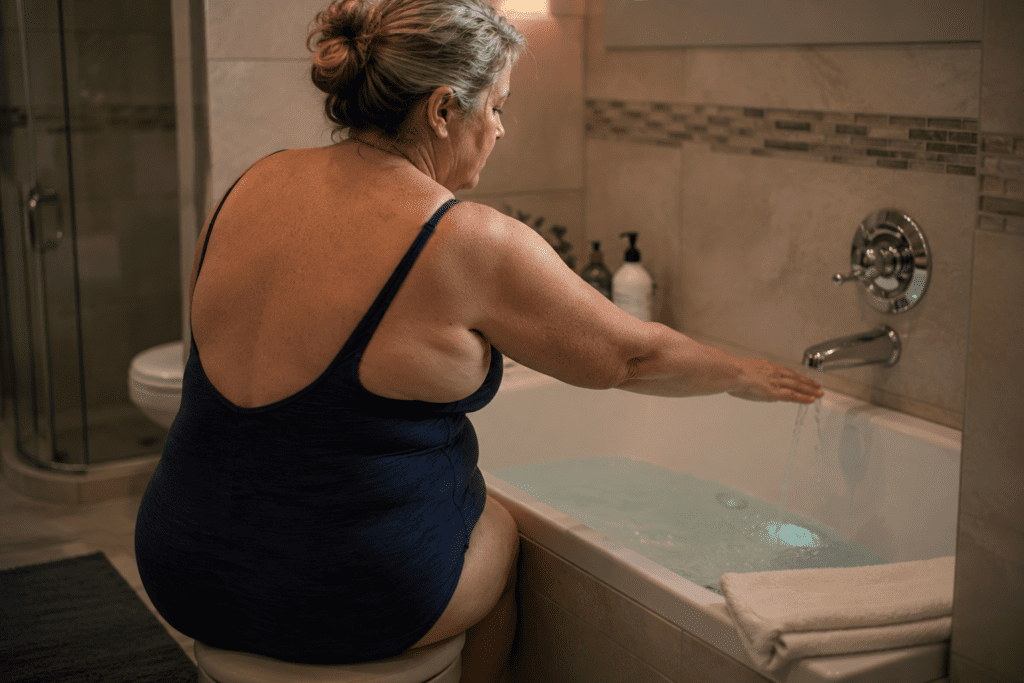
Step 3: Consider immersion if accessible. Cold baths, outdoor swimming, or dedicated cold plunge tubs take the cold water therapy benefits to a measurably higher level because full-body immersion increases the surface area exposed to cold — meaning the physiological response is stronger and faster. A temperature of 50–59°F for 3–10 minutes, 3–5 times per week, is the range where most of the well-documented benefits occur.
- Never practice cold immersion alone if you’re new to it — sudden cold can cause a gasp reflex and temporary disorientation.
- Avoid cold plunging immediately after strength training if your goal is muscle growth — some research suggests it may blunt hypertrophy signals when used directly post-workout.
- Morning cold exposure appears to have stronger mood and focus effects, based on circadian rhythm interaction with cortisol and norepinephrine.
- People with cardiovascular conditions, Raynaud’s disease, or cold urticaria should consult a doctor before starting.
What I found next — when I dug into the metabolic angle — surprised me more than anything else in this research.
The Counterintuitive Truth About Cold Water Therapy Benefits and Metabolism
Here’s the myth-busting moment: most people assume cold water therapy is primarily a recovery or mood tool. But the metabolic story is arguably more significant — and far less discussed.
Your body has two types of fat: white adipose tissue (WAT), which stores energy, and brown adipose tissue (BAT), which burns energy to produce heat. For most of adulthood, researchers assumed adults had negligible amounts of brown fat. That assumption turned out to be wrong. Adults retain meaningful brown fat deposits — especially around the neck, collarbone, and spine — and cold exposure is one of the most effective ways to activate it.
When brown fat is activated, it burns glucose and fatty acids to generate heat. Research published in the New England Journal of Medicine confirmed that cold exposure significantly increases brown fat activity in adults — and that people with more active brown fat tend to have better insulin sensitivity and lower body mass index. That’s a metabolic domino effect that starts with something as simple as cold water exposure.
This is also why the cold water therapy benefits overlap meaningfully with what people are trying to achieve through natural metabolism boosters for women — particularly those over 50, where metabolic rate naturally declines. Cold exposure doesn’t replace nutrition or movement, but it activates a metabolic pathway that most lifestyle interventions simply don’t touch.
What’s more, this brown fat activation appears to compound over time. Regular cold exposure essentially trains your body to thermogenically respond more efficiently. The first plunge is the hardest. By week four, your body is better at it — and so is your metabolism.
Common Mistakes (And What to Do Instead)
But here’s what most people get wrong: they either give up after three days because they don’t feel dramatically different, or they go too hard too fast and make the whole experience miserable enough that they never return to it.
Cold water therapy is a practice, not an event. The benefits — both in the research and in practical experience — accumulate with consistency. A single cold shower is interesting. Thirty days of cold showers is transformative. The physiological adaptations that make cold water therapy benefits real (increased norepinephrine baseline, improved brown fat activation, reduced inflammatory tone) take weeks to develop.
The other common mistake is ignoring the warm-up afterward. After cold immersion, passive rewarming — meaning letting your body generate its own heat rather than immediately jumping into a hot shower — prolongs the metabolic and hormonal effects. Some practitioners call this the “afterdrop and rebound” phase, and it’s where a significant portion of the benefit is generated. Sit with a warm drink, wrap up in layers, and let your body do its work.
It’s also worth noting that cold water therapy pairs well with other thermal therapies. If you’re already interested in how heat and cold contrast can support detoxification and circulation, infrared sauna health and detox is worth exploring alongside cold exposure — the two work through complementary mechanisms and many practitioners rotate between them.
Cold Water Therapy Benefits for Mental Health: The Part Nobody Talks About
We’ve covered inflammation, metabolism, and recovery. But the mental health dimension of cold water therapy benefits is where I’ve seen the most visceral impact — and where the research is increasingly compelling.
What if the real problem isn’t just inflammation in your joints or sluggishness in your metabolism — but a nervous system that’s chronically stuck in a low-grade stress state? That’s what chronic inflammation and metabolic dysfunction often signal at a neurological level. And cold exposure, paradoxically, seems to help reset that.
The mechanism is this: brief, acute cold stress activates your sympathetic nervous system intensely — but then triggers a compensatory parasympathetic rebound. Done regularly, this trains your body to shift more fluidly between stress and recovery states. Think of it as interval training for your nervous system. The result, reported consistently across both clinical populations and regular practitioners, is lower baseline anxiety, better emotional resilience, and improved sleep quality.
Depression researchers have taken note. A case report published in peer-reviewed literature documented symptom remission in a patient with treatment-resistant depression following regular cold water swimming — a dramatic outcome that has since inspired further investigation. The cold water therapy benefits here are real, even if the research is still growing. The norepinephrine spike alone is clinically significant. And unlike many interventions, cold water costs nothing and has no pharmaceutical side effects.
Final Thoughts: Is Cold Water Therapy Worth It?
After everything I’ve read, tracked, and observed, my answer is yes — with appropriate context. The cold water therapy benefits documented in research are not miraculous or exclusive to elite athletes. They are accessible, reproducible physiological responses that most healthy adults can access with a cold shower, a bathtub, and about ten minutes a day.
Will it fix everything? No. But as part of a broader approach to reducing inflammation, supporting metabolic health, and building stress resilience, it’s one of the most evidence-backed free tools available. The cold water therapy benefits we’ve explored — from brown fat activation to norepinephrine elevation to reduced inflammatory markers — represent a convergence of multiple physiological systems being nudged in a healthier direction simultaneously.
Start small. Stay consistent. Pay attention to how you feel — not just in the moment of cold exposure, but in the hours and days that follow. The patterns will become clear. And when you’re ready to stack additional support on top of a solid daily practice, there are thoughtful, research-informed options worth exploring.
❓ Frequently Asked Questions
How does cold water therapy specifically benefit brain health and mental clarity?
Cold water immersion triggers a rapid release of norepinephrine — a neurotransmitter linked to focus, alertness, and mood regulation — with studies showing increases of up to 300% after cold exposure. This neurochemical surge is one reason many people report sharper mental clarity and reduced brain fog following even short cold showers or ice baths.
How long do you need to stay in cold water to actually get the benefits?
Research shows measurable physiological responses — including reduced inflammation markers and norepinephrine release — occur with exposures as brief as 2–3 minutes at 50–59°F (10–15°C). Longer sessions don’t linearly increase benefits and can introduce risks like hypothermia, so shorter, consistent sessions tend to outperform occasional extended ones.
Does cold water therapy help with anxiety and depression or is that overhyped?
The evidence is promising but not conclusive: cold exposure activates the sympathetic nervous system and floods the brain with norepinephrine and endorphins, both of which are directly tied to mood elevation. A 2023 controlled study found regular cold water swimmers reported significantly lower depression and mood disturbance scores compared to non-swimmers, though larger randomized trials are still needed.
What temperature water is actually cold enough for cold water therapy to work?
The effective therapeutic range supported by research is 50–59°F (10–15°C) — cold enough to trigger vasoconstriction, hormetic stress responses, and neurotransmitter release, but manageable for most healthy adults. Water above 60°F produces diminishing physiological returns, while anything below 50°F escalates risk without proportionally greater benefit.
Can cold water therapy improve focus and productivity the same day you do it?
Yes — the norepinephrine spike from cold immersion peaks within minutes and can sustain elevated alertness and attention for several hours post-exposure, which is why many practitioners time their sessions to the morning before cognitively demanding work. This acute effect is distinct from the longer-term mood and inflammatory benefits, which accumulate with regular practice over weeks.
📊 naturalbloodsugartips.com
My honest recommendation after everything I have researched
🍵 A Daily Tea Ritual for Your Heart & Waistline
Cardio Slim Tea combines traditional heart-supporting herbs in a convenient daily tea format — no pills, no harsh chemicals. Just a warm, calming ritual that works with your body’s natural processes.
👉 Yes, I Want to Try Cardio Slim Tea✓ Official website | ✓ 60-day money-back guarantee | ✓ Free shipping
⚠️ Due to high demand, stock is limited. Check availability before it sells out.
*Results may vary. This is an affiliate link — I only recommend what I have researched for my own family.

About the Author — Sarah
I am not a doctor or nutritionist — I am a daughter who has been caring for my mother since her type 2 diabetes diagnosis. That journey pushed me to research natural alternatives and evidence-based lifestyle changes. Everything I share comes from that personal mission: to help my mom live better, with more energy and less dependence on medication. Always consult your healthcare provider before making any changes to your treatment plan.
⚕️ Medical Disclaimer: I am not a medical professional. This blog reflects my personal research caring for a family member with diabetes. For informational purposes only — not medical advice. Always consult a qualified healthcare provider.
📚 Scientific References
- Bleakley C, et al. Cold-water immersion (cryotherapy) for preventing and treating muscle soreness after exercise. Cochrane Database Syst Rev. 2012;(2):CD008262. PMID: 22336838.
- Cypess AM, et al. Identification and importance of brown adipose tissue in adult humans. N Engl J Med. 2009;360(15):1509–1517. PMID: 19357405.
- Srámek P, et al. Human physiological responses to immersion into water of different temperatures. Eur J Appl Physiol. 2000;81(5):436–442. PMID: 10613442.
- van Tulleken C, et al. Open water swimming as a treatment for major depressive disorder. BMJ Case Rep. 2018;2018:bcr2018225007. PMID: 30002082.