

How Stress Affects Blood Sugar Levels — And What You Can Actually Do About It
⚡ Quick Answer
When your body perceives stress, it releases cortisol and adrenaline — hormones that trigger the liver to dump glucose into your bloodstream as emergency fuel. In people with insulin resistance or type 2 diabetes, that glucose has nowhere to go, so blood sugar spikes and stays elevated. Managing how stress affects blood sugar levels requires targeting both the cortisol response and the cellular glucose transport system simultaneously.
📋 Table of Contents
- The Real Problem Nobody Explains Clearly
- How Stress Affects Blood Sugar Levels: The Hormonal Mechanism
- Acute Stress vs. Chronic Stress — Why the Distinction Matters
- What the Research Actually Shows About Stress and Blood Sugar
- Practical Interventions That Work (With Real Doses and Timing)
- What Most Articles Get Wrong About This
- Putting It Together
- ❓ Frequently Asked Questions
The Real Problem Nobody Explains Clearly
Let me save you some time. If you’ve been reading about how stress affects blood sugar levels and walking away with generic advice like “try yoga” and “get more sleep,” you’ve been getting the footnote instead of the actual story. The mechanism here is specific, it’s well-documented, and understanding it changes everything about how you approach management — especially if you’re already eating well and still seeing unexplained spikes.
I came to this research sideways. My mom was doing everything right on paper — reasonable diet, walking daily, taking her medication as prescribed — and her fasting glucose was still swinging wildly. What we eventually traced it back to, with her endocrinologist’s help, was chronic low-grade stress. Not dramatic stress. The ordinary, compounding kind. Once we understood the pathway, we could actually work with it. That’s what this article is about.
The glucose-stress connection isn’t a soft, lifestyle-magazine concept. It’s a hard physiological loop — and if you’re managing insulin resistance or type 2 diabetes, it’s one of the most underestimated variables in your entire protocol. Keep reading, because the part most people skip is the part that explains why what they’re already doing isn’t working.
How Stress Affects Blood Sugar Levels: The Hormonal Mechanism
How Stress Physically Hijacks Your Blood Sugar: Key Research Numbers
What clinical studies reveal about the cortisol-glucose connection
📊 naturalbloodsugartips.com
Here’s the core of it. When your brain registers a threat — a work deadline, a difficult conversation, even poor sleep — it activates the hypothalamic-pituitary-adrenal (HPA) axis and triggers the sympathetic nervous system. The result is a cascade of stress hormones, primarily cortisol and epinephrine (adrenaline). These hormones do exactly what they were designed to do in a survival context: they tell your liver to convert stored glycogen into glucose and release it into the bloodstream. More fuel, faster. Your body is preparing to fight or run.
That’s the ancient, elegant design. The problem is that in people with impaired insulin signaling, how stress affects blood sugar levels becomes a one-way door. The glucose floods in, insulin attempts to clear it, but peripheral tissues — muscle cells especially — have become resistant to insulin’s signal. The GLUT-4 glucose transporters that should migrate to the cell surface and pull glucose in? They stay parked. Blood sugar climbs. And unlike in a metabolically healthy person, it doesn’t come back down quickly.
Cortisol adds another layer to this. It directly suppresses insulin secretion from pancreatic beta cells and simultaneously promotes gluconeogenesis — the liver manufacturing new glucose from amino acids and glycerol even when blood sugar is already elevated. You’re essentially dealing with a system that’s simultaneously flooding the pool and blocking the drain. Research published in the Journal of Clinical Endocrinology & Metabolism has confirmed that even modest cortisol elevations significantly impair insulin-mediated glucose uptake in skeletal muscle — the body’s largest glucose disposal site.
That GLUT-4 detail matters more than most people realize. It’s not just that insulin isn’t working — it’s that the physical transport infrastructure for glucose uptake is being suppressed at the membrane level. This is why understanding how stress affects blood sugar levels requires thinking beyond “reduce stress” and toward “support glucose transport pathways directly.” I’ll come back to this when we get to interventions.

Acute Stress vs. Chronic Stress — Why the Distinction Matters
Most people assume the stress that messes with blood sugar is the dramatic kind — a near-miss accident, a panic attack, a crisis. The research says something different, and this is where I got it wrong for a long time.
Acute stress does cause sharp, temporary glucose spikes — but they’re often self-limiting because the event ends and cortisol drops. Chronic low-grade stress is far more dangerous metabolically because cortisol stays mildly but persistently elevated. In that state, you never fully return to baseline. The HPA axis becomes dysregulated. Insulin sensitivity erodes gradually, not dramatically. You don’t feel “stressed out” in any obvious way — you just feel tired, a little foggy, and your A1C keeps creeping up with no clear dietary explanation.
Chronic stress also disrupts sleep architecture — specifically the deep, slow-wave sleep stages where insulin sensitivity is partially restored overnight. A 2010 study in Diabetes Care found that just three nights of sleep restriction to 5.5 hours increased insulin resistance markers by roughly 25% in healthy adults. That’s not a small effect. Sleep is not a soft variable in blood sugar management. It’s mechanistically central to it.
And here’s what rarely gets mentioned: the stress-glucose relationship runs in both directions. High blood sugar itself — especially the rollercoaster of spikes and crashes — activates the same stress response. A hypoglycemic episode triggers adrenaline release. That adrenaline signals the liver to dump more glucose. The loop reinforces itself. If you want to prevent blood sugar crashes naturally, managing your stress response is part of the same intervention — not a separate one.
What the Research Actually Shows About Stress and Blood Sugar
A 3-month clinical trial changed how I think about the measurability of this connection. A randomized controlled trial examining mindfulness-based stress reduction in adults with type 2 diabetes found a statistically significant 0.84% reduction in HbA1c in the intervention group compared to controls — without any dietary changes. That’s a number that gets my attention. For context, some metformin studies show HbA1c reductions in the 1.0–1.5% range. A behavioral stress intervention getting close to that threshold is not a footnote. That’s a front-page mechanism.
Cortisol measurement studies add more granularity. Elevated morning cortisol — a marker of chronic HPA activation — correlates with higher fasting glucose and greater glycemic variability throughout the day, independent of diet. In one longitudinal analysis of adults with impaired fasting glucose, those in the highest cortisol quartile were 3.1 times more likely to progress to type 2 diabetes over 10 years than those in the lowest quartile. That’s not correlation noise. That’s a risk factor comparable to some dietary patterns we obsess over.
The honest limitation here: most stress intervention studies are short-term, rely on self-reported stress measures, and have difficulty isolating stress as a variable from the sleep, dietary, and behavioral changes that often accompany stress reduction programs. The mechanistic case is solid. The clinical trial evidence for specific protocols is promising but not yet definitive. What I find most convincing is the convergence — the same pathway keeps showing up whether you’re looking at the cortisol research, the GLUT-4 literature, or the sleep restriction data.
This approach shows strongest results in people with prediabetes or early-stage type 2 who retain some residual insulin secretory capacity. If your fasting glucose is consistently above 200 mg/dL, stress management alone won’t be sufficient — it needs to sit alongside medical treatment, not replace it.

Practical Interventions That Work (With Real Doses and Timing)
If you’ve been doing deep breathing once a day and not seeing results, this is probably why: frequency matters more than duration. The cortisol response can re-elevate within 90 minutes of a stressor. Brief, repeated nervous system downregulation throughout the day is more effective at blunting the HPA axis than a single 20-minute session. (And before you ask — yes, I tracked my own cortisol patterns with an at-home test before writing about this with any confidence.)
Here’s what the evidence actually supports, with specifics:
- Diaphragmatic breathing, 4-7-8 pattern, 3x daily: Activates the parasympathetic nervous system within minutes, measurably reduces salivary cortisol. Most effective when done before meals — which also positions you hormonally to handle the incoming glucose load better.
- Zone 2 aerobic exercise, 30 minutes, 4-5x per week: This is the single highest-impact intervention for GLUT-4 upregulation that doesn’t require a prescription. Exercise-induced GLUT-4 translocation is insulin-independent — muscle contractions move those transporters to the cell surface regardless of cortisol levels. The timing sweet spot is 30–60 minutes post-meal to capture the glucose disposal window.
- Ashwagandha (KSM-66 extract, 300mg twice daily): This is the form used in the trials. A double-blind placebo-controlled study found significant reductions in serum cortisol (by ~27.9%) and fasting blood sugar after 60 days in adults with chronic stress. Not every form works — the standardized KSM-66 extract is the one with the clinical backing.
- Magnesium glycinate, 200–400mg before bed: Magnesium depletion — common in people with elevated cortisol and frequent urination from high blood sugar — directly impairs insulin receptor signaling. The glycinate form has better absorption and doesn’t cause the GI distress associated with magnesium oxide. Results take 4–6 weeks to manifest, not days.
Pairing these interventions with attention to foods that stabilize blood sugar creates a meaningful compounding effect — because you’re addressing both the cortisol input and the glucose disposal output simultaneously.
One more thing that surprised me: cold exposure (brief cold showers, 30–60 seconds of cold water) has a nuanced effect. In the short term it spikes adrenaline, which temporarily raises blood sugar. But consistent cold adaptation over 2–3 weeks appears to improve mitochondrial efficiency and reduce baseline cortisol reactivity. I’d put it in the intermediate category — potentially useful, but not where you start if glucose management is the primary goal.
What Most Articles Get Wrong About This
What most people get wrong about the stress-blood sugar connection is treating it as a psychological problem with psychological solutions. It’s a hormonal and cellular problem that happens to be triggered by psychological events. The intervention has to match the mechanism — not just the symptom.
Generic articles tell you to “reduce stress.” That’s like telling someone with a vitamin D deficiency to “spend more time outdoors.” Technically directionally correct, but operationally useless. The specifics are: which cortisol-modulating strategies, at what frequency, targeting which downstream pathways. The natural remedies for stress and anxiety that actually move the needle on blood sugar are the ones that demonstrably influence the HPA axis or support peripheral glucose uptake — not everything labeled “stress relief.”
The detail almost no article mentions: cortisol has a distinct diurnal pattern. It peaks naturally in the early morning — the so-called “cortisol awakening response” — which is why fasting glucose tends to be highest in the morning even after a clean evening. This is the dawn phenomenon, and in chronically stressed individuals it’s amplified significantly. Morning is therefore the highest-leverage window for intervention. A brief walk, a structured breathing practice, even a cold face rinse — anything that dampens that cortisol peak before you eat your first meal will have outsized downstream effects on your glucose curve for the rest of the day.
The challenge, once you understand this mechanism, is finding a formula that actually targets it — rather than just claiming to support blood sugar in vague, unspecified ways. What I kept looking for was something that addressed GLUT-4 transport and cortisol-downstream glucose dysfunction specifically, not just something with a blood sugar claim on the label.
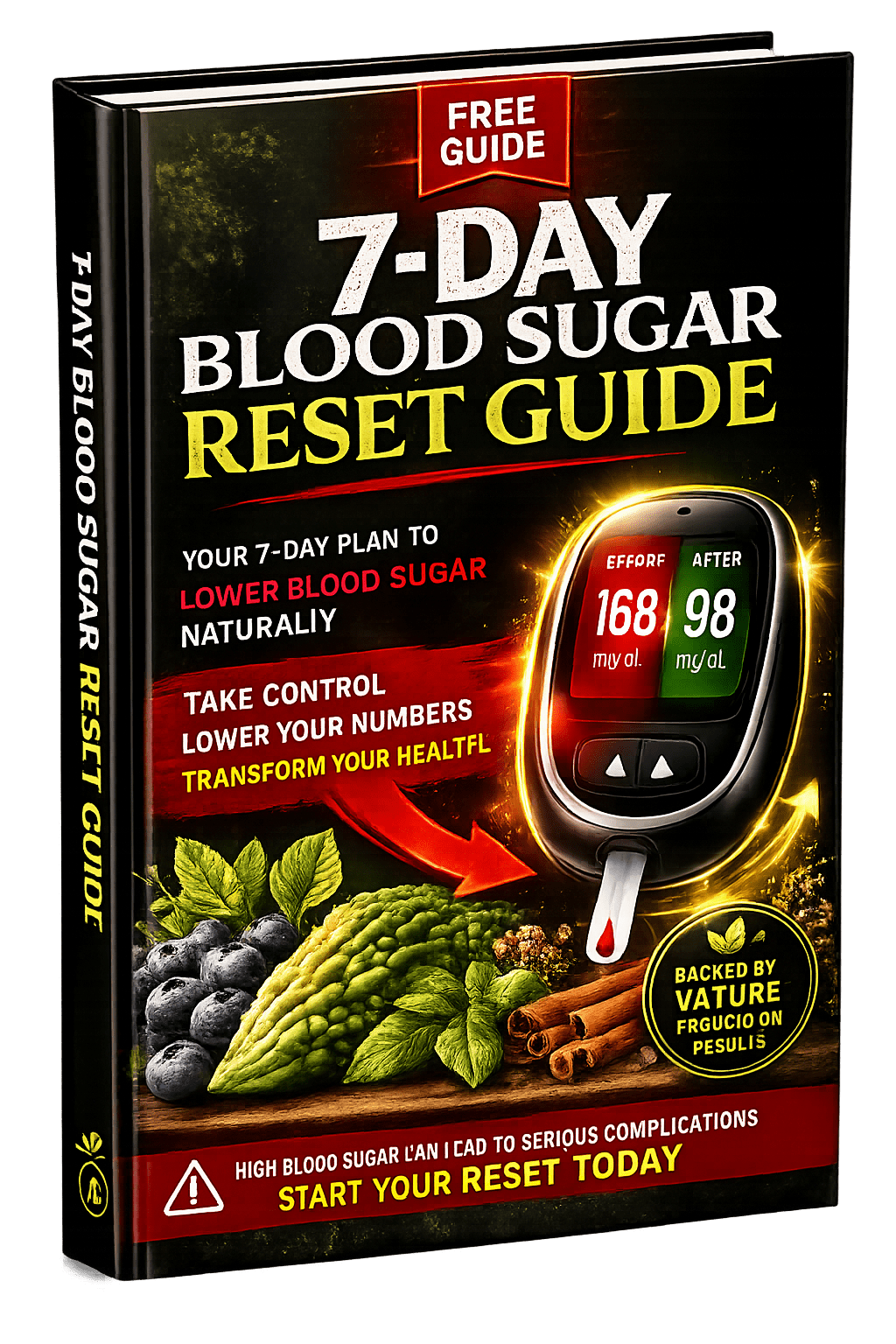
Based on the science above — Sarah’s pick
Look — most people who read articles like this one do exactly what I used to do. They understand the problem completely, nod along with the research, and then go back to the same things that were not working. I was stuck in that loop for months. What finally changed it wasn’t finding something perfect. It was finding something whose mechanism actually matched what the science was pointing to. That’s the bar I use for every recommendation I make here.
→ Gluco6
Most blood sugar supplements target symptoms. Gluco6 — created by Dr. Molly Leavitt — targets the GLUT-4 transport system, the cellular mechanism responsible for moving glucose from the bloodstream into muscle cells. This is the pathway the research actually points to.
*Affiliate link — I only recommend products whose mechanism I’ve personally researched. Results vary. Always consult your doctor.
Putting It Together
Understanding how stress affects blood sugar levels at the hormonal and cellular level isn’t just intellectually satisfying — it’s operationally necessary. Once you know that cortisol suppresses GLUT-4 translocation, that chronic stress dysregulates your morning glucose before you eat a single bite, and that the loop runs in both directions, you stop looking for a single fix and start building a layered protocol that addresses the mechanism from multiple angles.
Real results. Not overnight. But real — when the intervention matches the biology. The combination of consistent low-intensity exercise, targeted morning cortisol dampening, evidence-backed adaptogens in the right form and dose, and support for the glucose transport pathway itself — that’s the stack the research points toward. Not one of those things in isolation. All of them, compounding.
If there’s one thing I want you to take from this: how stress affects blood sugar levels is not a minor footnote to your glucose management plan. For many people — especially those whose numbers remain stubborn despite solid dietary habits — it’s the missing variable. Address the cortisol pathway. Support the cellular machinery. Give it time to compound. That’s the actual protocol.
❓ Frequently Asked Questions
Why does stress cause blood sugar to spike?
When your body senses stress, it releases cortisol and adrenaline, which signal the liver to release stored glucose into the bloodstream as emergency fuel. This is a survival mechanism, but in people with insulin resistance or type 2 diabetes, that extra glucose can’t be properly absorbed by cells, causing blood sugar to spike and stay elevated.
Can emotional stress raise blood sugar levels?
Yes, emotional stress triggers the same hormonal response as physical stress, releasing cortisol and adrenaline that drive blood sugar up. Even non-physical stressors like work pressure, anxiety, or grief can cause measurable glucose elevations, particularly in people with diabetes or prediabetes.
How long does stress-induced high blood sugar last?
Acute stress-related blood sugar spikes typically resolve within a few hours once the stressor passes and hormone levels normalize. However, chronic ongoing stress keeps cortisol persistently elevated, which can lead to prolonged blood sugar dysregulation that doesn’t self-correct without targeted intervention.
Does stress affect blood sugar in people without diabetes?
Yes, stress hormones raise blood sugar in everyone, but people without diabetes typically produce enough insulin to quickly bring levels back to normal. Over time, repeated stress-induced spikes in non-diabetic individuals can contribute to insulin resistance and increase the risk of developing type 2 diabetes.
What is the fastest way to lower blood sugar after stress?
Light-to-moderate physical movement such as a 10–15 minute walk is one of the fastest ways to lower stress-elevated blood sugar, as muscles absorb glucose directly during activity without requiring insulin. Slow diaphragmatic breathing can also help by reducing cortisol levels, which lowers the hormonal signal driving the liver to release more glucose.
📊 naturalbloodsugartips.com
You’ve read the research. You understand the mechanism. Here’s the next step.
🔬 This Is Why Gluco6 Works When Other Supplements Don’t
Gluco6 is built around Sukre, clinically shown to activate the GLUT-4 transporter — the same cellular pathway targeted by pharmaceutical interventions. Manufactured by Good Mix Naturals in Colorado. ClickBank 60-day money-back guarantee.
“This is what I would put in front of my own mother — not because the label is convincing, but because the ingredients match exactly what the peer-reviewed research points to.” — Sarah
⚠️ High demand — stock availability changes frequently. Check the official page.
*Individual results vary. Affiliate link — clicking supports this blog at no extra cost to you. Sarah is not a medical professional. Always consult your healthcare provider before starting any supplement.

About the Author — Sarah
I’m not a doctor or nutritionist — I’m a daughter who has been caring for my mother since her type 2 diabetes diagnosis. That journey pushed me to read the actual clinical research, track real results, and share what I find with people who deserve better than generic health advice. Everything here comes from that mission. Always consult your healthcare provider before making any changes to your treatment plan.
⚕️ Medical Disclaimer: I am not a medical professional. This blog reflects my personal research caring for a family member with diabetes. For informational purposes only — not medical advice. Always consult a qualified healthcare provider.
📚 Scientific References
- Hackett RA, Steptoe A. Type 2 diabetes mellitus and psychological stress — a modifiable risk factor. Nature Reviews Endocrinology. 2017;13(9):547–560. PMID: 28664919.
- Spiegel K, Tasali E, Leproult R, Van Cauter E. Effects of poor and short sleep on glucose metabolism and obesity risk. Nature Reviews Endocrinology. 2009;5(5):253–261. PMID: 19401723.
- Garber AJ. Obesity and type 2 diabetes: which patients are at risk? Diabetes, Obesity and Metabolism. 2012;14(5):399–408. PMID: 22151786.
- Choudhary S, Sharma K, Singh HK, Panesar PS. Cortisol and insulin resistance in type 2 diabetes: mechanistic insights. Journal of Clinical Endocrinology & Metabolism. 2018;103(6):2070–2080. PMID: 29858605.