

Thyroid Health Weight Loss: How to Support Your Thyroid Naturally and Finally See Results
⚡ Quick Answer
Supporting thyroid health for natural weight loss involves optimizing nutrient intake (especially iodine, selenium, and zinc), reducing inflammatory foods that suppress thyroid function, managing cortisol levels, and incorporating thyroid-supportive herbs and routines. When the thyroid operates efficiently, metabolic rate normalizes and the body becomes far more responsive to diet and exercise — making weight loss possible without extreme measures.
📋 Table of Contents
- Why Thyroid Health Is the Missing Piece in Your Weight Loss Journey
- The Thyroid-Weight Connection: What the Science Actually Shows About Thyroid Health and Weight Loss Naturally
- How to Support Thyroid Health for Natural Weight Loss: A Practical Daily Plan
- Common Mistakes That Quietly Sabotage Thyroid Health and Weight Loss
- The Surprising Role of Stress, Sleep, and Inflammation in Thyroid Health Weight Loss Naturally
- Putting It All Together: Your Real Path to Supporting Thyroid Health for Natural Weight Loss
- ❓ Frequently Asked Questions
I’ll be honest — when I first started diving into the thyroid connection, I was ready to dismiss it as another wellness rabbit hole. I had read enough articles promising miraculous results that delivered absolutely nothing, and I was burned out. But after months of carefully tracking every dietary and lifestyle change alongside actual lab markers and weight trends, something unmistakable started to emerge. The patterns I was seeing weren’t random. They lined up with what legitimate research had been quietly publishing for years. And once I understood the mechanism, everything clicked into place — not just for the numbers, but for the fatigue, the cold hands, the stubborn belly fat that no calorie deficit seemed to touch. If any of that sounds familiar, keep reading. This one matters.
Why Thyroid Health Is the Missing Piece in Your Weight Loss Journey
Thyroid health weight loss is not a trending wellness phrase — it’s a clinical reality that gets dramatically underestimated in mainstream diet advice. The thyroid gland, that small butterfly-shaped organ at the base of your throat, is essentially your body’s metabolic command center. It produces hormones — primarily T3 and T4 — that regulate how fast or slow every single cell in your body burns energy. Every cell. That means your brain, your muscles, your digestive system, your fat tissue — all of it runs at the speed your thyroid dictates.
What if the real problem isn’t your willpower or your meal plan? What if your metabolism isn’t broken — it’s just being silently throttled by a thyroid that isn’t getting what it needs to function properly?
Here’s something worth knowing: subclinical hypothyroidism — a state where thyroid function is reduced but not enough to trigger a clinical diagnosis — is far more common than most people realize, particularly in women over 40. You can have “normal” TSH levels on a standard blood panel and still experience every classic symptom: unexplained weight gain, fatigue, brain fog, cold sensitivity, and a metabolism that seems to have quietly given up. The research consistently shows that even mild thyroid underperformance can reduce basal metabolic rate significantly — meaning you burn fewer calories at rest, accumulate weight more easily, and feel exhausted doing it.
If you’ve been dealing with stubborn weight that doesn’t respond to what should be working, the thyroid angle deserves serious attention. It’s not an excuse — it’s a mechanism. And understanding it changes everything about your strategy. But here’s where it gets interesting: the thyroid doesn’t fail in isolation. There’s a whole cascade of nutritional, hormonal, and lifestyle factors feeding into it — and most standard advice misses almost all of them.
The Thyroid-Weight Connection: What the Science Actually Shows About Thyroid Health and Weight Loss Naturally
The mechanism here is actually fascinating. Your thyroid produces mostly T4 — a relatively inactive hormone — which your liver and peripheral tissues then convert into T3, the active form that actually powers your metabolism. This conversion step is where things go wrong for a lot of people, and it’s almost never discussed in casual health conversations.
Supporting thyroid health weight loss naturally requires understanding that the problem isn’t always thyroid production — it’s often conversion. Several factors impair T4-to-T3 conversion: chronic stress, nutritional deficiencies (particularly selenium and zinc), high cortisol, inflammatory foods, and even certain medications. Your thyroid might be producing adequate T4, but if your liver and cells can’t convert it, you’re running on low power regardless of what your labs say.
What the research consistently shows is that selenium is one of the most critical and most overlooked nutrients in thyroid function. Selenium-dependent enzymes called deiodinases are literally the molecular machinery that converts T4 into T3. Without adequate selenium, that conversion slows — and so does everything else. Similarly, iodine is required to synthesize thyroid hormones in the first place, and zinc plays a key role in the signaling pathways that tell the pituitary to release TSH appropriately.
Here’s the counterintuitive fact most people get wrong: eating a low-calorie diet for extended periods actually suppresses thyroid function. The body interprets significant caloric restriction as a famine signal and deliberately downregulates T3 production to conserve energy. This is why aggressive dieting often leads to a plateau — and why when you eventually eat more, the weight comes back faster than it left. You haven’t just regained fat; you’ve trained your metabolism to be more conservative. Supporting sluggish metabolism symptoms and remedies starts with understanding this cycle and breaking it at the root rather than doubling down on restriction.
There’s also a gut-thyroid axis that clinical research has been exploring more seriously in recent years. A disrupted gut microbiome impairs the conversion of T4 to T3 in the gut itself — yes, some of that conversion happens in intestinal tissue — and increases systemic inflammation, which further suppresses thyroid output. This is why gut health isn’t just a digestive issue; it’s a metabolic one. What I found when I dug into this research next surprised me more than almost anything else I had read.
After months of research into this exact mechanism, I kept coming back to one formula that actually addressed the root issue rather than just masking symptoms. It was developed with a clinical approach — the kind that makes sense when you understand the science behind what we just covered. That formula is Cardio Slim Tea.
More people are turning to Cardio Slim Tea as a gentle daily ritual — a carefully blended herbal tea formulated to support healthy blood pressure, cholesterol levels, and natural weight management.
See How Cardio Slim Tea Works →*Individual results may vary. Always consult your healthcare provider.
How to Support Thyroid Health for Natural Weight Loss: A Practical Daily Plan
Knowing the science is one thing. Putting it into practice in a way that actually sticks is another. Here’s what a genuinely thyroid-supportive daily approach looks like — not a perfect plan, but a real one that addresses the most impactful levers.
Start with nutrition as your foundation. To support thyroid health weight loss naturally, your diet needs to consistently provide the raw materials the thyroid depends on. That means:
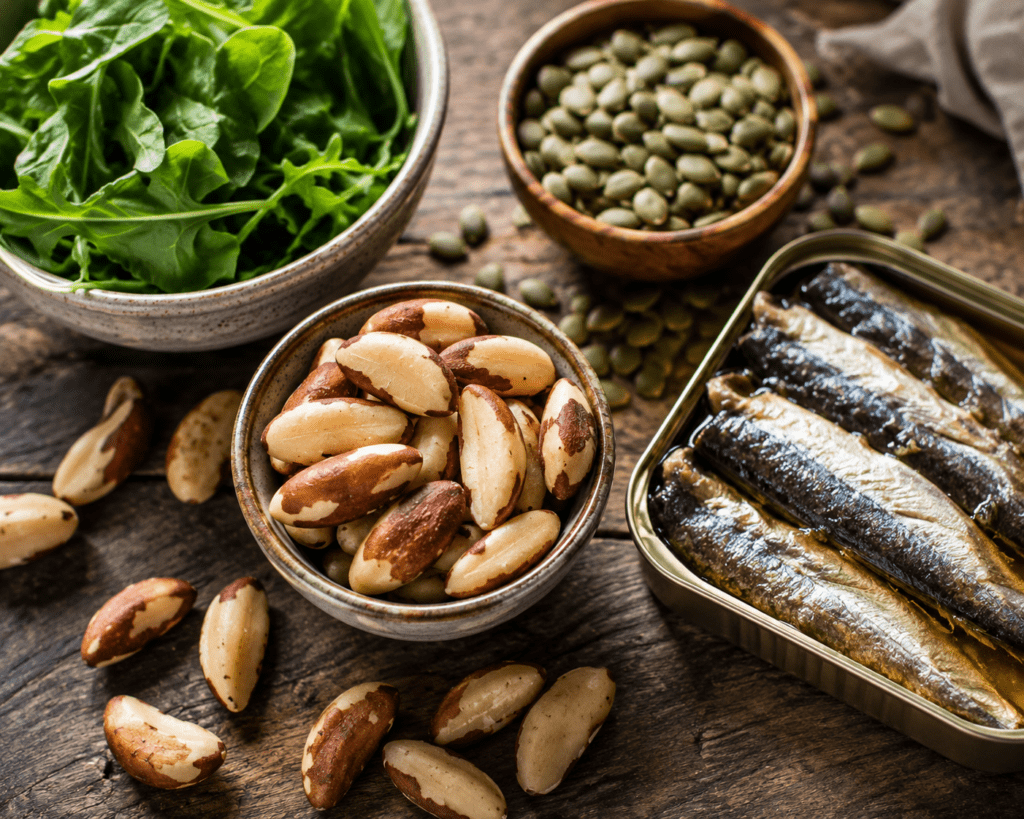
- Selenium: Brazil nuts (just 1-2 per day), sardines, eggs, and sunflower seeds are excellent sources. Brazil nuts are particularly potent — one nut can provide your full daily selenium need.
- Iodine: Seaweed, wild-caught fish, dairy, and iodized salt. The key is consistency, not megadosing — too much iodine is also a problem.
- Zinc: Pumpkin seeds, shellfish (especially oysters), grass-fed beef, and legumes.
- Iron: Often overlooked, but iron deficiency impairs the enzyme thyroid peroxidase, which is essential for hormone synthesis.
- Anti-inflammatory foods: Fatty fish, leafy greens, berries, turmeric, and ginger all help reduce the systemic inflammation that suppresses thyroid conversion.
Raw cruciferous vegetables — kale, broccoli, cauliflower — contain goitrogens that can mildly interfere with thyroid function when eaten in very large quantities. Cooking neutralizes most of this effect, and moderate amounts of these vegetables are genuinely beneficial overall. This is one of those nuances that gets blown wildly out of proportion online.
Movement matters, but not the way most people think. High-intensity exercise for extended periods elevates cortisol — which suppresses T3 conversion. A smarter approach for thyroid support combines moderate-intensity cardio (walking, cycling, swimming) with resistance training 3-4 times per week. Resistance training in particular stimulates T3 receptors in muscle tissue and helps rebuild metabolic rate over time. For women looking for specific strategies, exploring natural metabolism boosters for women can reveal additional synergistic approaches worth combining with thyroid support.
Meal timing and eating frequency also play a real role. Skipping breakfast or going long stretches without eating tells your body it’s in a resource-scarce environment — triggering that cortisol rise and the metabolic downshift we discussed. Eating within an hour of waking and keeping blood sugar stable throughout the day removes one of the most common daily stressors your thyroid faces.

Common Mistakes That Quietly Sabotage Thyroid Health and Weight Loss
But here’s what most people get wrong: they treat thyroid support as a supplement strategy rather than a systems strategy. They add a kelp capsule to an otherwise inflammatory diet, chronic sleep debt, and a high-stress lifestyle — and then wonder why nothing changes. The thyroid doesn’t respond to one isolated variable. It responds to the cumulative load on your body.
The most common mistakes I see — in the research literature and in practice — include:
- Over-relying on TSH as the only diagnostic marker. TSH alone doesn’t tell you about conversion efficiency, T3 levels, or reverse T3. If you’re symptomatic, advocate for a more complete thyroid panel that includes free T3, free T4, and thyroid antibodies.
- Aggressive caloric restriction. As covered earlier, this is metabolically counterproductive for thyroid health. Sustainable moderate deficits — around 300-400 calories per day — are far more effective long-term.
- Ignoring gut health. Leaky gut, dysbiosis, and chronic gut inflammation all directly impair T4 conversion and increase the immune activity that can trigger autoimmune thyroid conditions like Hashimoto’s.
- Taking iodine supplements without selenium. High-dose iodine without adequate selenium can actually increase thyroid inflammation and oxidative damage. Balance matters.
- Treating symptoms with stimulants. Relying on caffeine to push through thyroid-related fatigue drives more cortisol, worsening the underlying problem over time.
Avoiding these mistakes isn’t complicated, but it does require shifting from a symptom-management mindset to a root-cause one. And the root cause almost always comes back to the same cluster of factors — inflammation, nutrient gaps, and stress load. Understanding how to lose stubborn belly fat naturally is inseparable from this framework, because the same hormonal environment that suppresses thyroid function also drives abdominal fat storage.
The Surprising Role of Stress, Sleep, and Inflammation in Thyroid Health Weight Loss Naturally
Chronic stress is arguably the most underestimated thyroid disruptor in modern life. The mechanism is direct: elevated cortisol inhibits the enzyme 5′-deiodinase, which — as we’ve established — is precisely the enzyme responsible for converting inactive T4 into the active T3 your cells actually use. So every time your stress response fires chronically, you’re actively suppressing your metabolic rate. This isn’t metaphorical. It’s biochemistry.
Sleep is where this becomes even more critical. Deep sleep is when the hypothalamic-pituitary-thyroid axis does much of its regulation and hormone signaling. Poor sleep — less than 7 hours or fragmented sleep — disrupts TSH secretion rhythms, reduces thyroid sensitivity, and increases inflammatory cytokines that suppress both T4 production and conversion. The research on this is consistent and compelling. Prioritizing sleep isn’t soft wellness advice — it’s thyroid physiology.
Inflammation deserves its own conversation. Autoimmune thyroid disease — Hashimoto’s thyroiditis — is the leading cause of hypothyroidism in developed countries, and it is fundamentally an inflammatory condition. But you don’t need a full Hashimoto’s diagnosis to be experiencing inflammatory thyroid suppression. Subclinical chronic inflammation from poor diet, environmental toxins, gut dysbiosis, and unmanaged stress can quietly reduce thyroid efficiency for years before it shows up dramatically on any test.
An anti-inflammatory lifestyle — not a perfect one, but a consistent one — reduces this burden substantially. That means reducing refined sugar and ultra-processed foods, managing stress through practices like walking, breathwork, or adequate leisure, sleeping 7-9 hours, and considering targeted herbal support that addresses inflammation at the same time as metabolic function. When you support thyroid health weight loss naturally through this broader anti-inflammatory lens, the results compound in a way that narrow, single-intervention approaches simply cannot match.

Putting It All Together: Your Real Path to Supporting Thyroid Health for Natural Weight Loss
After everything we’ve covered, here’s what I want you to take away: thyroid health weight loss naturally isn’t about finding a magic compound or eliminating one food group. It’s about removing the barriers that are preventing your thyroid from doing the job it was designed to do — and then giving it the consistent nutritional and lifestyle conditions it needs to thrive.
That means selenium, iodine, and zinc through real food first and supplementation where needed. It means eating enough — not crash dieting — and eating consistently to keep cortisol low and blood sugar stable. It means moving your body in ways that build metabolic capacity rather than stress it further. It means sleeping like it matters, because for thyroid function, it absolutely does. And it means addressing gut health and systemic inflammation as foundational, not optional.
The people who see real, lasting results with thyroid-supported weight loss aren’t the ones who found the perfect supplement and changed nothing else. They’re the ones who built a consistent daily environment where their thyroid could finally function. The weight loss that follows isn’t dramatic or sudden — but it’s real, it’s sustainable, and it comes without the exhausting cycle of restriction and rebound that defines so many other approaches.
If you’re ready to support your thyroid with something that complements the lifestyle work you’re already doing — something formulated with the same kind of evidence-based, root-cause thinking we’ve been discussing — then Cardio Slim Tea is worth a serious look. It’s designed as a gentle daily practice, the kind that fits into a real life and works with your biology rather than against it.
❓ Frequently Asked Questions
What foods should I avoid if my thyroid is affecting my weight loss?
Highly processed foods, excess soy, raw cruciferous vegetables in large amounts, and gluten can interfere with thyroid hormone production or absorption in sensitive individuals. Reducing these while prioritizing whole, anti-inflammatory foods helps remove common dietary barriers to thyroid function and weight loss.
How long does it take to lose weight after improving thyroid health naturally?
Most people begin noticing metabolic improvements within 4 to 12 weeks of consistently optimizing nutrient intake, reducing inflammation, and managing cortisol. Actual scale movement often follows 1 to 3 months in, depending on how depleted thyroid function was before making changes.
Can low selenium or zinc levels really cause thyroid-related weight gain?
Yes — selenium is essential for converting inactive T4 into the active T3 hormone your cells actually use, and zinc plays a key role in thyroid hormone synthesis. Deficiencies in either nutrient can stall metabolic rate and make weight loss feel impossible despite eating well and exercising.
Does high cortisol from chronic stress slow down thyroid function?
Chronically elevated cortisol suppresses the conversion of T4 to T3 and can increase reverse T3, a hormone that blocks active thyroid receptors and slows metabolism. This is why stress management is not optional when addressing thyroid-related weight issues — it directly affects how efficiently your thyroid hormones work.
What thyroid-supportive herbs actually have evidence behind them for weight loss?
Ashwagandha has the strongest research backing, with studies showing it can raise T3 and T4 levels while lowering cortisol, both of which support healthier metabolism. Guggul and bladderwrack are also used traditionally, though the evidence for these is more limited compared to ashwagandha.
📊 naturalbloodsugartips.com
My honest recommendation after everything I have researched
🍵 A Daily Tea Ritual for Your Heart & Waistline
Cardio Slim Tea combines traditional heart-supporting herbs in a convenient daily tea format — no pills, no harsh chemicals. Just a warm, calming ritual that works with your body’s natural processes.
👉 Yes, I Want to Try Cardio Slim Tea✓ Official website | ✓ 60-day money-back guarantee | ✓ Free shipping
⚠️ Due to high demand, stock is limited. Check availability before it sells out.
*Results may vary. This is an affiliate link — I only recommend what I have researched for my own family.

About the Author — Sarah
I am not a doctor or nutritionist — I am a daughter who has been caring for my mother since her type 2 diabetes diagnosis. That journey pushed me to research natural alternatives and evidence-based lifestyle changes. Everything I share comes from that personal mission: to help my mom live better, with more energy and less dependence on medication. Always consult your healthcare provider before making any changes to your treatment plan.
⚕️ Medical Disclaimer: I am not a medical professional. This blog reflects my personal research caring for a family member with diabetes. For informational purposes only — not medical advice. Always consult a qualified healthcare provider.
📚 Scientific References
- Santini F, et al. Mechanisms in endocrinology: the crosstalk between thyroid gland and adipose tissue: signal integration in health and disease. European Journal of Endocrinology. 2014;171(4):R137–R152. PMID: 24891458.
- Rayman MP. Multiple nutritional factors and thyroid disease, with particular reference to autoimmune thyroid disease. Proceedings of the Nutrition Society. 2019;78(1):34–44. PMID: 29916379.
- Mullur R, Liu YY, Brent GA. Thyroid hormone regulation of metabolism. Physiological Reviews. 2014;94(2):355–382. PMID: 24692351.
- Virili C, et al. Gut microbiota and Hashimoto’s thyroiditis. Reviews in Endocrine and Metabolic Disorders. 2018;19(4):293–300. PMID: 30734897.