
Foods That Stabilize Blood Sugar: What to Eat All Day for Steady Energy
If you’ve ever crashed mid-afternoon, felt shaky before lunch, or woken up exhausted despite a full night’s sleep, unstable blood sugar could be the culprit. Millions of Americans ride a daily rollercoaster of glucose spikes and crashes — and most don’t even realize it. The good news? foods that stabilize blood sugar are widely available, delicious, and backed by solid science. This guide breaks down exactly what to eat, when to eat it, and why it works.
Blood sugar instability doesn’t just affect people with diabetes. Research published in Nature Metabolism found that even healthy adults experience significant postprandial glucose spikes depending on what and when they eat. Over time, repeated spikes accelerate insulin resistance, increase inflammation, and drain your energy. Choosing the right foods isn’t about restriction — it’s about giving your body the fuel it actually needs to function steadily from morning to night.
This article covers the most effective foods that stabilize blood sugar naturally, organized by food group, with practical tips you can start using at your very next meal. Whether you’re managing prediabetes, supporting a loved one with type 2 diabetes, or simply trying to feel better every day, these strategies make an immediate difference.
🎁 Free 7-Day Blood Sugar Reset Guide
Enter your email below and get instant access to the exact daily habits that help stabilize blood sugar naturally — starting tomorrow morning.
Why Certain Foods That Stabilize Blood Sugar Work Better Than Others
Not all calories are created equal when it comes to glucose management. The glycemic index (GI) and glycemic load (GL) of a food determine how fast it pushes glucose into your bloodstream. High-GI foods like white bread and sugary drinks cause rapid spikes, while low-GI foods release glucose slowly, keeping levels steady. But GI is only part of the story — fiber content, protein density, healthy fat composition, and even meal timing all play a role. A 2022 review in Frontiers in Nutrition confirmed that dietary fiber alone can reduce fasting blood glucose by up to 0.56 mmol/L and lower HbA1c by 0.26%. Understanding these mechanisms helps you build meals that work with your body’s insulin response rather than against it.
The key is combining macronutrients strategically. Pairing complex carbohydrates with protein and healthy fats slows gastric emptying, meaning glucose enters the bloodstream more gradually. This is why a handful of almonds with an apple produces a very different glucose response than the apple alone. Foods that stabilize blood sugar naturally tend to share three traits: they’re high in fiber, rich in protein or healthy fats, and low in refined sugar and processed starches.
⚡ Complement Your Efforts with GlucoExtend
Many people combine these natural habits with GlucoExtend — a science-backed supplement formulated to support healthy blood sugar levels. Made in the USA with clinically studied ingredients.
Learn More →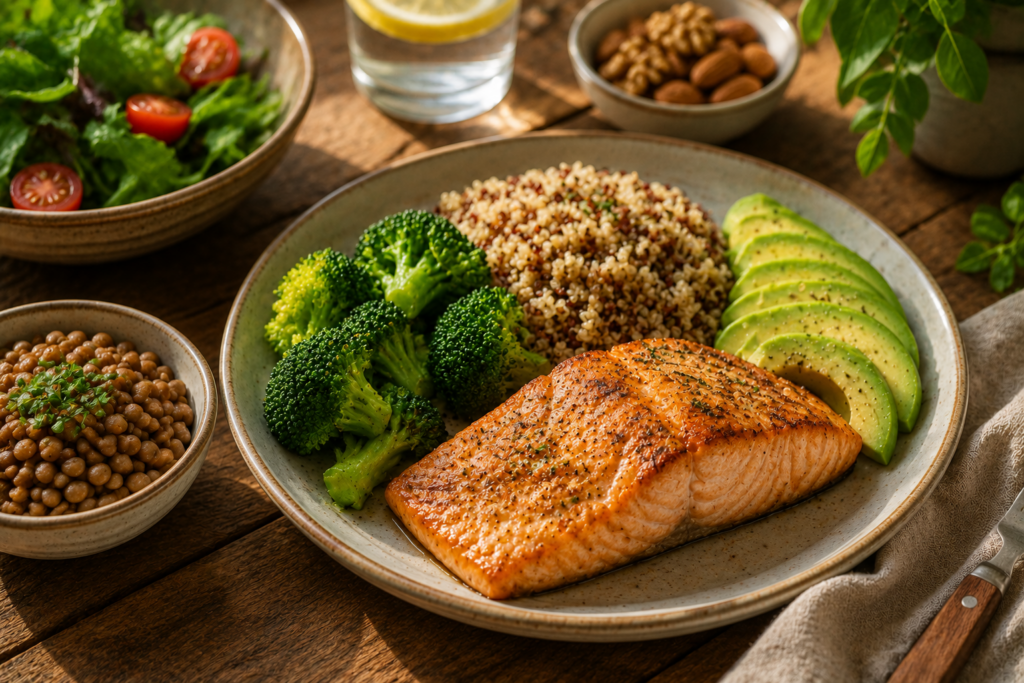
The Best Foods That Stabilize Blood Sugar Naturally Throughout the Day
Building your meals around the following food categories is one of the most powerful things you can do for your metabolic health. These aren’t exotic superfoods — most are staples you’ll find at any grocery store.
High-Fiber Vegetables and Legumes
Non-starchy vegetables are the backbone of any blood-sugar-friendly diet. They deliver vitamins, minerals, and most importantly, soluble fiber — which feeds beneficial gut bacteria and slows glucose absorption. Legumes like lentils, black beans, and chickpeas are especially powerful. A 2012 study in JAMA Internal Medicine found that participants who ate one cup of legumes daily for three months significantly improved their HbA1c and systolic blood pressure compared to a control group. Foods that stabilize blood sugar naturally from this category include:
- Broccoli and Brussels sprouts — rich in sulforaphane, which has shown anti-diabetic effects in clinical research
- Leafy greens (spinach, kale, collards) — high in magnesium, a mineral that supports insulin sensitivity
- Lentils and black beans — slow-digesting complex carbs with a glycemic index under 40
- Artichokes and asparagus — excellent sources of prebiotic fiber that supports a healthy gut-glucose axis
Protein-Rich Foods That Keep Glucose Steady
Protein has a minimal direct effect on blood glucose and, when eaten with carbohydrates, significantly blunts the glucose spike. Aim to include a quality protein source at every meal. Top options include:
- Eggs — one of the most nutrient-dense breakfast options; a 2015 study in The American Journal of Clinical Nutrition showed high-egg diets improved fasting blood glucose in people with type 2 diabetes
- Wild-caught salmon and sardines — provide omega-3 fatty acids that reduce inflammation and improve insulin sensitivity
- Greek yogurt (plain, unsweetened) — offers protein plus probiotics that influence gut-glucose signaling
- Chicken, turkey, and lean beef — versatile, satisfying, and carb-free anchor proteins for any meal
Healthy Fats That Slow Glucose Absorption
Dietary fat delays gastric emptying, meaning the carbohydrates in your meal convert to glucose more slowly. This is why adding avocado to a meal or cooking vegetables in olive oil can meaningfully flatten your blood sugar curve. Foods that stabilize blood sugar naturally in the fat category include:
- Avocados — loaded with monounsaturated fat and nearly 10 grams of fiber per fruit
- Extra virgin olive oil — oleic acid and polyphenols support insulin sensitivity; a staple of the Mediterranean diet, which reduces diabetes risk by up to 52% in some studies
- Nuts and seeds (almonds, walnuts, chia, flax) — provide fat, fiber, and magnesium in one portable package
Practical Meal-by-Meal Strategy for All-Day Blood Sugar Stability
Knowing which foods to eat is only half the battle — timing and combination matter just as much. Here’s a practical framework for keeping glucose stable from your first meal to your last:
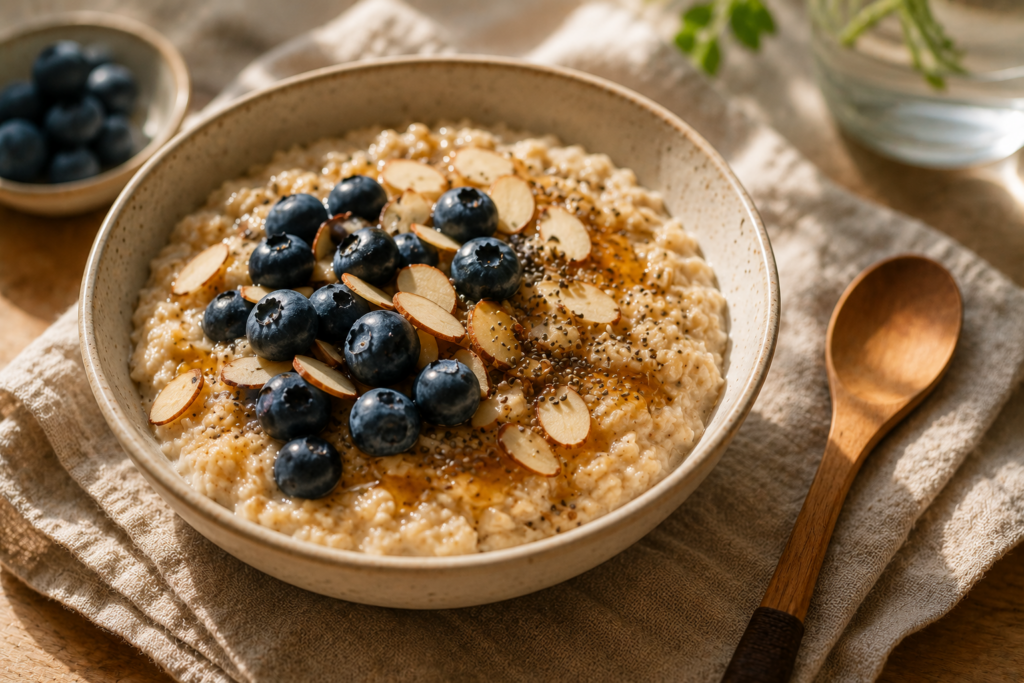
- Breakfast: Prioritize protein and fat before carbs. A two-egg scramble with spinach and avocado, followed by a small serving of berries, produces a far flatter glucose curve than oatmeal or toast alone. Berries are particularly valuable — they’re high in anthocyanins, which a 2020 meta-analysis linked to improved insulin resistance.
- Lunch: Build a plate that’s half non-starchy vegetables, one-quarter lean protein, and one-quarter complex carbs like quinoa or legumes. Drizzle olive oil and add a handful of pumpkin seeds for added fat and magnesium.
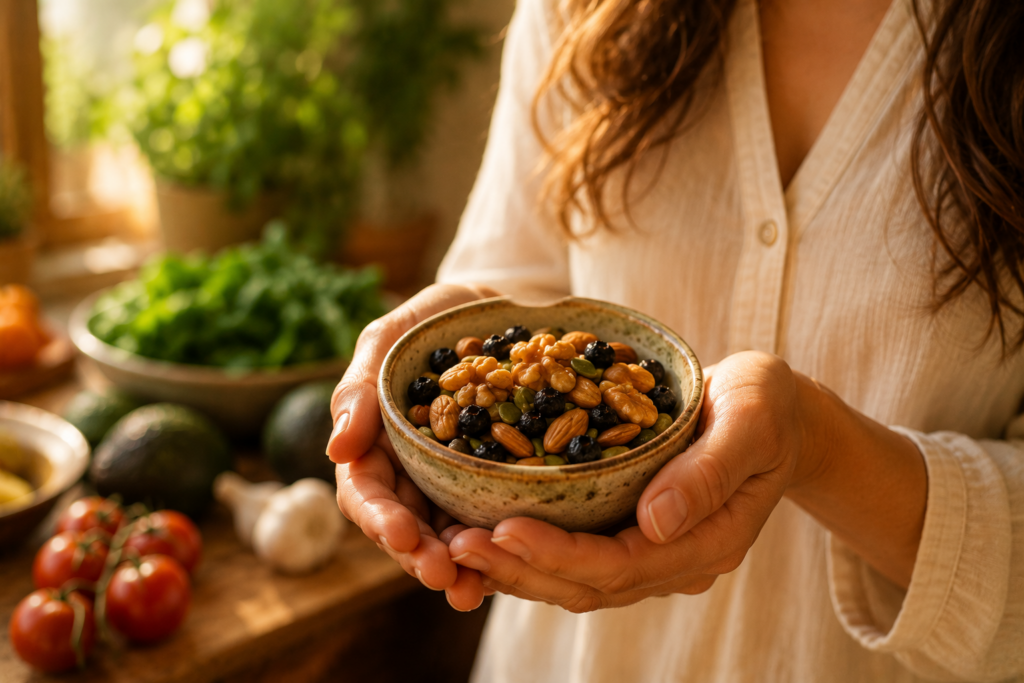
- Snacks: If you snack, make it count. Apple slices with almond butter, hard-boiled eggs, celery with hummus, or a small handful of walnuts all qualify as foods that stabilize blood sugar naturally without triggering a spike.
- Dinner: Keep starchy carbs modest in the evening when insulin sensitivity naturally declines. Prioritize fatty fish, roasted vegetables, and a side of lentils or beans for fiber.
- Timing tip: A 10-minute walk after meals has been shown in multiple studies to reduce postprandial glucose spikes by 12–22%. Combine good food choices with light post-meal movement for compounding benefits.
What to Limit or Avoid for Stable Blood Sugar
Equally important is knowing what disrupts glucose balance. Ultra-processed foods, sugary beverages, refined grains, and foods high in trans fats all promote insulin resistance over time. The average American gets nearly 60% of daily calories from ultra-processed foods — a dietary pattern strongly associated with metabolic dysfunction. Swapping even two or three processed food servings per day for whole-food alternatives can produce measurable improvements in fasting glucose within weeks.
Start Today: Small Changes, Lasting Results
You don’t need a complete diet overhaul to start feeling the difference. Begin by adding one or two of these foods that stabilize blood sugar naturally to your next meal. Swap white rice for cauliflower rice or lentils. Add a handful of spinach to your morning eggs. Replace your afternoon cookie with almond butter on celery. Each small shift compounds over time into significantly better metabolic health, sustained energy, and reduced risk of chronic disease. Your blood sugar — and your energy levels — will thank you.
🌿 Support Your Blood Sugar with GlucoExtend
GlucoExtend is a doctor-formulated supplement designed to help maintain healthy blood sugar levels naturally. Thousands of people use it daily alongside smart food choices to wake up with more energy and stable glucose levels.
👉 See Official Page*Results may vary. Affiliate link.
⚕️ Medical Disclaimer: This article is for informational purposes only and does not constitute medical advice. Always consult a qualified healthcare provider before making changes to your diet, supplements, or treatment plan.