

Best Berberine Supplement for Blood Sugar Control: The Transdermal Breakthrough
⚡ Quick Answer
The best berberine supplement for blood sugar control is one that actually reaches your bloodstream in meaningful concentrations — and that’s where transdermal delivery changes the game. Standard berberine capsules have notoriously poor bioavailability due to first-pass liver metabolism, meaning most of what you swallow never reaches your cells. Transdermal berberine patches bypass digestion entirely, delivering a steadier, more absorbable dose directly through the skin for consistent blood sugar support throughout the day.
📋 Table of Contents
- What Makes a Berberine Supplement Actually Work for Blood Sugar Control
- The Science Behind Berberine and Blood Sugar: Why the Mechanism Matters
- How to Use Berberine Supplement for Blood Sugar Control the Right Way
- The Bioavailability Problem Nobody Talks About
- Common Mistakes That Undermine Your Results
- Why Purisaki Berberine Patches Are a Different Category Entirely
- Conclusion: What Actually Moves the Needle
- ❓ Frequently Asked Questions
Last spring, I watched someone I love hit a wall. She had been logging meals, walking every morning, taking her supplements faithfully — and her fasting numbers refused to budge. It was the kind of frustration that makes you want to throw the whole routine out. Instead of doubling down on the same approach, I went back to square one. I pulled up every piece of research I could find on berberine supplement blood sugar control and started asking different questions. Not “does berberine work?” — that part was settled. But rather: why does it work for some people and not others, and what was everyone getting wrong about delivery?
What I found reshaped everything I thought I knew. And if you’ve been trying to manage blood sugar naturally without getting the results you expected, this article is for you.
What Makes a Berberine Supplement Actually Work for Blood Sugar Control
Let’s start with the honest truth that most supplement guides skip: not all berberine supplement blood sugar control products are created equal — and the difference isn’t just brand quality or milligram count. It comes down to whether the compound actually gets absorbed in concentrations high enough to do anything meaningful.
Berberine is a naturally occurring alkaloid found in plants like barberry, goldenseal, and Oregon grape. It’s been used in traditional Chinese and Ayurvedic medicine for centuries. But what made researchers take notice in recent decades is the way it interacts with blood sugar regulation at a cellular level — and the data is genuinely impressive. Studies comparing berberine to metformin have shown comparable effects on fasting glucose and HbA1c in people with type 2 diabetes. That’s not a small claim.
But here’s what most people get wrong: they assume that buying a reputable 500mg capsule and taking it consistently will automatically deliver those results. The research showing berberine’s effectiveness was conducted with careful dosing protocols — and often with formulations designed to maximize how much actually enters circulation. When you take a standard capsule, the amount that survives digestion and first-pass liver metabolism is often a fraction of what you swallowed.
If you’ve been exploring natural supplements for prediabetes support, berberine consistently sits at the top of evidence-based lists — but the form you choose matters more than the label claim. That nuance is what this article is really about.
And what I found next surprised me more than anything I’d read before.
The Science Behind Berberine and Blood Sugar: Why the Mechanism Matters
Best Berberine Supplements for Blood Sugar
Consult a healthcare provider before starting berberine, especially if taking diabetes medications.
📊 naturalbloodsugartips.com
The mechanism here is actually fascinating — and once you understand it, you’ll see why delivery method changes everything.
Berberine works primarily by activating an enzyme called AMPK — adenosine monophosphate-activated protein kinase. Think of AMPK as your cells’ master energy switch. When it’s activated, your muscles become more efficient at pulling glucose out of the bloodstream. Your liver, which often keeps releasing glucose even when blood sugar is already elevated (a key problem in type 2 diabetes), gets a signal to slow that release down. Insulin sensitivity improves from multiple directions simultaneously.
Here’s a counterintuitive fact that most people find surprising: berberine also influences the gut microbiome in ways that independently affect glucose metabolism. Research shows it selectively enriches beneficial bacteria that produce short-chain fatty acids — compounds that improve the gut-liver-pancreas communication loop. This means berberine isn’t just acting on one pathway. It’s working systemically. That’s part of why the clinical results look so strong.
What the research consistently shows is that berberine also reduces the enzyme activity responsible for breaking down complex carbohydrates in the gut — slowing glucose absorption after meals in a way that’s genuinely meaningful for post-meal spikes. If your numbers tend to look worse after eating, that’s exactly the window where berberine’s mechanism is working hardest.
Your liver keeps releasing glucose overnight — even when you’re fasting and eating nothing. That’s why fasting glucose in the morning is often the most stubborn number to move. Berberine’s AMPK activation directly addresses this through a pathway called gluconeogenesis suppression, which is the same mechanism metformin targets. The fact that a plant-derived compound hits this same pathway is remarkable, and it’s why clinicians have been paying close attention.
Understanding this mechanism also explains why supplements that improve insulin sensitivity tend to work best when paired with consistent lifestyle habits — berberine amplifies what your body is already trying to do, rather than overriding it entirely.
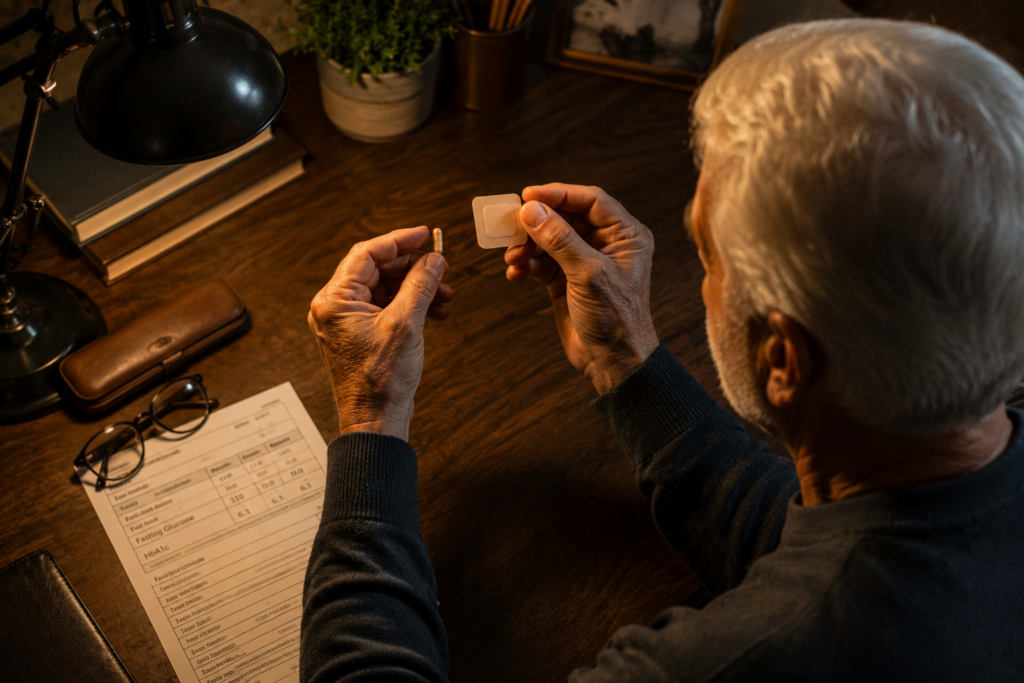
After months of research into this exact mechanism, I kept coming back to one formula that actually addressed the root issue rather than just masking symptoms. It was developed with a clinical approach — the kind that makes sense when you understand the science behind what we just covered. That formula is Purisaki Berberine Patches.
If you’ve tried berberine capsules and dealt with digestive discomfort, Purisaki Berberine Patches offer a smarter solution — a plant-based transdermal patch that delivers berberine directly through the skin, bypassing digestion entirely.
See How Purisaki Berberine Patches Works →*Individual results may vary. Always consult your healthcare provider.
How to Use Berberine Supplement for Blood Sugar Control the Right Way
Even the best supplement underperforms when it’s used incorrectly. Here’s what actually matters when you’re using a berberine supplement for blood sugar control — whether you’re starting out or trying to troubleshoot plateaued results.
- Timing relative to meals: For capsule-based berberine, taking it 20–30 minutes before your largest meals targets the post-meal glucose spike directly. The compound is actively working as carbohydrates are being broken down and absorbed. Most people take it once and forget about timing — this single adjustment changes results.
- Consistency over heroic dosing: The clinical evidence points to consistent, moderate doses over time rather than large sporadic doses. AMPK activation builds a cumulative effect — it’s not a single-event drug. Think of it more like strength training than a pain reliever.
- Pair with food that contains fat: Berberine is fat-soluble, meaning it absorbs better when there’s some dietary fat present. Taking it with a completely fat-free meal reduces uptake. A small amount of olive oil, nuts, or avocado in the same meal improves how much actually reaches circulation.
- Give it a real runway: Understanding the berberine timeline for blood sugar improvement is critical. Most people see meaningful shifts in fasting glucose between weeks 4 and 8. Evaluating results at week 2 and concluding “it doesn’t work” is one of the most common — and costly — mistakes.
- Watch for digestive signals: Standard berberine capsules cause GI discomfort in a meaningful percentage of users — cramping, loose stools, nausea. This isn’t just inconvenient; it often causes people to reduce or abandon their dose entirely, which defeats the purpose. This is where delivery format becomes the practical deciding factor.
But here’s where it gets interesting — following all of these guidelines still doesn’t solve the fundamental bioavailability problem that undermines most people’s results.
The Bioavailability Problem Nobody Talks About
What if the real problem isn’t what you’re taking, but how it’s reaching — or failing to reach — your cells?
Berberine is classified pharmacologically as having poor oral bioavailability. When you swallow a capsule, the compound faces a gauntlet: stomach acid, intestinal enzymes, gut wall absorption limitations, and finally the liver’s first-pass metabolism, which processes and neutralizes a significant portion before it ever reaches systemic circulation. Researchers have estimated that only a small fraction of an oral berberine dose reaches the bloodstream in active form. That’s why clinical studies often use split dosing protocols (three times daily) — they’re compensating for poor single-dose absorption.
This is the myth worth busting directly: taking more berberine in capsule form doesn’t proportionally increase the amount that works in your body. At a certain threshold, you’re mainly increasing the chance of GI side effects, not improving efficacy. The bottleneck isn’t dose — it’s the delivery pathway itself.
Transdermal delivery — applying compounds through the skin — is a well-established pharmaceutical approach used for hormones, nicotine, pain medications, and more. The skin, while selective, allows lipophilic (fat-soluble) compounds to pass through and enter capillary circulation directly, completely bypassing the digestive tract and liver first-pass metabolism. Berberine’s fat-soluble nature makes it a reasonable candidate for this delivery route — and it’s precisely why a transdermal patch approach is a fundamentally different category than a capsule, not just a different format.
Common Mistakes That Undermine Your Results
If you’ve been using a berberine supplement for blood sugar support and the results have been underwhelming, one of these is likely why.
Choosing based on price alone. Budget berberine supplements often use lower-grade extracts with inconsistent alkaloid concentrations. The label might say 500mg, but what percentage of that is actually berberine HCl — the active form — varies enormously between manufacturers. This isn’t a premium vs. generic argument; it’s a quality control reality.
Ignoring the sleep and stress piece. Cortisol — the stress hormone elevated by poor sleep and chronic stress — directly counteracts berberine’s glucose-regulating mechanisms. If someone is sleeping five hours a night and running on stress, the best supplement in the world is fighting uphill. The supplement supports the system; it doesn’t override it.
Stopping when results plateau. Blood sugar management isn’t linear. The body adapts, adjusts, and sometimes stalls before moving again. Most people who stop at the plateau never see the second phase of improvement that often follows. Clinical evidence supports staying consistent for at least 12 weeks before drawing any firm conclusions.
Not tracking the right numbers. Fasting glucose is one data point. Post-meal glucose (measured 1–2 hours after eating), HbA1c trends over 3 months, and energy levels throughout the day give you a far more complete picture of how berberine is actually working in your body.
Why Purisaki Berberine Patches Are a Different Category Entirely
After going deep on everything above — the mechanism, the bioavailability problem, the delivery research — one product consistently made sense as the logical conclusion: Purisaki Berberine Patches.
The core advantage is the transdermal delivery system. Rather than running berberine through your digestive tract and hoping enough survives to reach circulation, the patch delivers it directly through skin absorption into the bloodstream. This means no GI discomfort, no concern about meal timing or fat co-ingestion, and a steadier release profile throughout the day rather than the spike-and-drop of capsule dosing.
What makes Purisaki’s approach compelling from a research standpoint is that it aligns the delivery method with what we actually know about berberine’s limitations. Most brands optimize their marketing. Purisaki’s formulation appears to have optimized the pharmacology instead — which is exactly the kind of clinical thinking that produces results worth talking about.
For anyone who has tried standard berberine supplement blood sugar control options and hit a ceiling, the transdermal route isn’t a gimmick — it’s a genuinely different physiological pathway. And given that the primary barrier to berberine’s effectiveness has always been bioavailability, addressing that barrier directly is the smartest place to start.
Conclusion: What Actually Moves the Needle
Managing blood sugar naturally is not about finding a magic bullet. It’s about stacking well-understood mechanisms in ways that compound over time — and making sure every piece you add to that stack is actually doing its job.
Berberine is one of the most well-researched natural compounds for blood sugar regulation that exists. The evidence isn’t fringe or preliminary — it’s robust, replicated, and taken seriously by clinicians. The reason so many people don’t get the results the research promises comes down to a delivery problem, not a chemistry problem. The compound works. Getting it absorbed reliably is the challenge that most capsule-based products quietly fail to solve.
If you’ve done the right things — cleaned up your diet, moved your body, stayed consistent — and you’re still watching stubborn numbers, the answer probably isn’t to try harder with the same approach. It’s to ask whether the berberine supplement for blood sugar control you’re using is actually reaching your cells in the concentrations needed to activate the mechanisms the research describes.
That question has a clear answer now. And it’s one worth acting on.
❓ Frequently Asked Questions
Why does berberine have poor bioavailability when taken as a capsule?
Berberine is heavily metabolized by the liver before it reaches systemic circulation, a process called first-pass metabolism, which can destroy the majority of an oral dose. This means blood concentrations often stay too low to produce meaningful blood sugar benefits, even at higher capsule doses.
How does transdermal berberine delivery actually improve blood sugar control compared to pills?
Transdermal patches release berberine directly through the skin into the bloodstream, bypassing the digestive tract and liver metabolism entirely. This results in more stable, sustained plasma concentrations throughout the day, which better mirrors the steady glucose-regulating effect the compound is known for.
How long does berberine take to show results for blood sugar control?
Most research on berberine and blood sugar shows measurable improvements in fasting glucose and HbA1c within 4 to 12 weeks of consistent use. Results vary depending on delivery method, dosage, and individual metabolic factors, with higher-bioavailability formats generally showing faster response times.
Can you take berberine for blood sugar control if you are already on metformin?
Berberine activates similar metabolic pathways as metformin, particularly AMPK, so combining the two can amplify glucose-lowering effects beyond what either achieves alone. This overlap means the combination carries a real risk of hypoglycemia and warrants careful monitoring of blood glucose levels.
What dose of berberine is clinically effective for lowering blood sugar?
Clinical trials typically use 500 mg taken two to three times daily, totaling 1,000–1,500 mg per day, to achieve significant reductions in fasting blood glucose and postprandial spikes. With low-bioavailability oral forms, however, a substantial portion of that dose is lost before reaching target tissues, making delivery method as important as the stated milligram amount.
📊 naturalbloodsugartips.com
My honest recommendation after everything I have researched
🩹 The Smarter Way to Take Berberine — Without the Stomach Pain
Purisaki Berberine Patches combine plant-based berberine with other natural ingredients in a convenient daily patch format — no pills, no stomach upset, no guesswork. Just consistent, gentle support throughout the day.
👉 Yes, I Want to Try Purisaki Berberine Patches✓ Official website | ✓ 60-day money-back guarantee | ✓ Free shipping
⚠️ Due to high demand, stock is limited. Check availability before it sells out.
*Results may vary. This is an affiliate link — I only recommend what I have researched for my own family.

About the Author — Sarah
I am not a doctor or nutritionist — I am a daughter who has been caring for my mother since her type 2 diabetes diagnosis. That journey pushed me to research natural alternatives and evidence-based lifestyle changes. Everything I share comes from that personal mission: to help my mom live better, with more energy and less dependence on medication. Always consult your healthcare provider before making any changes to your treatment plan.
⚕️ Medical Disclaimer: I am not a medical professional. This blog reflects my personal research caring for a family member with diabetes. For informational purposes only — not medical advice. Always consult a qualified healthcare provider.
📚 Scientific References
- Yin J, Xing H, Ye J. Efficacy of berberine in patients with type 2 diabetes mellitus. Metabolism. 2008;57(5):712-717. PMID: 18442638.
- Zhang H, Wei J, Xue R, et al. Berberine lowers blood glucose in type 2 diabetes mellitus patients through increasing insulin receptor expression. Metabolism. 2010;59(2):285-292. PMID: 19800084.
- Cao C, Su M. Effects of berberine on glucose-lipid metabolism, inflammatory factors and insulin resistance in patients with metabolic syndrome. Experimental and Therapeutic Medicine. 2019;17(4):3009-3014. PMID: 30936976.
- Xu X, Yi H, Wu J, et al. Therapeutic effect of berberine on metabolic diseases: Both pharmacological data and clinical evidence. Biomedicine & Pharmacotherapy. 2021;133:110984. PMID: 33212367.