

Sluggish Metabolism Symptoms Remedies: What’s Really Going On and How to Fix It Naturally
⚡ Quick Answer
Sluggish metabolism symptoms include unexplained weight gain, persistent fatigue, cold sensitivity, brain fog, and slow digestion — and they’re often driven by hormonal imbalances, chronic inflammation, or mitochondrial dysfunction rather than simple calorie math. Addressing sluggish metabolism symptoms and remedies naturally means targeting the root mechanisms: optimizing thyroid function, improving insulin sensitivity, supporting mitochondrial health, and reducing cortisol-driven metabolic suppression through diet, movement, sleep, and targeted herbal support.
📋 Table of Contents
- Recognizing Sluggish Metabolism Symptoms Remedies Start With
- The Real Science: Why Your Metabolism Slows Down
- How to Address Sluggish Metabolism Symptoms and Remedies Naturally
- Common Mistakes That Keep Your Metabolism Stuck
- Natural Remedies for Sluggish Metabolism Symptoms Worth Taking Seriously
- Where to Go From Here
- ❓ Frequently Asked Questions
It was late on a Tuesday night — well past eleven — when something finally clicked. I’d been buried in research for hours, scrolling through study after study on PubMed, looking for answers that actually made sense. And then I found it: a mechanism that explained, clearly and precisely, why everything we’d been trying wasn’t working. Not a supplement failure, not a willpower problem. A biological process that most mainstream advice completely ignores. That moment reshaped how I think about sluggish metabolism symptoms remedies — and it’s the reason I wrote this article.
If you’ve been dealing with stubborn weight that won’t budge, exhaustion that no amount of sleep fixes, or a body that seems to run ten degrees colder than everyone else’s — you’re not imagining it. You may be experiencing the classic signs of a slowing metabolic rate, and the solutions go much deeper than “eat less, move more.”
Recognizing Sluggish Metabolism Symptoms Remedies Start With
Before you can fix something, you have to see it clearly. Sluggish metabolism symptoms and remedies are deeply connected — because the symptoms themselves point directly to which biological systems need support. This isn’t a vague cluster of “feeling off.” The signs are specific, and they tend to travel in groups.
The most commonly reported symptoms of a slow metabolism include:
- Unexplained weight gain or extreme difficulty losing weight — especially around the midsection, even when eating carefully
- Persistent fatigue that doesn’t resolve with rest — this is your cells signaling they’re not producing energy efficiently
- Feeling cold all the time — cold hands, cold feet, low basal body temperature — a classic signal of reduced thermogenesis
- Brain fog and slow thinking — the brain is one of the most metabolically expensive organs; when metabolism falters, cognition often follows
- Constipation or sluggish digestion — gut motility is partly driven by metabolic rate, particularly thyroid output
- Dry skin, thinning hair, and brittle nails — often dismissed as cosmetic issues, but they’re reliable metabolic indicators
- Low mood or mild depression — neurotransmitter production is energy-dependent; a slowing metabolism affects mood chemistry directly
What’s worth noting here is that many of these symptoms overlap with hypothyroidism, insulin resistance, and adrenal fatigue — and that overlap isn’t coincidental. These systems are metabolically intertwined. Treating symptoms in isolation rarely leads anywhere useful.
But here’s where it gets interesting — understanding why these symptoms appear together is the key to understanding why certain natural remedies actually work, while others are essentially useless.
The Real Science: Why Your Metabolism Slows Down
7 Signs You Have a Sluggish Metabolism
These symptoms may also indicate thyroid or other medical conditions. Consult a healthcare provider for proper diagnosis.
📊 naturalbloodsugartips.com
Most people think of metabolism as a dial — something you can simply crank up with caffeine or green tea extract. The reality is far more layered. Sluggish metabolism symptoms remedies that actually work have to account for at least three distinct mechanisms that researchers now understand are driving the slowdown.
First: mitochondrial dysfunction. Your mitochondria are the power plants inside every cell. When they become inefficient — due to oxidative stress, nutrient deficiencies, or chronic inflammation — your body produces less ATP (cellular energy) per unit of fuel. You eat the same amount, but generate less energy and more metabolic waste. The result feels exactly like a sluggish metabolism: fatigue, weight gain, brain fog. Research consistently shows that mitochondrial efficiency decreases significantly with age, sedentary behavior, and high-sugar diets.
Second: thyroid-adrenal crosstalk. Here’s the counterintuitive part that most people miss entirely — chronic stress doesn’t just make you tired, it actively suppresses thyroid function. Elevated cortisol inhibits the conversion of T4 (inactive thyroid hormone) to T3 (the active form that drives metabolic rate). So if you’re under prolonged stress and your doctor says your TSH looks “normal,” you may still have functionally low T3 at the cellular level. This mechanism explains why so many people with textbook sluggish metabolism symptoms get told their labs are fine.
Third: leptin resistance. Leptin is the hormone that tells your brain you have enough energy stored and that your metabolism can run at full speed. When cells become resistant to leptin’s signal — often triggered by high fructose intake, poor sleep, and chronic inflammation — the brain perceives a state of starvation and deliberately slows metabolic rate to conserve energy. This is why learning to fix leptin resistance naturally is one of the most overlooked strategies for restoring healthy metabolic function.
The mechanism here is actually fascinating when you think about it from an evolutionary angle: your body isn’t broken, it’s executing a survival program that made perfect sense 10,000 years ago but works against you in a modern food environment. That reframe changes everything about how you approach the remedies.
After months of research into this exact mechanism, I kept coming back to one formula that actually addressed the root issue rather than just masking symptoms. It was developed with a clinical approach — the kind that makes sense when you understand the science behind what we just covered. That formula is Cardio Slim Tea.
More people are turning to Cardio Slim Tea as a gentle daily ritual — a carefully blended herbal tea formulated to support healthy blood pressure, cholesterol levels, and natural weight management.
See How Cardio Slim Tea Works →*Individual results may vary. Always consult your healthcare provider.

How to Address Sluggish Metabolism Symptoms and Remedies Naturally
Now that the “why” makes sense, the “how” becomes much more focused. Addressing sluggish metabolism symptoms remedies naturally isn’t about doing everything at once — it’s about stacking strategies that work on the right biological levers, in the right order. Here’s a practical framework built from what the evidence actually supports.
Step 1 — Prioritize protein at every meal. Of all macronutrients, protein has the highest thermic effect — your body burns roughly 20–30% of protein calories during digestion itself. That’s not a small number. What the research consistently shows is that adequate protein intake (around 1.2–1.6g per kg of body weight) also preserves lean muscle mass, which is the primary driver of resting metabolic rate. Losing muscle — which happens on low-calorie, low-protein diets — is one of the fastest ways to permanently slow metabolism.
Step 2 — Time your eating strategically. Your liver continues releasing glucose overnight even when you’re fasting — that’s a normal function, but it also means your first meal of the day carries metabolic weight beyond just calories. Eating within a defined window (many people do well with 8–10 hours) reduces the burden on insulin throughout the day and gives your cells time to restore sensitivity. This isn’t about starvation — it’s about timing that works with your circadian biology rather than against it.
Step 3 — Use cold exposure deliberately. This is where it gets counterintuitive for most people: brief cold exposure — even a 2-minute cold shower — activates brown adipose tissue (BAT), a specialized fat that generates heat by burning calories. Clinical evidence supports BAT activation as a meaningful contributor to metabolic rate, particularly in adults with higher white fat stores. This isn’t folk wisdom; it’s measurable thermogenesis.
Step 4 — Resistance training over cardio. Most people reach for the treadmill. What actually works better for long-term metabolic rate is building muscle through resistance training. Muscle tissue burns calories even at rest — significantly more than fat tissue does. Two to three sessions per week of strength-focused movement creates a compounding metabolic advantage that cardio simply cannot match on its own. For women especially, exploring natural metabolism boosters for women alongside resistance training can make a measurable difference in outcomes.
Step 5 — Address sleep as a metabolic intervention. Most people don’t know that just four nights of shortened sleep (around five to six hours) can reduce insulin sensitivity by nearly 25% and measurably suppress leptin. Sleep isn’t passive recovery — it’s active metabolic maintenance. Treating sleep as a priority is one of the most direct things anyone can do to support healthy metabolic function.
What I found next, when I looked at the specific compounds that support these pathways, surprised me more than anything else in this research.
Common Mistakes That Keep Your Metabolism Stuck
If you’ve tried everything and still feel like you’re running on empty, there’s a good chance one of these patterns is working against you. These are the mistakes I see repeated constantly — and the ones that took me the longest to unlearn.
The biggest myth worth busting: eating less will fix a slow metabolism. This sounds logical — fewer calories in, weight comes off — but it ignores the adaptive thermogenesis response. When you chronically under-eat, your body doesn’t just use stored fat for fuel. It down-regulates thyroid output, reduces non-exercise activity thermogenesis (the fidgeting, pacing, and small movements you do automatically), and breaks down muscle for fuel. The result is a metabolism that’s even slower than when you started, and a body that becomes extraordinarily efficient at storing every calorie it gets. This is the yo-yo dieting trap, and it’s grounded in real physiology.
Other patterns worth examining honestly:
- Skipping breakfast consistently when under stress — cortisol peaks in the morning, and without fuel, this can amplify the cortisol-T3 conversion problem discussed earlier
- Relying on stimulants (excessive caffeine, energy drinks) to manage fatigue — these mask the symptom while increasing cortisol load, compounding the problem over time
- Ignoring micronutrient gaps — selenium, zinc, magnesium, and iodine are all required for thyroid hormone synthesis and conversion; deficiencies in any of these directly impair metabolic rate
- Only doing steady-state cardio — without resistance work, cardio can actually accelerate muscle loss on a deficit, reducing resting metabolic rate over time
What if the real problem isn’t how much you’re eating, but what your cells are doing with the energy they receive? That question leads directly to the most promising area of natural metabolic support.
Natural Remedies for Sluggish Metabolism Symptoms Worth Taking Seriously
When it comes to addressing sluggish metabolism symptoms remedies naturally, a handful of compounds stand out not just in traditional use but in modern research. These aren’t magic bullets — but layered onto the lifestyle foundations above, they create meaningful support.
Green tea catechins (EGCG) have some of the most consistent human trial data of any botanical compound studied for metabolic support. They inhibit an enzyme that breaks down norepinephrine — effectively extending the thermogenic signal in fat tissue. The effect is modest but real, and it compounds with caffeine present naturally in the tea.
Ashwagandha addresses the cortisol-thyroid axis directly. Multiple randomized trials have shown significant reductions in cortisol with standardized ashwagandha extract, which in turn can support better T4-to-T3 conversion. For anyone dealing with stress-driven metabolic slowdown, this is one of the most evidence-aligned adaptogens available.
Berberine activates AMPK — sometimes called the “metabolic master switch” — in a way that improves both insulin and leptin sensitivity simultaneously. Clinical evidence supports its use for blood sugar regulation and weight management, and some researchers have compared its insulin-sensitizing effect favorably to pharmaceutical options, without the same side effect profile. For those looking for natural fat burners without side effects, berberine is worth serious attention.
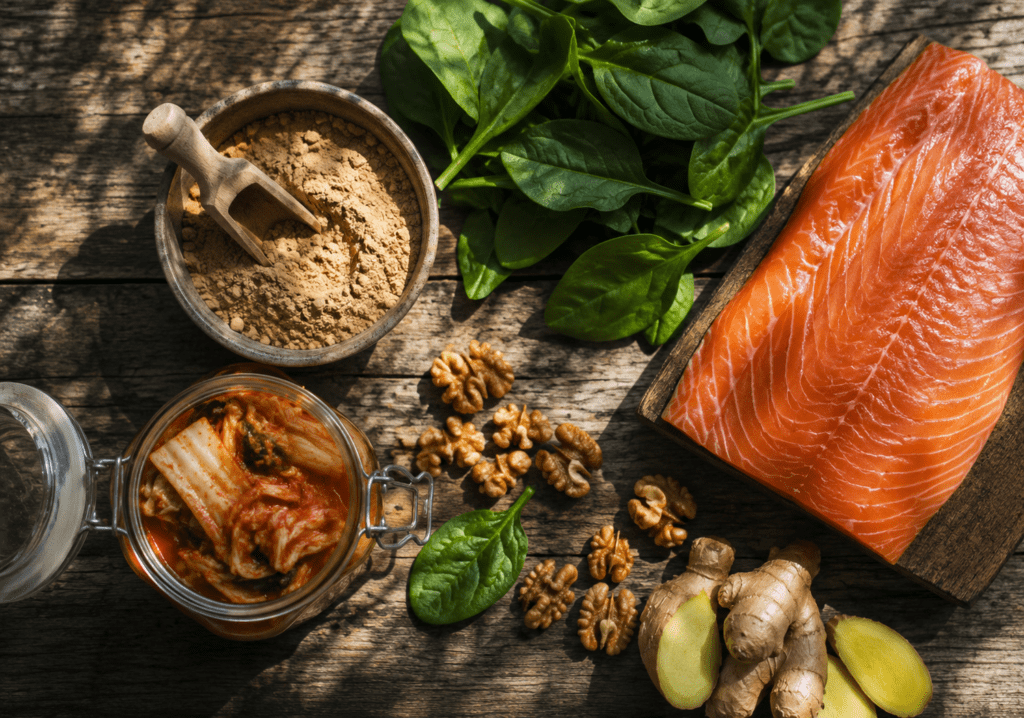
Ginger root supports thermogenesis through a different pathway — it increases the thermic effect of food and has been shown to reduce feelings of hunger post-meal, which helps prevent the compensatory overeating that undermines metabolic recovery efforts.
The smartest approach to sluggish metabolism symptoms remedies naturally combines these compounds with the dietary and lifestyle levers discussed above. They’re not a replacement for foundational habits — but for many people, they’re the difference between slow progress and meaningful change.
Where to Go From Here
A sluggish metabolism is not a character flaw, and it’s not a permanent sentence. It’s a set of biological signals that, once you understand what they’re pointing to, can actually be addressed in a targeted and intelligent way. The symptoms — the fatigue, the cold sensitivity, the weight that won’t move — are your body’s way of telling you that a specific set of systems need support. And the research gives us genuine tools for that.
What I’ve learned through years of reading and applying this research is that the people who see real results aren’t doing more — they’re doing the right things in the right combination. Protein and strength training to protect lean mass. Sleep as a non-negotiable metabolic intervention. Targeted adaptogens and botanicals to address the hormonal mechanisms. And a clear-eyed understanding of why restriction alone makes things worse, not better.
Addressing sluggish metabolism symptoms remedies naturally is entirely possible — and it doesn’t require a complete life overhaul. It requires understanding the system you’re working with, and then choosing tools that respect that biology rather than fight against it. Start with one lever. Build from there. The mechanisms are on your side once you stop working against them.
❓ Frequently Asked Questions
What are the earliest signs that your metabolism is slowing down before weight gain starts?
Before weight gain becomes obvious, early signs include persistent fatigue that doesn’t improve with rest, feeling unusually cold in warm environments, and needing more sleep than usual without feeling refreshed. Brain fog and sluggish bowel movements are also early indicators tied to declining thyroid activity and reduced mitochondrial energy output.
Can high cortisol levels actually slow your metabolism, and how do you fix it?
Yes — chronically elevated cortisol suppresses thyroid hormone conversion, promotes fat storage (especially visceral fat), and breaks down muscle tissue, all of which lower your resting metabolic rate. Reducing cortisol-driven metabolic suppression requires consistent sleep (7–9 hours), stress regulation practices like zone-2 cardio or breathwork, and adaptogenic herbs such as ashwagandha that modulate the HPA axis.
Which foods specifically help fix a sluggish metabolism by improving insulin sensitivity?
Foods that measurably improve insulin sensitivity include fatty fish rich in omega-3s, leafy greens high in magnesium, fermented foods that support the gut microbiome, and low-glycemic whole grains that prevent blood sugar spikes. Reducing ultra-processed foods and refined sugars is equally critical, since chronic glucose dysregulation directly impairs mitochondrial function and metabolic rate.
Is sluggish metabolism always a thyroid problem, or are there other causes people miss?
Thyroid dysfunction is a common cause, but frequently missed drivers include mitochondrial dysfunction (reduced cellular energy production), poor gut microbiome diversity that impairs hormone metabolism, and chronic low-grade inflammation that disrupts insulin signaling. Many people address the thyroid and see partial results because they haven’t resolved the underlying inflammation or mitochondrial inefficiency.
What common dieting mistakes make a slow metabolism even worse?
Severe caloric restriction below roughly 1,200 calories triggers adaptive thermogenesis, where the body actively lowers its metabolic rate to conserve energy, making long-term weight loss harder. Skipping protein (which has the highest thermic effect of food) and doing only steady-state cardio without resistance training are two other mistakes that accelerate muscle loss and further reduce basal metabolic rate.
📊 naturalbloodsugartips.com
My honest recommendation after everything I have researched
🍵 A Daily Tea Ritual for Your Heart & Waistline
Cardio Slim Tea combines traditional heart-supporting herbs in a convenient daily tea format — no pills, no harsh chemicals. Just a warm, calming ritual that works with your body’s natural processes.
👉 Yes, I Want to Try Cardio Slim Tea✓ Official website | ✓ 60-day money-back guarantee | ✓ Free shipping
⚠️ Due to high demand, stock is limited. Check availability before it sells out.
*Results may vary. This is an affiliate link — I only recommend what I have researched for my own family.

About the Author — Sarah
I am not a doctor or nutritionist — I am a daughter who has been caring for my mother since her type 2 diabetes diagnosis. That journey pushed me to research natural alternatives and evidence-based lifestyle changes. Everything I share comes from that personal mission: to help my mom live better, with more energy and less dependence on medication. Always consult your healthcare provider before making any changes to your treatment plan.
⚕️ Medical Disclaimer: I am not a medical professional. This blog reflects my personal research caring for a family member with diabetes. For informational purposes only — not medical advice. Always consult a qualified healthcare provider.
📚 Scientific References
- Mullur R, Liu YY, Brent GA. Thyroid hormone regulation of metabolism. Physiological Reviews. 2014;94(2):355–382. PMID: 24692351.
- Taheri S, Lin L, Austin D, Young T, Mignot E. Short sleep duration is associated with reduced leptin, elevated ghrelin, and increased body mass index. PLoS Medicine. 2004;1(3):e62. PMID: 15602591.
- Chandrasekhar K, Kapoor J, Anishetty S. A prospective, randomized double-blind, placebo-controlled study of safety and efficacy of a high-concentration full-spectrum extract of ashwagandha root in reducing stress and anxiety in adults. Indian Journal of Psychological Medicine. 2012;34(3):255–262. PMID: 23439798.
- Ye Y, Liu X, Wu N, Han Y, Wang J, Yu Y, Chen Q. Efficacy of berberine alone and in combination for the treatment of type 2 diabetes: a systematic review and meta-analysis. Frontiers in Pharmacology. 2021;12:709831. PMID: 34489712.