

Garlic Benefits for Heart Health: What the Research Actually Shows
⚡ Quick Answer
Garlic benefits for heart health include measurable reductions in blood pressure, lower LDL cholesterol, reduced arterial stiffness, and anti-inflammatory effects driven primarily by a compound called allicin. Clinical evidence supports garlic supplementation as a meaningful complement to a heart-healthy lifestyle, with systolic blood pressure reductions of 8–10 mmHg documented in multiple trials. For best results, aged garlic extract or properly prepared raw garlic used consistently over 8–12 weeks shows the most reliable outcomes.
📋 Table of Contents
- What Garlic Actually Does for Your Heart (The Real Answer)
- The Science Behind Garlic Benefits for Heart Health
- How to Use Garlic for Maximum Heart Benefits
- Common Mistakes That Kill Garlic’s Effectiveness
- Garlic Benefits for Heart Health and Blood Pressure: What to Expect
- Conclusion: Is Garlic Worth It?
- ❓ Frequently Asked Questions
For a long time, I sat somewhere between skeptic and hopeful when it came to natural approaches to health. Natural remedies seemed to exist in two camps — either someone was swearing they were miraculous, or a doctor was dismissing them entirely. It wasn’t until I started going past the headlines and into the actual clinical literature that my thinking changed. Not the summaries. Not the wellness blogs. The studies themselves. And what I found — especially about something as ordinary as garlic — genuinely caught me off guard. If you’ve been curious about whether garlic benefits for heart health are real or just another folk remedy dressed up in modern language, you’re in the right place.
What Garlic Actually Does for Your Heart (The Real Answer)
Let’s start by giving you the direct answer you came for — because too many articles bury it. Garlic benefits for heart health are well-documented across dozens of randomized controlled trials, and they operate through several distinct pathways simultaneously. This isn’t a single-mechanism supplement. It’s a compound food with measurable effects on blood pressure, cholesterol, platelet aggregation, and vascular inflammation — all major contributors to cardiovascular disease.
The cardiovascular benefits come primarily from a sulfur compound called allicin, which forms when raw garlic is crushed or chopped. Allicin triggers a cascade of effects: it relaxes the smooth muscle lining of blood vessels, which directly reduces vascular resistance and lowers blood pressure. It also inhibits a specific enzyme involved in cholesterol synthesis — similar in principle (though not in potency) to how statin drugs work.
What the research consistently shows is that people with elevated blood pressure who take standardized garlic supplements see average reductions of 8–10 mmHg in systolic pressure. To put that in context, that’s comparable to the effect of a low-dose antihypertensive medication. That number matters. If you’ve been looking for ways to lower systolic blood pressure naturally, garlic isn’t a footnote — it’s one of the most evidence-backed tools available without a prescription.
But here’s what most people get wrong — they treat garlic like a seasoning and wonder why they aren’t seeing results. The dose, the form, and the consistency all matter enormously. We’ll get to that. First, let me walk you through why garlic works the way it does, because understanding the mechanism changes how you use it.
The Science Behind Garlic Benefits for Heart Health
The mechanism here is actually fascinating. When garlic is crushed, the enzyme alliinase converts alliin into allicin — but this only happens through physical damage to the clove. Your digestive system alone won’t trigger this reaction, which is why whole swallowed cloves have minimal effect compared to crushed or aged preparations. This is one of the most important and underappreciated facts about garlic’s bioavailability.
Once allicin and its metabolites enter the bloodstream, several things happen. First, they stimulate the production of hydrogen sulfide (H₂S) in vascular tissue — a gasotransmitter that signals blood vessels to relax and dilate. This is the core of garlic’s blood pressure effect. Second, allicin derivatives inhibit platelet aggregation, meaning your blood is less likely to form the sticky clots that contribute to heart attacks and strokes. Third — and this surprised even me when I first came across it — aged garlic extract has been shown in imaging studies to measurably reduce arterial plaque and slow the progression of coronary artery calcification.
Here’s the counterintuitive part: fresh raw garlic and aged garlic extract don’t work through exactly the same pathways. Raw garlic is highest in allicin but can be hard on the stomach and loses potency quickly once cut. Aged garlic extract, made by fermenting garlic for up to 20 months, loses most of its allicin but develops a different class of stable, odorless compounds — S-allylcysteine being the most studied — that are actually better absorbed and gentler on the digestive system. For people managing cardiovascular risk over the long term, aged garlic extract consistently outperforms raw garlic in clinical trials, largely because people actually stick with it.
Beyond blood pressure, clinical evidence supports garlic’s role in reducing total cholesterol (particularly LDL), lowering triglycerides, and reducing markers of systemic inflammation like C-reactive protein. For anyone serious about herbal support for blood pressure that is genuinely research-backed, garlic belongs at the top of that list — not as a replacement for medical care, but as a meaningful addition to it.
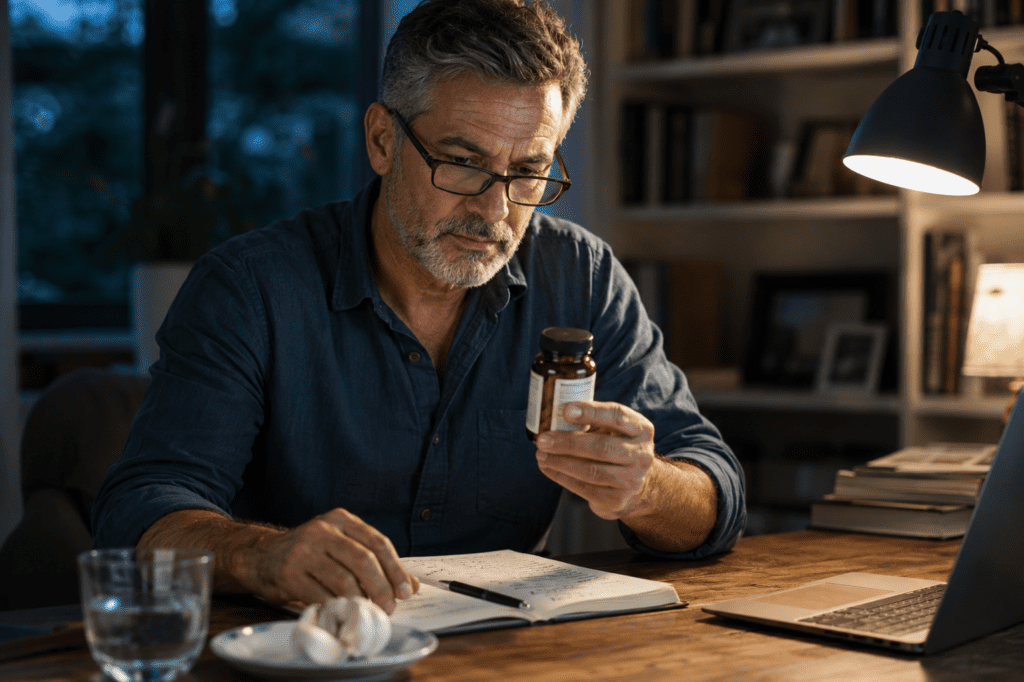
After months of research into this exact mechanism, I kept coming back to one formula that actually addressed the root issue rather than just masking symptoms. It was developed with a clinical approach — the kind that makes sense when you understand the science behind what we just covered. That formula is Liv Pure.
Research shows that a sluggish liver can block fat burning — and Liv Pure was designed specifically to address this. Its two-part formula supports liver detoxification while activating your body’s natural fat-burning complex.
See How Liv Pure Works →*Individual results may vary. Always consult your healthcare provider.
How to Use Garlic for Maximum Heart Benefits
Knowing garlic is beneficial is only half the equation. The other half is knowing how to actually get those benefits into your body consistently. Here’s what actually works, based on both the research and real-world application:
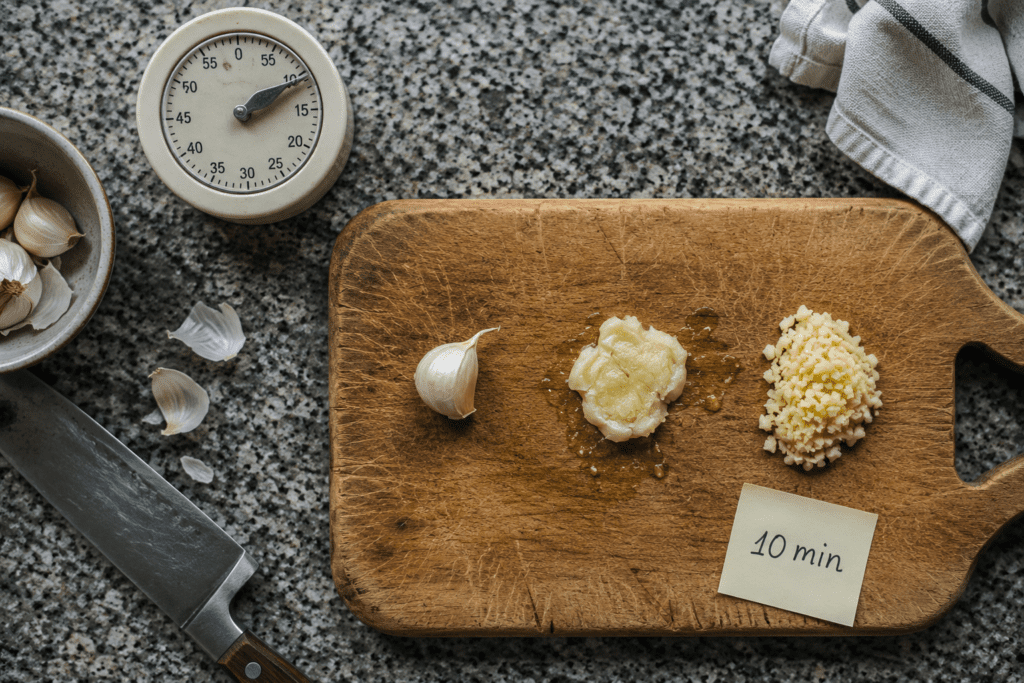
If you prefer raw garlic: Crush or mince 1–2 cloves and let them rest for 10 minutes before eating or cooking. This waiting period is critical — it allows the alliinase enzyme to fully convert alliin into allicin before heat (which destroys alliinase) is applied. Add it at the end of cooking or eat it raw with food to reduce stomach irritation.
- Crush it, don’t slice it. Slicing generates less allicin than crushing because it creates less cell damage. A garlic press or the flat of a knife works better than careful chopping.
- Wait 10 minutes before applying heat. Once allicin is formed, it’s relatively heat-stable. The enzyme that creates it, however, is not — so activate it first, then cook.
- Consistency over quantity. Small amounts used daily outperform large amounts used occasionally. This is a compound effect, not an acute one.
- For supplementation: Look for aged garlic extract standardized to S-allylcysteine content, or allicin-releasing supplements with enteric coating. Dosages in clinical trials typically range from 600 mg to 1,200 mg of aged garlic extract daily.
It’s also worth noting that garlic pairs well with other evidence-supported approaches. For instance, combining it with magnesium for high blood pressure creates complementary effects — garlic working on vascular tone through the H₂S pathway, magnesium supporting the relaxation of smooth muscle tissue through calcium channel modulation. Together, they address blood pressure from multiple angles.
What I found when digging deeper into how people actually implement this surprised me more than almost anything else in the research.
Common Mistakes That Kill Garlic’s Effectiveness
If you’ve tried garlic before and felt like nothing happened, one of these is almost certainly why.
Mistake 1: Buying garlic powder or pre-minced jarred garlic. Jarred minced garlic has been shown to contain virtually no allicin — the enzyme alliinase is deactivated during processing. Garlic powder is similarly compromised. These forms are fine for flavor, but they’re not the same product that clinical trials studied.
Mistake 2: Giving up too soon. Garlic’s cardiovascular benefits are not immediate. Most well-designed trials run 8 to 12 weeks before measuring outcomes. People who try it for two weeks and conclude it doesn’t work are drawing conclusions from an incomplete experiment.
Mistake 3: Ignoring form-specific dosing. There’s a meaningful difference between a clove of raw garlic, a capsule of garlic oil, an allicin-releasing tablet, and aged garlic extract. They aren’t interchangeable, and the research on each form shows different outcomes. What if the real problem isn’t that garlic doesn’t work — but that most people are using a form that can’t deliver what the studies actually tested?
Mistake 4: Using garlic as the only intervention. Garlic works best as part of a coherent cardiovascular strategy — paired with dietary changes, movement, stress management, and where appropriate, targeted supplementation. It amplifies results; it doesn’t replace the foundation.
Garlic Benefits for Heart Health and Blood Pressure: What to Expect
Let’s talk realistic expectations — because overpromising is one of the things that erodes trust in natural approaches entirely. Garlic benefits for heart health are real, measurable, and clinically supported, but they exist on a spectrum based on your starting point, the form you use, and how consistently you use it.
For someone with mildly elevated blood pressure (Stage 1 hypertension, around 130–139/80–89 mmHg), consistent garlic supplementation over 12 weeks can produce meaningful reductions — sometimes enough to bring readings into a healthier range without medication. For someone with severely elevated blood pressure, garlic is not a replacement for medical intervention, but it can support and enhance the effectiveness of treatment.
On the cholesterol side, the evidence shows modest but consistent reductions in LDL — typically in the 10–15% range with regular use. Not dramatic, but significant when sustained over months and years. What the research consistently shows is that small, sustained improvements in multiple cardiovascular markers add up to substantially reduced long-term risk.
The anti-inflammatory effects are perhaps the most underappreciated aspect of garlic’s cardiovascular profile. Chronic low-grade inflammation is now understood to be a major driver of arterial damage and plaque formation — and garlic consistently reduces CRP and other inflammatory biomarkers. This is where the long-game benefits really accumulate.
For anyone who has been searching for a natural approach that is genuinely backed by data — not just tradition — garlic benefits for heart health represent one of the most compelling cases in the entire landscape of natural cardiovascular support. And when combined with targeted formulas designed to address the systemic factors underlying cardiovascular and metabolic health, the results compound further.

Conclusion: Is Garlic Worth It?
After everything I’ve read — and I’ve read a lot — my answer is an unambiguous yes, with a clear asterisk: form, dose, and consistency are everything. The garlic sitting in your kitchen is not automatically the same product that reduced blood pressure by 10 mmHg in a 12-week randomized trial. But when you use it correctly — or choose a well-standardized supplement form — the evidence is genuinely impressive.
What I’ve come to believe is that natural approaches work best when you understand the mechanism deeply enough to use them correctly. Garlic isn’t magic. It’s chemistry — specific, well-characterized, and increasingly well-documented chemistry. The gap between “garlic is good for you” and actually getting the cardiovascular benefits is filled in by understanding the details we covered here.
If you’ve been dealing with blood pressure that creeps higher every year, or cholesterol numbers that keep moving in the wrong direction, or you’re just tired of feeling like you’re running out of options — the research on garlic benefits for heart health offers something genuinely worth your attention. It’s not a complete solution on its own, but it’s a real piece of a real strategy. And sometimes, having one piece of the puzzle click into place is exactly what changes the momentum.
The best approach is always one that works through multiple pathways at once — supporting vascular health, reducing inflammation, and addressing the underlying metabolic factors that drive cardiovascular risk. When garlic is part of a broader, well-designed protocol, that’s when people tend to see the most meaningful and lasting results.
❓ Frequently Asked Questions
How much garlic do you need to eat daily to lower blood pressure?
Most clinical trials showing meaningful blood pressure reductions used the equivalent of 2–4 cloves of raw garlic per day, or 600–1200 mg of aged garlic extract. Consistency over 8–12 weeks matters more than any single large dose.
Is aged garlic extract better than raw garlic for heart health?
Aged garlic extract has an edge in clinical research because it standardizes the active compounds and avoids the allicin degradation that happens when raw garlic is cooked or stored improperly. Raw garlic works too, but only when crushed and left to sit for 10 minutes before eating or heating.
Can garlic supplements interact with blood pressure medications?
Yes — garlic has mild blood-thinning and blood pressure-lowering effects that can amplify the action of anticoagulants like warfarin and antihypertensive drugs, potentially causing blood pressure to drop too low. Anyone already on cardiovascular medication should track their readings closely when adding garlic supplementation.
How long does it take for garlic to lower cholesterol?
Studies tracking LDL reduction typically show measurable changes after 8–12 weeks of consistent garlic supplementation, with modest reductions in the range of 10–15 mg/dL. Effects on triglycerides appear in a similar timeframe, though results vary based on baseline diet.
Does cooking garlic destroy its heart health benefits?
High heat does break down allicin, which is the primary active compound responsible for garlic’s cardiovascular effects. Crushing or mincing garlic and waiting 10 minutes before adding it to low-heat cooking preserves significantly more allicin than dropping whole cloves directly into a hot pan.
📊 naturalbloodsugartips.com
My honest recommendation after everything I have researched
🔥 Discover Why Your Liver May Be Blocking Weight Loss
Liv Pure combines a Liver Purification Complex and a Liver Fat-Burning Complex with clinically studied Mediterranean plant compounds. Made in a GMP-certified, FDA-registered facility in the USA.
👉 Yes, I Want to Try Liv Pure✓ Official website | ✓ 60-day money-back guarantee | ✓ Free shipping
⚠️ Due to high demand, stock is limited. Check availability before it sells out.
*Results may vary. This is an affiliate link — I only recommend what I have researched for my own family.

About the Author — Sarah
I am not a doctor or nutritionist — I am a daughter who has been caring for my mother since her type 2 diabetes diagnosis. That journey pushed me to research natural alternatives and evidence-based lifestyle changes. Everything I share comes from that personal mission: to help my mom live better, with more energy and less dependence on medication. Always consult your healthcare provider before making any changes to your treatment plan.
⚕️ Medical Disclaimer: I am not a medical professional. This blog reflects my personal research caring for a family member with diabetes. For informational purposes only — not medical advice. Always consult a qualified healthcare provider.
📚 Scientific References
- Ried K, Travica N, Sali A. The effect of aged garlic extract on blood pressure and other cardiovascular risk factors in uncontrolled hypertensives: the AGE at Heart trial. Integr Blood Press Control. 2016;9:9–21. PMID: 26869831.
- Ried K, Toben C, Fakler P. Effect of garlic on serum lipids: an updated meta-analysis. Nutr Rev. 2013;71(5):282–299. PMID: 23590705.
- Varshney R, Budoff MJ. Garlic and heart disease. J Nutr. 2016;146(2):416S–421S. PMID: 26764327.
- Ried K, Frank OR, Stocks NP, Fakler P, Sullivan T. Effect of garlic on blood pressure: a systematic review and meta-analysis. BMC Cardiovasc Disord. 2008;8:13. PMID: 18554422.