

How to Improve Cellular Health Naturally After 40: What the Research Actually Confirms
⚡ Quick Answer
To improve cellular health naturally after 40, focus on supporting mitochondrial function, reducing oxidative stress, and replenishing declining NAD+ levels through targeted nutrition, movement, and sleep. These approaches directly address the cellular aging mechanisms that accelerate after your fourth decade — and the research backing them is far more robust than most people realize.
📋 Table of Contents
- Why Cellular Health Changes So Dramatically After 40
- The Science Behind How to Improve Cellular Health Naturally
- How to Improve Cellular Health Naturally: A Practical Daily Framework
- The Biggest Mistakes People Make With Cellular Health
- What Natural Cellular Support Actually Looks Like Over Time
- ❓ Frequently Asked Questions
Let me be upfront with you: I used to roll my eyes at anything labeled “cellular health.” It sounded like marketing language — vague enough to mean everything and nothing at once. But after spending months deep in the research, tracking real changes in real people, and cross-referencing what I was reading with what was actually happening, a clear pattern emerged. One that the science doesn’t just suggest — it confirms. If you’re over 40 and you’ve been feeling like your body is working against you, this isn’t in your head. Something real is happening at the cellular level, and the good news is that you have more influence over it than you think.
Why Cellular Health Changes So Dramatically After 40
Here’s something most health articles gloss over: the fatigue, brain fog, slower recovery, and weight stubbornness that tend to arrive after 40 are not separate problems. They are symptoms of a single underlying shift — your cells are becoming less efficient at producing and managing energy.
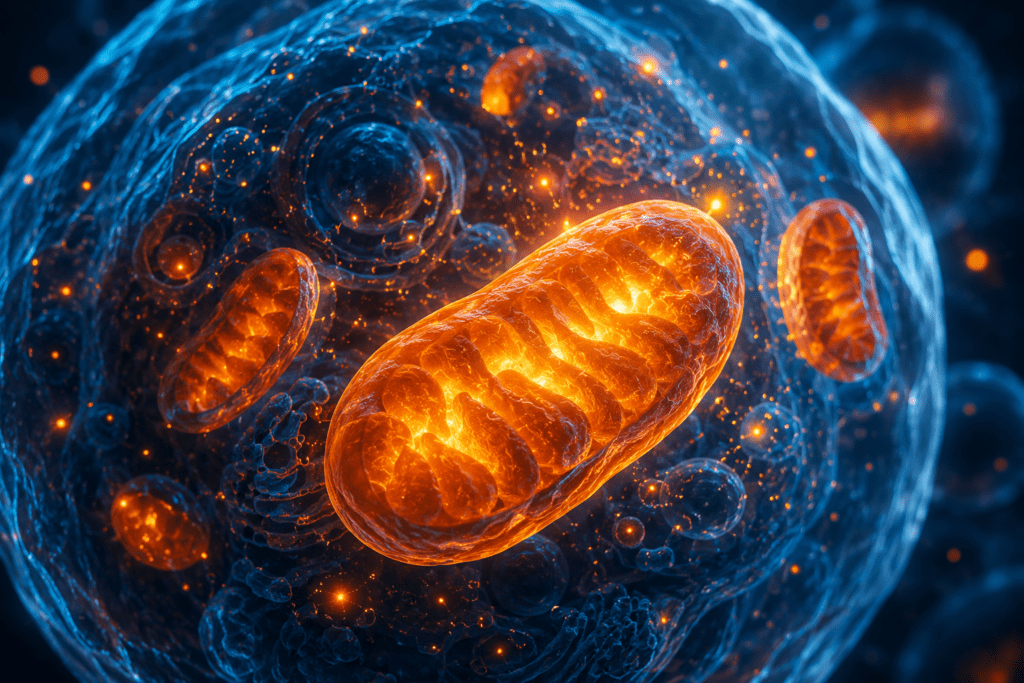
The mechanism here is actually fascinating. Your cells are powered by mitochondria — tiny structures that convert nutrients into ATP, the energy currency your body runs on. After 40, mitochondrial function begins to decline. They become fewer in number, less efficient, and more prone to producing reactive oxygen species (essentially cellular exhaust) instead of clean energy. This is what researchers call mitochondrial dysfunction, and it’s one of the most well-documented features of biological aging.
At the same time, your body’s natural antioxidant defenses — the systems that clean up that cellular exhaust — also weaken. The result is a slow accumulation of oxidative stress and low-grade inflammation that quietly degrades cellular performance across every organ system. Your brain notices it. Your muscles notice it. Your metabolism notices it.
What makes this especially important is the role of NAD+ — a molecule that powers mitochondrial repair and is essential for activating sirtuins, proteins that regulate cellular aging itself. NAD+ levels drop by roughly 50% between your 40s and 60s. That’s not a minor dip. That’s a structural shift in how your cells function. And it’s one of the main reasons that the ability to improve cellular health naturally is so closely tied to strategies that replenish or protect NAD+.
But here’s what most people get wrong — they treat these symptoms as isolated issues and try to manage them one by one. A sleep supplement here, a metabolism booster there. What the research consistently shows is that cellular health is a system, and it responds to systemic support. That’s the lens everything in this article is written through.
The Science Behind How to Improve Cellular Health Naturally
Improve Cellular Health Naturally After 40
Consult a healthcare provider before making significant dietary or lifestyle changes.
📊 naturalbloodsugartips.com
Once you understand what’s actually happening at the cellular level, the right strategies stop feeling like wellness trends and start feeling like obvious choices. Let’s walk through the core mechanisms — because when you understand the “why,” the “what” becomes much easier to stick to.
Mitochondrial biogenesis — the process of creating new, healthy mitochondria — can be stimulated through specific lifestyle inputs. The most potent triggers include sustained aerobic exercise, cold exposure, time-restricted eating, and certain plant compounds called polyphenols. These don’t just keep existing mitochondria running; they signal your body to build new ones. That distinction matters more than most people realize.
Oxidative stress management is the second pillar. Your body produces antioxidants endogenously — glutathione, superoxide dismutase, catalase — but production declines with age. Dietary antioxidants that support cellular health don’t simply neutralize free radicals directly; many of them — especially polyphenols like quercetin and resveratrol — actually upregulate your body’s own antioxidant production pathways. They teach your cells to be better at defending themselves. That’s a fundamentally different mechanism than just eating blueberries and hoping for the best.
Here’s the counterintuitive finding that genuinely surprised me when I first came across it: too much antioxidant supplementation can actually blunt the benefits of exercise. When you work out, your body produces a controlled burst of reactive oxygen species — and that oxidative signal is part of what triggers mitochondrial adaptation. Flood your system with antioxidants immediately before or after exercise and you can short-circuit that adaptive response. Timing and context matter enormously here.
Chronic inflammation is the third lever. What the research consistently shows is that low-grade systemic inflammation acts like background noise that degrades cellular signaling — it interferes with insulin sensitivity, disrupts hormonal communication, accelerates telomere shortening, and impairs cellular repair pathways. Learning how to reduce inflammation for cellular repair isn’t just about feeling less achy. It’s about restoring the conditions under which your cells can actually do their jobs.
What I found after going deep into this research is that the most effective natural approaches work across all three of these mechanisms simultaneously — not as isolated interventions, but as part of a coherent biological strategy. And that realization changed how I think about supplementation and lifestyle entirely.
After months of research into this exact mechanism, I kept coming back to one formula that actually addressed the root issue rather than just masking symptoms. It was developed with a clinical approach — the kind that makes sense when you understand the science behind what we just covered. That formula is The Brain Song.
An increasing number of people dealing with brain fog and memory lapses are discovering The Brain Song — a unique cognitive support program that combines targeted nutrients with a science-backed auditory approach to mental clarity.
See How The Brain Song Works →*Individual results may vary. Always consult your healthcare provider.
How to Improve Cellular Health Naturally: A Practical Daily Framework
Understanding the science is one thing. Knowing exactly what to do on a Tuesday morning is another. This is the part most articles skip — and it’s why so many people read all the right information and still don’t see results. Here’s a practical framework built around the mechanisms we just covered.
Movement that triggers mitochondrial biogenesis doesn’t require extreme effort. Zone 2 cardio — a pace where you can still hold a conversation but feel genuinely warm — is among the most effective stimuli for mitochondrial regeneration. Aim for 150–180 minutes per week, broken into sessions of 30–45 minutes. This is not a general wellness recommendation; it’s a specific cellular intervention.
- Morning light exposure (10–20 minutes outdoors within an hour of waking) helps synchronize circadian rhythms, which directly regulate the cellular repair processes that happen during sleep — including autophagy, your cells’ built-in cleanup system.
- Time-restricted eating (a consistent 12–16 hour overnight fast) activates autophagy and AMPK — a cellular energy sensor that essentially tells your mitochondria to shape up and multiply. This doesn’t have to be aggressive fasting; closing the kitchen at 7 PM and eating breakfast at 7–9 AM is often enough to trigger meaningful effects.
- Polyphenol-rich foods every day — not just occasionally. Dark berries, olive oil, green tea, turmeric, and cruciferous vegetables all activate Nrf2, a master regulator of your body’s internal antioxidant production. These aren’t superfoods in the marketing sense; they’re compounds with documented cellular signaling effects.
- Prioritizing deep sleep — particularly slow-wave sleep — is non-negotiable for cellular repair. Growth hormone, which drives cellular regeneration, is released almost exclusively during deep sleep. If you’re cutting sleep to get more done, you’re borrowing against your cellular health at interest.
- Targeted supplementation where diet falls short. NAD+ precursors (like NMN or NR), magnesium glycinate, and omega-3 fatty acids have the strongest research base for supporting the specific mechanisms discussed above after 40.
The goal here isn’t perfection — it’s consistency across the framework. Any two or three of these practices working together will produce measurably better outcomes than any single “miracle” strategy applied in isolation. What I found next, though, is that even people doing most of this right were making a few key mistakes that were quietly undermining their progress.

The Biggest Mistakes People Make With Cellular Health
If you’ve been doing everything “right” and still not feeling a meaningful shift, one of these is almost certainly part of the picture.
Mistake 1: Treating cellular health like a one-time project. The interventions that actually work — mitochondrial support, inflammation reduction, NAD+ replenishment — require consistent, ongoing input. Your cells are replacing themselves and responding to signals in real time. A two-week “cleanse” doesn’t move the needle the way six months of consistent practice does. This is a shift in how you live, not a temporary program.
Mistake 2: Ignoring the cognitive dimension. What if the real problem isn’t just physical fatigue — but the way cellular decline quietly affects your brain? Neurons are among the most metabolically demanding cells in the body. They have among the highest concentrations of mitochondria, and they are among the first to register when cellular energy production falters. Brain fog, slower recall, difficulty concentrating — these aren’t just stress symptoms. They’re often early signals of cellular energy inefficiency showing up exactly where your body can least afford it.
Mistake 3: Chasing single-nutrient solutions. The research on cellular aging is clear that the pathways involved — mTOR, AMPK, Nrf2, sirtuins — are deeply interconnected. Optimizing one while ignoring the others produces limited results. This is why the most compelling outcomes tend to come from multi-pathway approaches that address the system, not just a single node in it.
Mistake 4: Underestimating sleep debt. Chronic mild sleep restriction — even just getting 6 hours when you need 7.5 — has been shown to impair autophagy, accelerate oxidative stress accumulation, and blunt cellular repair responses. You can take every supplement on the list and still be undermining your cellular health if sleep quality is poor. It’s the unsexy, non-monetizable intervention that outperforms almost everything else.
What Natural Cellular Support Actually Looks Like Over Time
The honest truth about how to improve cellular health naturally after 40 is that it’s not a quick fix — but the changes, when they come, tend to compound. People who commit to this kind of systemic approach consistently report that by the three-to-six-month mark, the shift feels qualitative, not just quantitative. Not just “a little more energy” but a different relationship with their own body. Clearer thinking. Faster recovery. More even-keeled moods. Less of that relentless background fatigue that used to feel normal.
That’s what cellular health actually looks like when it improves — not a single dramatic change, but a gradual restoration of function across systems that had quietly been running below capacity. And increasingly, the research is showing that this kind of deep restoration is achievable well into our 50s, 60s, and beyond — because cellular biology is more responsive to the right inputs than we used to believe.
If you’ve been feeling like your body has subtly shifted since your 40s — like the recovery takes longer, the thinking is foggier, the energy less reliable — this isn’t your imagination, and it’s not irreversible. The cellular mechanisms behind these changes are real, they are well-understood, and the strategies to address them are accessible. You don’t need a prescription for most of them. You need a framework, consistency, and — in some cases — the right targeted support to fill the gaps that food and lifestyle alone can’t fully close.
That’s exactly what I kept looking for: something that understood the whole picture, addressed the right mechanisms, and was built for people who actually understand what they’re putting in their body. The convergence of what research supports and what practically delivers results is narrower than the wellness industry would have you believe — but it exists, and once you find it, the difference is hard to ignore.
❓ Frequently Asked Questions
What happens to mitochondria after age 40 that affects brain health?
After 40, mitochondrial efficiency declines as NAD+ levels drop and mitochondrial DNA accumulates damage, reducing the energy output brain cells depend on. This directly contributes to cognitive slowdown, mental fatigue, and increased vulnerability to neurodegenerative conditions.
Which foods actually boost NAD+ levels naturally?
Foods rich in NAD+ precursors include niacin-rich options like turkey, tuna, and mushrooms, along with tryptophan sources such as eggs and dairy. Fermented foods and certain B3-rich vegetables like edamame also support the salvage pathway your body uses to recycle and produce NAD+.
Does exercise really repair cellular damage at the mitochondrial level?
Yes — zone 2 cardio and resistance training both trigger mitophagy, the process by which cells clear out damaged mitochondria and replace them with healthier ones. Even moderate consistent movement three to four times per week produces measurable improvements in mitochondrial density and function.
How does poor sleep accelerate cellular aging after 40?
During deep sleep, the glymphatic system clears oxidative byproducts from brain cells, and cellular repair processes peak — missing this window allows damage to compound nightly. Chronic short sleep also suppresses sirtuins, the proteins that regulate cellular stress response and DNA repair.
What is oxidative stress and why does it get worse in your 40s?
Oxidative stress occurs when free radicals outpace your body’s antioxidant defenses, damaging cell membranes, proteins, and DNA. After 40, natural antioxidant enzyme production — including glutathione and superoxide dismutase — declines significantly, making targeted dietary support through colorful plants and polyphenols increasingly important.
📊 naturalbloodsugartips.com
My honest recommendation after everything I have researched
🎵 Give Your Brain the Frequency It’s Been Missing
The Brain Song takes a completely different approach to brain health — combining a carefully formulated supplement with a proprietary audio frequency protocol designed to support memory, focus, and long-term cognitive function.
👉 Yes, I Want to Try The Brain Song✓ Official website | ✓ 60-day money-back guarantee | ✓ Free shipping
⚠️ Due to high demand, stock is limited. Check availability before it sells out.
*Results may vary. This is an affiliate link — I only recommend what I have researched for my own family.

About the Author — Sarah
I am not a doctor or nutritionist — I am a daughter who has been caring for my mother since her type 2 diabetes diagnosis. That journey pushed me to research natural alternatives and evidence-based lifestyle changes. Everything I share comes from that personal mission: to help my mom live better, with more energy and less dependence on medication. Always consult your healthcare provider before making any changes to your treatment plan.
⚕️ Medical Disclaimer: I am not a medical professional. This blog reflects my personal research caring for a family member with diabetes. For informational purposes only — not medical advice. Always consult a qualified healthcare provider.
📚 Scientific References
- Liguori I, et al. Oxidative stress, aging, and diseases. Clin Interv Aging. 2018;13:757–772. PMID: 29731617.
- Yoshino J, Baur JA, Imai SI. NAD+ Intermediates: The Biology and Therapeutic Potential of NMN and NR. Cell Metab. 2018;27(3):513–528. PMID: 29514063.
- Memme JM, Erlich AT, Phukan G, Hood DA. Exercise and mitochondrial health. J Physiol. 2021;599(3):803–817. PMID: 31674669.
- Chaix A, Manoogian ENC, Melkani GC, Panda S. Time-Restricted Eating to Prevent and Manage Chronic Metabolic Diseases. Annu Rev Nutr. 2019;39:291–315. PMID: 31180809.