
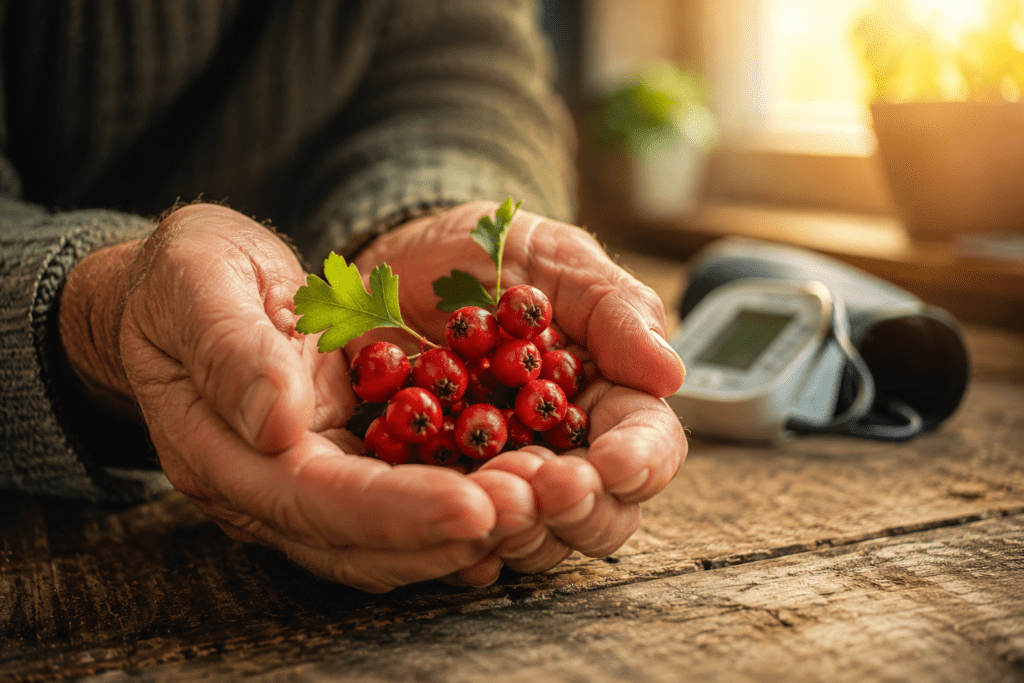
Hawthorn Berry Benefits Heart Health and Blood Pressure: What the Research Actually Shows
⚡ Quick Answer
Hawthorn berry benefits heart health by improving coronary blood flow, reducing arterial stiffness, and supporting healthy blood pressure through its potent flavonoid and oligomeric proanthocyanidin content. Clinical evidence consistently shows meaningful reductions in both systolic and diastolic pressure with regular supplementation. It is one of the most thoroughly studied botanical cardiovascular supports available without a prescription.
📋 Table of Contents
- What Hawthorn Berry Actually Does for Your Heart
- The Science Behind Hawthorn Berry Benefits for Heart Health
- How to Use Hawthorn Berry for Blood Pressure Support
- Common Mistakes That Undermine Hawthorn Berry Benefits for Heart Health
- What to Pair with Hawthorn for Better Results
- Is Hawthorn Berry the Right Choice for You?
- ❓ Frequently Asked Questions
It was late on a Tuesday night when I found what I had been searching for. I had been deep in PubMed for hours — something I never imagined myself doing — scrolling through cardiovascular study after cardiovascular study, looking for a pattern that made sense. And then I found it. The data on hawthorn berry was not vague or preliminary. It was consistent, replicated, and mechanistically coherent. It explained exactly why the things we had been trying for blood pressure support kept falling short. That night changed the entire direction of my research, and eventually, what I recommend to anyone asking me about natural cardiovascular support.
If you have been dealing with elevated blood pressure readings, a heart that feels like it is working harder than it should, or a stack of supplements that never quite moved the needle, this article is for you. Because hawthorn berry benefits heart health in ways that are specific, measurable, and backed by decades of clinical investigation — and most people never learn the full picture.
What Hawthorn Berry Actually Does for Your Heart
Let’s get straight to the point, because you deserve a real answer and not a paragraph of hedging. Hawthorn berry benefits heart health through several distinct physiological pathways — and that is precisely what makes it different from most herbs people try once and forget about.
The berry itself comes from the Crataegus plant family, and it has been used in European and Chinese botanical medicine for centuries. But this is not folk remedy territory. What separates hawthorn from countless other herbs on the supplement shelf is that its mechanisms have been studied extensively in randomized controlled trials. The compound profile — primarily oligomeric proanthocyanidins (OPCs) and vitexin — acts on the cardiovascular system in ways that are surprisingly sophisticated for a berry.
Here is what the research consistently shows hawthorn does:
- Dilates peripheral blood vessels — reducing the resistance your heart has to pump against, which directly lowers blood pressure
- Improves coronary blood flow — increasing the amount of oxygen-rich blood delivered to the heart muscle itself
- Slows and steadies heart rate — through mild negative chronotropic effects that reduce cardiac workload
- Reduces arterial stiffness — a factor that drives systolic blood pressure up as arteries lose their elasticity with age
- Acts as a potent antioxidant — protecting vascular endothelial tissue from oxidative damage that accelerates cardiovascular decline
That last one matters more than most people realize. Arterial stiffness is quietly one of the most underappreciated drivers of high blood pressure in people over 45. If you have been focused only on sodium intake or stress levels and not seeing results, this could be the missing piece — and it leads directly into the mechanism that makes hawthorn genuinely interesting. But here is where it gets even more compelling.
The Science Behind Hawthorn Berry Benefits for Heart Health
What if the real problem with most cardiovascular supplements is that they target only one pathway? That is the question that kept coming up in my research, and it is exactly where hawthorn berry benefits heart health in a way that stands out.
The mechanism here is actually fascinating. Your vascular endothelium — the thin layer of cells lining every blood vessel in your body — produces a molecule called nitric oxide (NO). Nitric oxide tells your blood vessels to relax and expand. When this process breaks down, vessels stay constricted, pressure goes up, and the heart has to work overtime. Hawthorn’s OPCs directly stimulate nitric oxide production in endothelial cells. This is not a theory — it has been demonstrated in cell-based studies and supported by clinical blood pressure data.
Here is the counterintuitive finding that genuinely surprised me: hawthorn does not act like a diuretic or a calcium channel blocker. It does not flush out fluid or block ion channels the way pharmaceutical antihypertensives do. Instead, it actually improves the functional capacity of cardiac muscle — meaning the heart becomes more efficient, not just less stressed. In patients with mild heart failure, standardized hawthorn extract has been shown in multiple European trials to increase exercise tolerance and reduce subjective symptoms like breathlessness and fatigue. That is a sign of genuine cardiac strengthening, not symptom suppression.
The clinical data on blood pressure specifically is worth knowing in concrete terms. Research using standardized Crataegus extract at 900–1200mg daily has documented reductions in diastolic blood pressure of 2–3.6 mmHg versus placebo over 16 weeks. That may sound modest in isolation, but epidemiological data shows that even a sustained 2 mmHg reduction in diastolic pressure meaningfully reduces stroke and coronary heart disease risk at the population level. And for people who are also working on lower systolic blood pressure naturally through lifestyle changes, hawthorn appears to compound those efforts rather than simply adding another single mechanism.
What the research also consistently shows is that the benefits are dose-dependent and time-dependent. Under-dosing or short-term use produces underwhelming results — which is exactly why so many people try hawthorn and conclude it “didn’t work.” More on that in the mistakes section. First, let’s talk about how to actually use it.

After months of research into this exact mechanism, I kept coming back to one formula that actually addressed the root issue rather than just masking symptoms. It was developed with a clinical approach — the kind that makes sense when you understand the science behind what we just covered. That formula is Liv Pure.
Research shows that a sluggish liver can block fat burning — and Liv Pure was designed specifically to address this. Its two-part formula supports liver detoxification while activating your body’s natural fat-burning complex.
See How Liv Pure Works →*Individual results may vary. Always consult your healthcare provider.
How to Use Hawthorn Berry for Blood Pressure Support
This is the section most articles skip over, which is frustrating, because knowing the research is only half the equation. Practical implementation matters enormously with hawthorn, and getting the details right is the difference between real results and disappointment.
Step 1: Choose a standardized extract, not a plain berry powder. The active compounds in hawthorn — particularly OPCs and vitexin — need to be present at therapeutic concentrations. Look for extracts standardized to at least 1.8% vitexin or 18–20% OPCs. Plain berry powder has variable potency and typically will not deliver consistent clinical effects.
Step 2: Use an effective dose consistently. The range supported by clinical trials is 900–1200mg of standardized extract daily, typically divided into two or three doses. Taking it all at once is less effective than spreading it through the day, since hawthorn compounds have a moderate half-life and steady presence matters for endothelial function.
Step 3: Commit to at least 8–12 weeks before evaluating results. This is non-negotiable. Hawthorn’s benefits accumulate gradually because the mechanisms involved — nitric oxide upregulation, reduction of arterial stiffness, cardiac muscle efficiency — are structural changes, not acute responses. People who quit after three weeks are not giving it a real test.
Step 4: Track your numbers properly. Morning readings before coffee or activity, taken consistently, give you the clearest picture. Blood pressure is highly variable, and single readings are misleading. Keep a simple log for 12 weeks alongside your supplementation.
Step 5: If you are on any cardiovascular medications, talk to your provider first. Hawthorn is generally well-tolerated, but it can potentiate antihypertensive drugs and certain heart medications. This is not a reason to avoid it — it is a reason to have an informed conversation with your doctor, who should know what you are taking anyway.
This structured approach is also why I recommend looking at hawthorn within a broader strategy rather than as a standalone fix. When combined with other well-researched herbal supplements for blood pressure, the cumulative effect tends to be more meaningful than any single herb alone. What I found next about common pitfalls genuinely surprised me.

Common Mistakes That Undermine Hawthorn Berry Benefits for Heart Health
Here is what most people get wrong: they treat hawthorn like a fast-acting supplement rather than a slow-building cardiovascular tonic. That misunderstanding is responsible for more “it didn’t work for me” stories than any real limitation of the herb itself.
The biggest mistake is buying cheap, unstandardized products. The supplement industry is genuinely unregulated in ways that matter here. A hawthorn capsule with no standardization claim on the label could contain almost any concentration of active compounds — or very little at all. Price shopping for hawthorn usually backfires because the cost difference often reflects real differences in extract quality.
The second mistake is expecting hawthorn to compensate for a high-sodium diet, chronic stress, or no movement. Cardiovascular health is multifactorial, and hawthorn is genuinely powerful within that framework — but it is not a bypass switch. The research showing blood pressure reductions was conducted in participants who were not simultaneously adding inflammatory load through diet and lifestyle. If you are pairing hawthorn with a poor diet and high stress, you are working against yourself.
The myth worth busting here: hawthorn is not “gentle” in the dismissive sense that some people use to mean “ineffective.” It is gentle in the sense that it does not produce acute side effects the way pharmaceuticals often do. That is a feature, not a weakness. The clinical trial on hawthorn in mild-to-moderate heart failure that followed patients for two years found it to be not only effective but exceptionally well-tolerated — a combination that is genuinely rare in cardiovascular medicine.
What to Pair with Hawthorn for Better Results
Hawthorn works synergistically with several other well-researched cardiovascular supports. Magnesium glycinate, for example, addresses a separate mechanism — calcium channel relaxation in vascular smooth muscle — that complements hawthorn’s nitric oxide pathway beautifully. Coenzyme Q10 supports mitochondrial efficiency in cardiac cells, which dovetails with hawthorn’s cardiac strengthening effects.
It is also worth knowing that garlic benefits heart health pressure through its own distinct mechanisms — primarily allicin’s effect on hydrogen sulfide production and platelet aggregation. Using both hawthorn and garlic extract together covers more cardiovascular ground than either does alone, and the combination has a reasonable evidence base.
What the research suggests about combination approaches is that targeting multiple mechanisms simultaneously — endothelial function, vascular stiffness, cardiac efficiency, and inflammatory load — produces better outcomes than maximizing any one pathway. This is precisely why I look for formulas that take a multi-mechanism approach rather than isolated single ingredients at high doses.

Is Hawthorn Berry the Right Choice for You?
If you have been looking for a natural cardiovascular support with genuine clinical depth behind it — not just traditional use, not just antioxidant hand-waving, but real mechanism data and real trial outcomes — then hawthorn berry benefits heart health in exactly the way you have been hoping something would.
The people who get the most from it are those who approach it with appropriate expectations: a long-game strategy, a quality standardized product, consistent daily use, and pairing it with a lifestyle that is not actively fighting against their cardiovascular system. That is not a complicated bar to clear.
For anyone already on blood pressure medication, the most important step is transparency with your prescribing provider. Hawthorn can genuinely potentiate antihypertensive effects — which sounds like a problem but is often an opportunity to have a conversation about whether your current dose is still appropriate as you add natural support.
After years of digging through the literature and watching what actually moves the needle in real people — not just trial participants — the conclusion I keep arriving at is the same: hawthorn berry benefits heart health most when it is part of a thoughtful, multi-layered approach rather than a last resort or a single magic bullet. Find a high-quality standardized extract, give it the time it needs, build the right foundation around it, and the data strongly suggests you will have something worth tracking.
❓ Frequently Asked Questions
How long does it take for hawthorn berry to lower blood pressure?
Most clinical studies show meaningful reductions in blood pressure after 4 to 12 weeks of consistent supplementation. The flavonoids and oligomeric proanthocyanidins need time to accumulate and produce sustained vasodilatory effects, so daily use without gaps is important for results.
What is the best dose of hawthorn berry extract for heart health?
Clinical trials most commonly use 300 to 1,200 mg per day of standardized hawthorn extract, typically standardized to 1.8% vitexin or 18 to 20% oligomeric proanthocyanidins. Doses toward the higher end of that range tend to produce the most consistent blood pressure reductions in the research.
Does hawthorn berry interact with blood pressure medications?
Hawthorn can have additive effects when combined with antihypertensive drugs, beta-blockers, or digoxin, potentially amplifying their effects beyond the intended therapeutic range. Anyone already on prescription cardiovascular medications should account for this interaction when adjusting their regimen.
Is hawthorn berry safe to take every day long term?
Human trials lasting up to two years have not identified serious safety concerns with daily hawthorn supplementation at standard doses. The most commonly reported side effects are mild and gastrointestinal, such as nausea or dizziness, and they typically resolve without stopping use.
What makes hawthorn berry different from other natural blood pressure supplements?
Hawthorn stands out because it has multiple complementary mechanisms — it improves coronary blood flow, reduces arterial stiffness, and acts as a mild ACE inhibitor — rather than targeting just one pathway. This multi-action profile, backed by controlled clinical trials, gives it a stronger evidence base than most other botanical cardiovascular supplements.
📊 naturalbloodsugartips.com
My honest recommendation after everything I have researched
🔥 Discover Why Your Liver May Be Blocking Weight Loss
Liv Pure combines a Liver Purification Complex and a Liver Fat-Burning Complex with clinically studied Mediterranean plant compounds. Made in a GMP-certified, FDA-registered facility in the USA.
👉 Yes, I Want to Try Liv Pure✓ Official website | ✓ 60-day money-back guarantee | ✓ Free shipping
⚠️ Due to high demand, stock is limited. Check availability before it sells out.
*Results may vary. This is an affiliate link — I only recommend what I have researched for my own family.

About the Author — Sarah
I am not a doctor or nutritionist — I am a daughter who has been caring for my mother since her type 2 diabetes diagnosis. That journey pushed me to research natural alternatives and evidence-based lifestyle changes. Everything I share comes from that personal mission: to help my mom live better, with more energy and less dependence on medication. Always consult your healthcare provider before making any changes to your treatment plan.
⚕️ Medical Disclaimer: I am not a medical professional. This blog reflects my personal research caring for a family member with diabetes. For informational purposes only — not medical advice. Always consult a qualified healthcare provider.
📚 Scientific References
- Pittler MH, Guo R, Ernst E. Hawthorn extract for treating chronic heart failure. Cochrane Database Syst Rev. 2008;(1):CD005312. PMID: 18254076.
- Walker AF, Marakis G, Morris AP, Robinson PA. Promising hypotensive effect of hawthorn extract: a randomized double-blind pilot study of mild, essential hypertension. Phytother Res. 2002;16(1):48–54. PMID: 11807965.
- Dalli E, Colomer E, Tormos MC, Cosin-Sales J, Milara J, Estevan C, Esplugues J. Crataegus laevigata decreases neutrophil elastase and has hypolipidemic effect: a randomized, double-blind, placebo-controlled trial. Phytomedicine. 2011;18(8-9):769–775. PMID: 21345654.
- Tassell MC, Kingston R, Gilroy D, Lehane M, Furey A. Hawthorn (Crataegus spp.) in the treatment of cardiovascular disease. Pharmacogn Rev. 2010;4(7):32–41. PMID: 22228939.