

How Social Connection Brain Health Works: The Science of Staying Sharp as You Age
⚡ Quick Answer
Strong social connection supports brain health by reducing chronic inflammation, stimulating neuroplasticity, and lowering cortisol — all of which directly slow cognitive decline. Research consistently shows that people with robust social ties have a significantly lower risk of dementia, regardless of other lifestyle factors. The brain, like a muscle, needs regular meaningful engagement to stay strong, and human connection is one of its most powerful forms of exercise.
📋 Table of Contents
- The Turning Point That Changed How I Think About Brain Aging
- The Real Link Between Social Connection and Brain Health
- The Fascinating Science: What Happens Inside Your Brain When You Connect
- How to Build Social Connection for Brain Health: A Practical Approach
- Common Mistakes People Make (And Why Quality Beats Quantity)
- The Bigger Picture: Combining Social Health With Brain-Supportive Habits
- Conclusion: Your Brain Is Waiting to Be Engaged
- ❓ Frequently Asked Questions
The Turning Point That Changed How I Think About Brain Aging
There was a moment — sitting at a kitchen table surrounded by health supplements, highlighted printouts, and half-read books — when I realized I’d been focusing on entirely the wrong things. I’d been obsessing over nutrients, glucose levels, sleep schedules. All important, yes. But what the data kept pointing toward, again and again, was something far more human. It wasn’t a pill or a protocol. It was connection.
I’d started down this research path because someone I loved was declining faster than she should have been. Her diet was decent. She walked. She slept reasonably well. But she was isolated. And the more I read, the more I understood that isolation wasn’t just an emotional problem — it was a neurological one. That realization sent me down a rabbit hole that fundamentally changed how I think about aging, memory, and what it actually means to protect the brain long-term.
If you’ve been dealing with brain fog, forgetfulness, or watching someone you love slowly lose their sharpness — and you’ve been looking mostly at diet and supplements — this article is going to reframe some things for you. In a good way.
The Real Link Between Social Connection and Brain Health
Let’s get clear on what the research actually says, because most coverage of this topic stays frustratingly vague. Social connection brain health isn’t just a feel-good concept — it’s measurable, mechanistic, and far more powerful than most people realize.
What the research consistently shows is that socially engaged adults have a 45–50% lower risk of developing dementia compared to their isolated peers. That number isn’t from a single small study — it’s a pattern that holds across decades of longitudinal data in diverse populations. When researchers control for physical health, diet, education, and genetics, social engagement still emerges as an independent, significant protective factor for cognitive longevity.
But here’s what most people get wrong: they assume this is about mood. That connection makes you feel better, and feeling better is good for your brain. That’s true, but it’s only part of the picture. The more important story is happening at the cellular and neurochemical level — and understanding it changes the way you think about every relationship in your life.
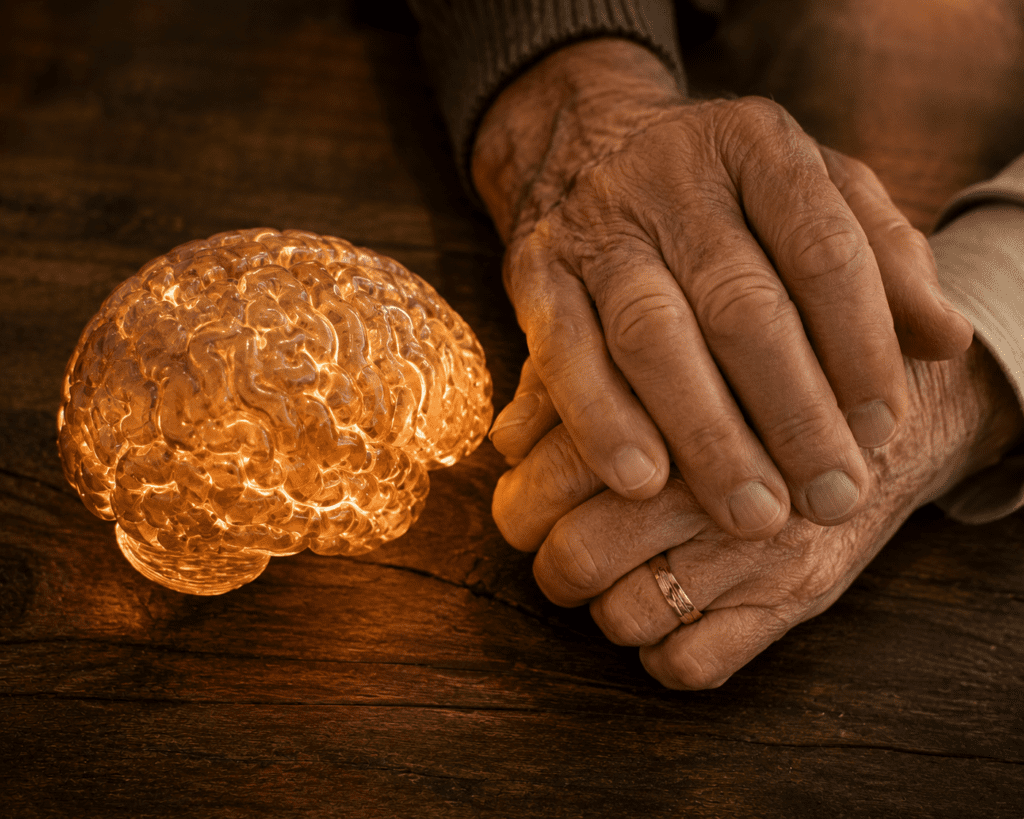
Loneliness, which is the subjective experience of social disconnection, triggers a measurable stress response. Chronically elevated cortisol — the hallmark of that stress response — damages the hippocampus, the brain region most associated with memory formation. Over years and decades, this structural damage accumulates. Meanwhile, people with rich social lives show thicker cortical regions in areas associated with attention, language, and decision-making. The brain is literally shaped by the company you keep.
If you’ve been searching for natural remedies for brain fog, you may find that the social dimension of your life is one of the most underrated factors worth examining.
What I found next, when I started looking at the actual mechanisms, surprised me more than anything else in this research.
After months of research into this exact mechanism, I kept coming back to one formula that actually addressed the root issue rather than just masking symptoms. It was developed with a clinical approach — the kind that makes sense when you understand the science behind what we just covered. That formula is The Brain Song.
An increasing number of people dealing with brain fog and memory lapses are discovering The Brain Song — a unique cognitive support program that combines targeted nutrients with a science-backed auditory approach to mental clarity.
See How The Brain Song Works →*Individual results may vary. Always consult your healthcare provider.
The Fascinating Science: What Happens Inside Your Brain When You Connect
The mechanism here is actually remarkable. When you engage in meaningful conversation or shared activity, your brain doesn’t just passively receive a mood boost — it activates a cascade of neurochemical events that directly support cognitive resilience.
Here’s what’s happening under the surface:
- BDNF (brain-derived neurotrophic factor) increases. Often called “fertilizer for the brain,” BDNF stimulates the growth of new neurons and strengthens synaptic connections. Social interaction is one of the most reliable, non-pharmaceutical ways to elevate BDNF levels. Low BDNF is consistently associated with depression, cognitive decline, and Alzheimer’s risk.
- Inflammatory markers drop. Chronic neuroinflammation is one of the primary drivers of cognitive aging. Socially isolated individuals show significantly higher levels of interleukin-6 and C-reactive protein — inflammatory markers linked to brain tissue damage. Connection, particularly close, trusting relationships, actively suppresses this inflammatory cascade.
- The default mode network stays active. This brain network, responsible for self-reflection, empathy, and narrative thinking, is exercised heavily during social interaction. People who use it regularly through conversation and relationships maintain stronger connectivity in this network as they age — which translates to better memory recall and emotional regulation.
- Oxytocin modulates stress pathways. The so-called “bonding hormone” doesn’t just make you feel warm toward others — it directly counteracts cortisol’s damaging effects on the hippocampus. This is one reason why even brief positive social exchanges have measurable short-term cognitive benefits.
Here’s the counterintuitive fact most people never hear: research has found that perceived social connection matters more than actual frequency of contact. In other words, someone who feels genuinely close to two or three people shows better cognitive outcomes than someone who attends social events frequently but feels emotionally disconnected. Your brain is measuring depth, not volume.
This has real implications for how we think about supporting brain health in older adults — and for understanding why certain people living alone don’t decline as rapidly as others. The quality of the connection, the sense of being known and valued, is doing the neurological heavy lifting.
Understanding this changes everything about how you should approach building your social life as a brain health strategy — and that’s exactly where we’re going next.
How to Build Social Connection for Brain Health: A Practical Approach
Knowing the science is one thing. Actually restructuring your life around it is another. Here’s a realistic, evidence-aligned approach that doesn’t require you to become an extrovert or overschedule yourself.
Start with depth, not breadth. Identify two to three relationships in your life where you feel genuinely seen. These are your brain’s most valuable assets. Prioritize them. Weekly phone calls, shared meals, consistent check-ins — these aren’t just nice-to-haves. They’re neurological maintenance.
Beyond that, consider adding structured social engagement in these ways:
- Join something skill-based. Group activities that involve learning — a language class, a book club, a community garden — combine social stimulation with cognitive challenge. This double-activation is especially potent for neuroplasticity. Speaking of which, exploring neuroplasticity exercises to improve brain function alongside your social engagement can compound your results significantly.
- Volunteer regularly. Clinical evidence supports volunteering as one of the strongest predictors of cognitive vitality in adults over 60. It combines purpose, social engagement, and routine — three things the aging brain thrives on.
- Don’t dismiss digital connection entirely. Video calls and online communities don’t replicate in-person interaction perfectly, but research shows they still activate meaningful social brain circuitry — particularly for those with limited mobility. Use them as supplements, not substitutes.
- Create ritual over randomness. The brain benefits most from predictable, recurring social connection. A standing Sunday dinner, a weekly walk with a neighbor — routine matters because anticipation itself is cognitively activating.
One practical note: if you’re helping an older parent or relative, the goal isn’t to pack their calendar. It’s to identify one or two anchoring relationships or activities and protect those consistently. Consistency produces the most durable neurological benefit.
Common Mistakes People Make (And Why Quality Beats Quantity)
What if the real problem isn’t how much social activity someone is getting, but what kind? This is where a lot of well-intentioned effort goes sideways.
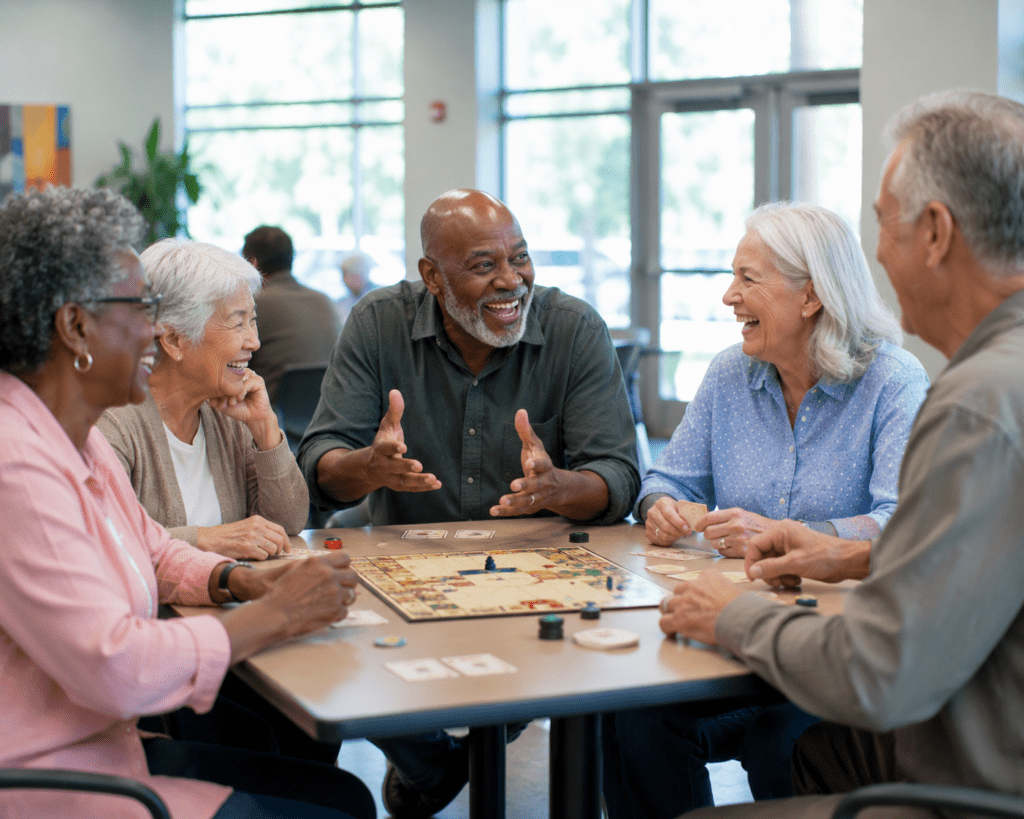
The most common mistake is treating social engagement like a numbers game — more events, more acquaintances, more group outings. But surface-level socializing, where conversations stay shallow and no one feels genuinely known, doesn’t produce the same neurochemical response as deep connection. The brain knows the difference. Stress hormones don’t drop. BDNF doesn’t spike. You’ve checked a box, but you haven’t nourished the system.
Another mistake is ignoring negative relationships. Not all social contact is beneficial. Chronic conflict, critical relationships, or interactions that consistently leave someone feeling diminished can actually amplify neuroinflammation rather than reduce it. The research here is unambiguous: the quality and emotional safety of a relationship matters as much as its existence.
There’s also a generational myth worth busting: that social isolation is a natural and acceptable part of aging. It isn’t. Social withdrawal in older adults is often treated as an inevitable personality shift when it’s actually a symptom — of depression, hearing loss, mobility limitation, or grief. Recognizing it as a modifiable health factor, not a personality trait, opens the door to real intervention.
For those also managing cognitive symptoms, combining the social dimension with targeted nutritional support is worth exploring. Learning to improve memory and focus naturally involves multiple interlocking strategies — and social engagement is one of the most underutilized.

The Bigger Picture: Combining Social Health With Brain-Supportive Habits
Social connection and brain health don’t operate in isolation from other lifestyle factors — they amplify each other. When researchers look at people who age cognitively well into their 80s and 90s, they virtually always find a combination of habits working in concert: consistent movement, quality sleep, a whole-food diet, mental stimulation, and strong social bonds.
The interesting thing is that social engagement often makes the other habits easier. People who walk regularly with a friend are more consistent than solo walkers. People who cook for others eat better. People who feel connected sleep better. The social dimension acts as a kind of behavioral glue that holds the rest of the protocol together.
This is why I always encourage people to think about brain health as an ecosystem rather than a checklist. You’re not trying to optimize one variable at a time. You’re trying to build a life where multiple inputs are working together — and social connection is one of the highest-leverage inputs available to you, with near-zero cost and profound downstream benefits.
If you’re also exploring targeted nutritional support alongside these lifestyle factors, it’s worth looking into formulas specifically designed for cognitive resilience — ones that address the same inflammatory and neurotrophic pathways that social connection activates. The combination is more powerful than either alone.
Conclusion: Your Brain Is Waiting to Be Engaged
The evidence is consistent, the mechanisms are understood, and the practical path forward is clearer than most people realize. Social connection brain health isn’t a soft concept or a secondary concern — it’s one of the most robustly supported predictors of how well your brain will function over the next decade and beyond.
If you’ve been focused exclusively on supplements, diet, and sleep — and something still feels like it’s missing — this might be the variable you haven’t fully accounted for. The brain is a social organ. It evolved in the context of community, language, shared experience, and mutual recognition. When that context disappears, the brain doesn’t just feel lonely. It begins to change in measurable, documentable ways that accelerate decline.
The good news is that these changes are not inevitable, and many are reversible. Reconnecting — genuinely, consistently, with people who matter — starts shifting the neurochemistry almost immediately. And pairing that social foundation with smart nutritional and cognitive support gives your brain every advantage it needs to stay sharp, resilient, and fully alive for years to come.
You don’t have to overhaul your life. You just have to start with one real conversation, one recurring ritual, one relationship you decide to invest in more deeply. Your brain will notice. And over time, so will you.
❓ Frequently Asked Questions
How many social interactions per week does it take to protect brain health as you age?
Research suggests that meaningful social engagement several times a week — rather than daily casual contact — provides the most cognitive protection. Quality matters more than frequency; deep, reciprocal interactions trigger stronger neuroplasticity benefits than brief or superficial ones.
Can online friendships and virtual socializing protect your brain the same way in-person connection does?
In-person interaction appears to provide stronger cognitive benefits, likely because it activates more sensory and emotional processing regions simultaneously. However, video calls and engaged online communities still offer measurable protection against cognitive decline compared to social isolation.
Does loneliness physically change brain structure over time?
Yes — chronic loneliness has been linked to measurable reductions in gray matter volume and accelerated hippocampal shrinkage, the brain region critical for memory. Elevated cortisol from prolonged social isolation creates a inflammatory environment that directly damages neural tissue.
Which types of social activities are best for preventing dementia specifically?
Activities combining social interaction with cognitive or physical challenge — such as group exercise classes, team sports, book clubs, or learning a skill with others — show the strongest association with reduced dementia risk. The dual stimulation of social bonding and mental engagement appears to compound the neuroprotective effect.
At what age should you start prioritizing social connection for brain health benefits?
The neuroprotective benefits of strong social ties are measurable across all adult age groups, but midlife — roughly ages 40 to 65 — appears to be a particularly critical window for establishing habits that reduce late-life dementia risk. Building robust social networks earlier creates structural and inflammatory baselines that compound favorably as the brain ages.
📊 naturalbloodsugartips.com
My honest recommendation after everything I have researched
🎵 Give Your Brain the Frequency It’s Been Missing
The Brain Song takes a completely different approach to brain health — combining a carefully formulated supplement with a proprietary audio frequency protocol designed to support memory, focus, and long-term cognitive function.
👉 Yes, I Want to Try The Brain Song✓ Official website | ✓ 60-day money-back guarantee | ✓ Free shipping
⚠️ Due to high demand, stock is limited. Check availability before it sells out.
*Results may vary. This is an affiliate link — I only recommend what I have researched for my own family.

About the Author — Sarah
I am not a doctor or nutritionist — I am a daughter who has been caring for my mother since her type 2 diabetes diagnosis. That journey pushed me to research natural alternatives and evidence-based lifestyle changes. Everything I share comes from that personal mission: to help my mom live better, with more energy and less dependence on medication. Always consult your healthcare provider before making any changes to your treatment plan.
⚕️ Medical Disclaimer: I am not a medical professional. This blog reflects my personal research caring for a family member with diabetes. For informational purposes only — not medical advice. Always consult a qualified healthcare provider.
📚 Scientific References
- Holt-Lunstad J, Smith TB, Baker M, Harris T, Stephenson D. Loneliness and social isolation as risk factors for mortality: a meta-analytic review. Perspectives on Psychological Science. 2015;10(2):227-237. PMID: 25910392.
- Fratiglioni L, Paillard-Borg S, Winblad B. An active and socially integrated lifestyle in late life might protect against dementia. Lancet Neurology. 2004;3(6):343-353. PMID: 15157849.
- Shankar A, McMunn A, Banks J, Steptoe A. Loneliness, social isolation, and behavioral and biological health indicators in older adults. Health Psychology. 2011;30(4):377-385. PMID: 21534675.
- Håkansson K, Rovio S, Helkala EL, et al. Association between mid-life marital status and cognitive function in later life: population based cohort study. BMJ. 2009;339:b2462. PMID: 19574312.