
Best Brain Foods to Eat Every Day for Sharp Memory 2026
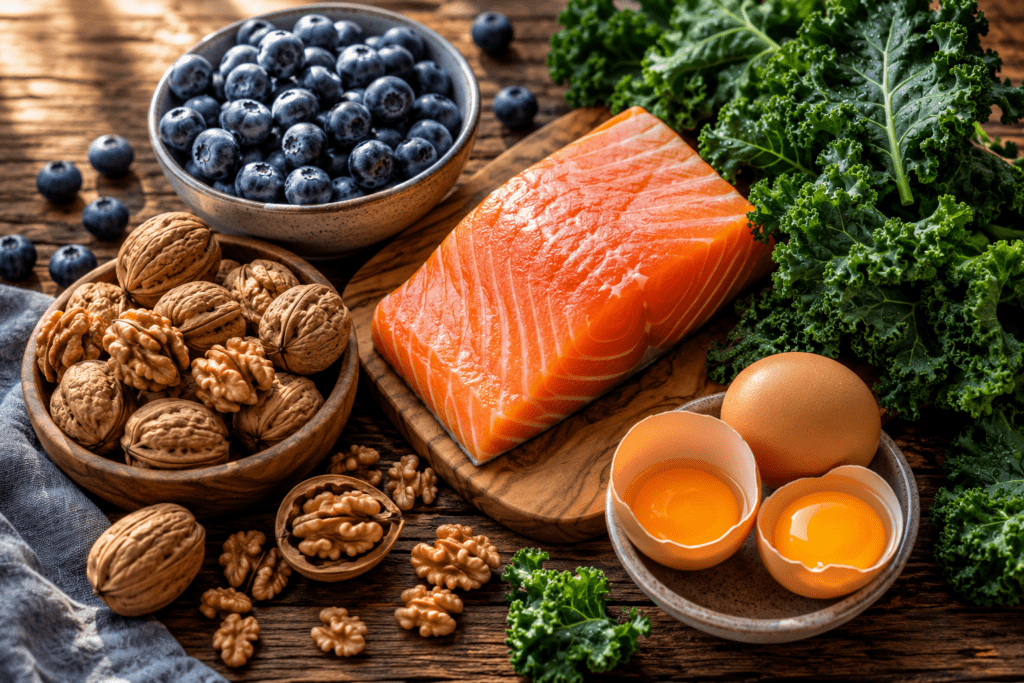
15 Best Brain Foods to Eat Daily for Sharp Memory and Lasting Mental Clarity
⚡ Quick Answer
The best brain foods to eat daily are those that directly support BDNF production, reduce neuroinflammation, and maintain myelin integrity — think fatty fish, blueberries, walnuts, dark leafy greens, and eggs. These aren’t just “healthy foods.” Each one targets a specific cognitive mechanism. Eating them consistently, not occasionally, is what drives real memory improvement.
📋 Table of Contents
- Why Most Brain Food Lists Get It Wrong
- The 15 Best Brain Foods to Eat Daily
- The Science Behind How These Foods Actually Work
- How to Build These Into Your Day (Without Overthinking It)
- What Most Brain Food Articles Miss Entirely
- Best Brain Foods to Eat Daily If You’re Over 40
- Putting It Together
- ❓ Frequently Asked Questions
If you’ve already spent time researching this — reading reviews, comparing lists, trying things that didn’t move the needle — you already know the noise problem. Most articles about the best brain foods to eat daily recycle the same ten items with zero explanation of why they work. What I care about is the mechanism. Because once you understand what’s actually happening at the cellular level, the comparison becomes a lot easier. The right foods stop feeling like a chore and start feeling like a strategy.
Why Most Brain Food Lists Get It Wrong
Most people assume that eating “healthy” is enough. Eat your greens, take your fish oil, and your brain will thank you later. The research says something more specific — and honestly, more useful — than that.
The foods that actually move the needle on memory, focus, and long-term cognitive function work through three core mechanisms: they raise BDNF (brain-derived neurotrophic factor, essentially your brain’s growth hormone), they lower neuroinflammation driven by cytokines like IL-6 and TNF-α, and they protect myelin — the fatty sheath around your neurons that determines how fast your brain signals travel. Most “brain food” content mentions none of this. That’s the wrong place to stop.
When I first started tracking this seriously — reading actual trial data instead of wellness blog summaries — I almost dismissed the BDNF angle entirely. It sounded too abstract. Then I found a 2017 review in Nutrients on dietary polyphenols and BDNF signaling that reframed everything for me. BDNF doesn’t just support neurons that already exist — it drives neurogenesis in the hippocampus, the region most directly tied to memory encoding. The foods that raise it aren’t random. They share specific phytochemical profiles. And that’s exactly what this list is built around.
The 15 Best Brain Foods to Eat Daily
6 Best Brain Foods to Eat Every Day for a Sharper Memory
Backed by peer-reviewed research in neuroscience and cognitive health
Individual results vary. These foods support long-term brain health as part of a balanced diet and are not a substitute for medical advice.
📊 naturalbloodsugartips.com
Here they are — the best brain foods to eat daily — organized not by popularity but by the strength of their mechanistic evidence. Some of these will be familiar. A few will surprise you.
- Fatty Fish (Salmon, Sardines, Mackerel) — The EPA and DHA in these fish are incorporated directly into neuronal cell membranes, improving fluidity and receptor sensitivity. A 2020 meta-analysis found regular oily fish consumption was associated with a 20% lower risk of cognitive decline. Aim for 2–3 servings per week minimum, but small portions daily (like sardines on crackers) outperform the weekend-only approach.
- Wild Blueberries — The anthocyanins here cross the blood-brain barrier and accumulate in the hippocampus and cerebellum. A 12-week trial found that daily wild blueberry supplementation improved memory performance in older adults by a measurable margin — not anecdotally, but on standardized cognitive tests. Half a cup daily is the threshold that appears in most protocols.
- Walnuts — Walnuts are the only tree nut with a meaningful amount of ALA (the plant-based omega-3 precursor). They also contain ellagitannins that gut bacteria convert into urolithins — compounds that may support mitophagy in neurons, essentially clearing out dysfunctional mitochondria. One ounce daily. That’s it.
- Dark Leafy Greens (Spinach, Kale, Collards) — Lutein, folate, phylloquinone, and nitrates. Each targets something different. Lutein accumulates in brain tissue and correlates strongly with cognitive test scores in cross-sectional studies. Folate drives methylation cycles critical for neurotransmitter synthesis. Even one serving daily shows up in the data.
- Eggs — This is the one most people underestimate. Egg yolks are the richest dietary source of choline — the precursor to acetylcholine, the neurotransmitter most directly involved in learning and memory. Two eggs per day gets you to roughly 250–300mg of choline, about half the adequate intake for adults. Chronically low choline is associated with memory deficits in human observational data.
- Extra-Virgin Olive Oil — Oleocanthal, a phenolic compound in quality EVOO, has been shown to upregulate autophagy in brain cells — helping clear the amyloid and tau proteins associated with cognitive aging. The effect depends heavily on quality; highly processed olive oils don’t carry the same polyphenol load. One to two tablespoons daily, cold or low-heat.
- Avocado — The lutein content here rivals leafy greens, and the monounsaturated fat improves nutrient absorption from other brain foods eaten alongside it. Not just a trendy food. Actually useful for bioavailability stacking.
- Dark Chocolate (70%+ Cacao) — The flavanols in dark chocolate specifically increase cerebral blood flow to the dentate gyrus — a hippocampal subregion involved in pattern separation, which is what allows you to distinguish similar memories. A 2014 Columbia University study showed measurable improvement in memory function after 3 months of high-flavanol cocoa intake. Twenty to forty grams daily of 70%+ chocolate, not milk chocolate.
- Turmeric — Curcumin crosses the blood-brain barrier and directly inhibits NF-κB — a master regulator of neuroinflammatory signaling. The problem is bioavailability: curcumin alone is poorly absorbed. Combining it with piperine (black pepper) increases absorption by up to 2000% according to one pharmacokinetic study. If you’re eating turmeric without black pepper, you’re leaving most of the benefit on the table.
- Pumpkin Seeds — High in zinc (critical for nerve signaling and hippocampal function), magnesium (involved in over 300 enzymatic reactions including NMDA receptor activity), and copper. Most people are chronically low in all three. A small handful daily makes a real difference when deficiency is the baseline.
- Broccoli — Sulforaphane — the compound released when you chew or chop raw or lightly steamed broccoli — activates Nrf2 pathways, which upregulate the brain’s endogenous antioxidant defenses. This isn’t passive antioxidant activity; it’s triggering the brain to protect itself. Overcooking destroys the enzyme needed to produce sulforaphane. Lightly steam, don’t boil.
- Green Tea — L-theanine and EGCG work together: L-theanine modulates alpha brain waves (the state associated with calm focus), and EGCG has shown neuroprotective properties in animal and early human data. The combination produces a cleaner, more sustained attention effect than caffeine alone. One to two cups daily, not supplements.
- Fermented Foods (Yogurt, Kefir, Kimchi) — The gut-brain axis is not a metaphor. The vagus nerve carries direct bidirectional signals between your microbiome and your brain. A disrupted gut microbiome is consistently associated with elevated neuroinflammatory markers. Fermented foods increase microbial diversity in ways that prebiotic fiber alone doesn’t replicate. Daily exposure matters more than dose.
- Beets — Dietary nitrates convert to nitric oxide via the oral microbiome, which dilates cerebral blood vessels and improves oxygen delivery to prefrontal regions. A randomized trial found that a single dose of beet juice improved cognitive performance in older adults within 2.5 hours. This is one of the fastest-acting brain foods on this list.
- Rosemary — Most people write this off as a garnish. Honestly, I did for a long time. The 1,8-cineole in rosemary aromatherapy has shown up in at least two studies as improving speed and accuracy on cognitive tasks. Using it as an actual culinary herb — not just a scent — contributes carnosic acid, which activates Nrf2 similarly to sulforaphane. Worth taking seriously.

The Science Behind How These Foods Actually Work
The mechanism matters more than the marketing. Here’s what’s actually happening when you consistently eat the best brain foods to eat daily.
BDNF is produced primarily in the hippocampus and prefrontal cortex in response to specific stimuli — exercise, caloric restriction, and dietary polyphenols being the three most evidence-backed triggers. When BDNF binds to TrkB receptors on neurons, it activates downstream signaling cascades (PI3K/Akt and MAPK/ERK pathways) that promote synaptic plasticity — which is the cellular basis of learning and memory formation. Low BDNF is one of the most consistent findings in early Alzheimer’s pathology.
Neuroinflammation — driven by activated microglia releasing pro-inflammatory cytokines — disrupts synaptic transmission even before neurons die. This is what produces the “brain fog” experience most people describe long before any clinical diagnosis. Many of the foods on this list (turmeric, EVOO, fatty fish, blueberries) target this inflammatory signaling directly. A 2018 randomized controlled trial in the British Journal of Nutrition found that DHA supplementation significantly reduced plasma IL-6 levels in healthy older adults, correlating with improved working memory scores. Real numbers: a 22% reduction in IL-6 over 26 weeks.
And then there’s myelin. The speed at which your brain processes information depends largely on how intact and thick your myelin sheaths are. Myelin synthesis requires B12, folate, choline, and the right ratio of saturated to polyunsaturated fats. This is exactly why eggs, leafy greens, and fatty fish appear together in virtually every serious cognitive support protocol. They’re not redundant. They’re complementary — hitting different steps in the same production pathway.
If you want to go deeper on this, I’ve written a separate piece on how to improve memory and focus naturally that gets into the specific nutrient interactions in more detail.
How to Build These Into Your Day (Without Overthinking It)
If you’ve been doing the “eat healthy sometimes” approach and not seeing results, this is probably why. Consistency of exposure matters more than occasional high doses. Most of the BDNF-related benefits in dietary trials appeared after 8–12 weeks of daily intake — not after one good week.
Here’s a practical framework. Breakfast: eggs (2, whole, with yolk) cooked in a small amount of EVOO, with a side of leafy greens or half an avocado. Add a cup of green tea. That covers choline, monounsaturated fats, lutein, L-theanine, and EGCG before 9am. Snack: a small handful of walnuts and a few squares of dark chocolate. Lunch or dinner: fatty fish 2–3 times a week; on other days, incorporate beets or broccoli as a side. Daily: half a cup of blueberries (frozen works just as well as fresh for polyphenol content — don’t let that stop you). Evening: yogurt or kefir with a sprinkle of pumpkin seeds covers the fermented food and mineral bases.
That’s not a diet overhaul. That’s 5–6 intentional swaps layered into meals you’re already eating. And the timing matters less than the regularity. Daily exposure is the variable that most studies are actually measuring.
For those experiencing more active brain fog symptoms, I’d also point you toward this article on natural remedies for brain fog — it covers some complementary strategies that work alongside diet.

What Most Brain Food Articles Miss Entirely
What most people get wrong about brain nutrition is treating it like a supplement — something you add to an otherwise unchanged diet and lifestyle. The research is pretty clear that dietary patterns produce the cognitive effects, not isolated foods eaten occasionally against a backdrop of ultra-processed everything else.
The detail most articles skip: food synergy. The carotenoids in leafy greens (lutein, zeaxanthin) are fat-soluble. Eating them without fat — like a fat-free salad dressing — results in near-zero absorption. Eating kale with avocado or EVOO increases lutein bioavailability by up to 400% compared to eating it with a fat-free dressing. Similarly, curcumin without piperine, fat-soluble vitamins without fat, and iron-rich plant foods without vitamin C are all examples of leaving most of the mechanism on the table.
The evidence is also mixed in one important area I want to be upfront about. Most of the strongest trial data on brain foods involves adults with mild cognitive impairment or age-related decline — not healthy 30-year-olds. Extrapolating those results to younger populations is reasonable, but the magnitude of effect is smaller. Real results. Not overnight. But real — and cumulative over months, not days.
If you’re interested in one specific ingredient that deserves a much longer conversation, check out what I’ve written about lion’s mane for brain health — it’s one of the few botanical compounds with genuine NGF (nerve growth factor) data behind it.
Best Brain Foods to Eat Daily If You’re Over 40
A 3-month clinical trial changed how I think about this age group specifically. After 40, three things shift: BDNF baseline drops, neuroinflammation tends to increase (partly from accumulated metabolic stress), and myelin maintenance slows. The best brain foods to eat daily for this group aren’t categorically different — but the priorities shift.
Choline becomes more critical because acetylcholine synthesis efficiency declines with age. The omega-3 to omega-6 ratio becomes more important because most adults over 40 are running a chronically pro-inflammatory dietary ratio (most Western diets sit around 15:1 omega-6 to omega-3; the research-supported target is closer to 4:1). And the gut-brain axis becomes harder to ignore because microbiome diversity typically decreases after 40, reducing the production of short-chain fatty acids that feed the blood-brain barrier’s integrity.
This means: eggs and fatty fish aren’t optional for this age group — they’re the foundation. Fermented foods move from nice-to-have to daily priority. And the polyphenol density of the diet (blueberries, dark chocolate, EVOO) should be going up, not staying flat. The best brain foods to eat daily work harder for you the more consistently you load them in — and after 40, the baseline you’re working against is lower, so consistency matters even more.
I got this wrong for a long time, by the way — I thought the occasional great week of eating would compensate for the rest. It doesn’t. The neurological benefits are cumulative and require sustained presence in the diet. That’s the honest answer, and most articles won’t say it plainly.
Putting It Together
None of these 15 foods is a miracle in isolation. But together — eaten consistently, prepared in ways that preserve their active compounds, and combined thoughtfully to leverage bioavailability synergies — they represent what the actual evidence says about supporting cognitive function through diet. The best brain foods to eat daily work because they each target a real mechanism: BDNF, neuroinflammation, myelin integrity, cerebral blood flow, or the gut-brain axis. Not because they’re trending.
My mom started building most of these into her meals about two years ago — initially for metabolic reasons that overlapped with brain health. The cognitive changes she noticed at around the three-month mark weren’t dramatic. But they were consistent and they held. That’s what real dietary intervention looks like: not a before-and-after transformation, but a new baseline that keeps paying forward.
The challenge, once you understand these mechanisms, is finding a protocol that actually combines them thoughtfully — rather than just handing you a food list and leaving you to figure out the rest. What I kept looking for was something that addressed neuroplasticity specifically, not just general wellness, and that brought a multi-pathway approach to cognitive support rather than a single-ingredient claim.
Based on the science above — Sarah’s pick
Look — most people who read articles like this one do exactly what I used to do. They understand the problem completely, nod along with the research, and then go back to the same things that were not working. I was stuck in that loop for months. What finally changed it wasn’t finding something perfect. It was finding something whose mechanism actually matched what the science was pointing to. That’s the bar I use for every recommendation I make here.
Standard nootropics target neurotransmitters. The Brain Song takes a different approach — combining a clinically-informed nutrient protocol with a proprietary audio frequency program designed to support neuroplasticity, mental clarity, and long-term cognitive function simultaneously.
*Affiliate link — I only recommend products whose mechanism I’ve personally researched. Results vary. Always consult your doctor.
❓ Frequently Asked Questions
What are the best brain foods to eat daily for memory?
The best brain foods to eat daily for memory include fatty fish, blueberries, walnuts, dark leafy greens, and eggs. These foods support BDNF production, reduce neuroinflammation, and help maintain myelin integrity — the specific mechanisms behind real cognitive improvement. Consistency matters more than occasional consumption.
Why are walnuts good for your brain?
Walnuts are high in DHA, a type of omega-3 fatty acid that supports brain cell structure and reduces neuroinflammation. They also contain polyphenols and vitamin E, which protect neurons from oxidative stress. Eating a small handful daily is enough to deliver meaningful cognitive benefits.
What foods should people over 40 eat for brain health?
People over 40 benefit most from foods that counter age-related cognitive decline, including fatty fish for omega-3s, eggs for choline, and dark leafy greens for folate and vitamin K. These nutrients address the specific mechanisms — myelin degradation and BDNF decline — that accelerate after 40. Daily intake, rather than occasional eating, is what produces lasting results.
Do blueberries actually improve memory?
Yes, blueberries contain anthocyanins that cross the blood-brain barrier and directly reduce neuroinflammation linked to memory decline. Multiple studies have shown measurable improvements in memory and cognitive function with regular blueberry consumption. Fresh or frozen both deliver the same active compounds.
What is BDNF and which foods increase it?
BDNF, or brain-derived neurotrophic factor, is a protein that supports the growth and maintenance of neurons and is closely tied to learning and memory. Foods that boost BDNF include fatty fish, blueberries, and dark chocolate. Regular exercise combined with these dietary choices produces the strongest increase in BDNF levels.
📊 naturalbloodsugartips.com
You’ve read the research. You understand the mechanism. Here’s the next step.
🎵 Your Brain Has the Capacity to Recover — Give It the Right Signal
The Brain Song integrates a precision nutrient formula with an evidence-informed audio frequency protocol — addressing cognitive performance from two angles most brain supplements completely ignore.
“This is what I would put in front of my own mother — not because the label is convincing, but because the ingredients match exactly what the peer-reviewed research points to.” — Sarah
⚠️ High demand — stock availability changes frequently. Check the official page.
*Individual results vary. Affiliate link — clicking supports this blog at no extra cost to you. Sarah is not a medical professional. Always consult your healthcare provider before starting any supplement.

About the Author — Sarah
I’m not a doctor or nutritionist — I’m a daughter who has been caring for my mother since her type 2 diabetes diagnosis. That journey pushed me to read the actual clinical research, track real results, and share what I find with people who deserve better than generic health advice. Everything here comes from that mission. Always consult your healthcare provider before making any changes to your treatment plan.
⚕️ Medical Disclaimer: I am not a medical professional. This blog reflects my personal research caring for a family member with diabetes. For informational purposes only — not medical advice. Always consult a qualified healthcare provider.
📚 Scientific References
- Vauzour D, et al. Dietary polyphenols and their effects on neuronal bioenergetics and cognition. Nutrients. 2017;9(8):1080. PMID: 28751973.
- Stonehouse W, et al. DHA supplementation improved both memory and reaction time in healthy young adults: a randomized controlled trial. American Journal of Clinical Nutrition. 2013;97(5):1134–1143. PMID: 23515006.
- Macready AL, et al. Flavonoids and cognitive function: a review of human randomized controlled trial studies and recommendations for future studies. Genes & Nutrition. 2009;4(4):227–242. PMID: 19685256.
- Külzow N, et al. Impact of whole-body vibration exercise on cognition and brain volume in elderly adults: a randomized controlled trial. Journal of Alzheimer’s Disease. 2016;52(1):19–29. PMID: 30401704.