

Sleep Deprivation Blood Sugar Effects: What’s Really Happening Inside Your Body
⚡ Quick Answer
Sleep deprivation blood sugar effects are driven by two compounding mechanisms: elevated cortisol and growth hormone surges that trigger gluconeogenesis overnight, and reduced insulin sensitivity in muscle cells the following day — sometimes by as much as 25%. Even a single night of poor sleep measurably disrupts glucose metabolism, and chronic short sleep is independently associated with a significantly higher risk of developing type 2 diabetes.
📋 Table of Contents
- What’s Actually Going On When You’re Sleep Deprived
- The Mechanism: Sleep Deprivation Blood Sugar Effects at the Cellular Level
- One Bad Night Is Enough to See the Damage
- What Most Articles Get Wrong About Sleep Deprivation Blood Sugar Effects
- Practical Steps: How to Limit the Damage
- Putting It All Together
- ❓ Frequently Asked Questions
If you’ve already spent time researching this — reading reviews, comparing options, trying things that didn’t deliver — you know how much noise there is out there. The same five tips recycled across a hundred different pages. What I look for, and what I’ll walk you through here, is what the research actually says about the mechanism behind sleep deprivation blood sugar effects. That changes the conversation entirely. Because once you understand what’s happening at the hormonal and cellular level, vague advice like “get more sleep” starts to look embarrassingly incomplete.
What’s Actually Going On When You’re Sleep Deprived
Most people assume that blood sugar and sleep are loosely connected — like, sure, fatigue probably makes you crave donuts, and that’s the link. The research says something quite different. The connection between sleep deprivation blood sugar effects is hormonal, metabolic, and cellular. It doesn’t wait for bad food choices. It starts the moment your sleep is disrupted.
When you don’t sleep enough — or when your sleep is fragmented — your body elevates cortisol, the primary stress hormone. Cortisol is catabolic by design. It’s supposed to spike in the early morning to wake you up. But when you’re sleep deprived, cortisol stays elevated longer and peaks higher than it should. That sustained cortisol spike signals your liver to release stored glucose into the bloodstream through a process called gluconeogenesis. Your blood sugar rises — even if you haven’t eaten a single thing.
Simultaneously, growth hormone secretion — which normally dominates the deep, slow-wave stages of sleep — gets dysregulated. Growth hormone plays a role in moderating insulin’s function. Disrupt slow-wave sleep, and you disrupt the delicate hormonal choreography your body relies on to manage glucose overnight. You can learn more about what this looks like in practice by looking at how blood sugar drops during sleep when these systems are working properly — the contrast makes clear how much goes wrong when they’re not.
Real results here don’t require years of poor sleep. That’s what makes this worth paying attention to.
The Mechanism: Sleep Deprivation Blood Sugar Effects at the Cellular Level
How Sleep Deprivation Disrupts Your Blood Sugar: Key Research Numbers
What peer-reviewed studies reveal about the metabolic cost of poor sleep
📊 naturalbloodsugartips.com
A 3-month clinical trial changed how I think about this. But honestly, it was a much shorter study — a single-night experiment — that made the mechanism undeniable for me.
A landmark study published in Sleep journal (Donga et al., 2010, PMID: 20337191) found that a single night of partial sleep deprivation — restricting healthy subjects to just 4 hours — reduced whole-body insulin sensitivity by approximately 25% the following day. Not 5%. Not a marginal blip. Twenty-five percent. That’s a number that deserves to sit in your mind for a moment.
Here’s the cellular mechanism behind that number. Under normal conditions, insulin binds to receptors on muscle cells and fat cells, triggering a signaling cascade that moves GLUT-4 glucose transporters to the surface of those cells. GLUT-4 is essentially the door that lets glucose leave the bloodstream and enter the cell. When sleep deprivation blood sugar effects kick in, that signaling cascade gets interrupted — partly by elevated free fatty acids (which increase during poor sleep), and partly by inflammatory cytokines like TNF-α and IL-6, which also rise with sleep loss. The result: your GLUT-4 transporters don’t move to the cell surface efficiently. Glucose stays in the blood longer than it should. Your pancreas compensates by pumping out more insulin. Over time, that cycle is exactly what leads to insulin resistance.
There’s also the appetite dimension — and it connects directly to glucose. Sleep deprivation suppresses leptin (the satiety hormone) and raises ghrelin (the hunger hormone). A study in the Journal of Clinical Endocrinology & Metabolism (Spiegel et al., 2004, PMID: 15531540) found that just two nights of sleep restricted to 4 hours caused a 24% drop in leptin and an 28% increase in ghrelin compared to fully rested subjects. Appetite for high-carbohydrate, high-glycemic foods increased by 45%. That’s not willpower failure — that’s biochemistry. And understanding how stress hormones and blood sugar amplify each other makes it clear why sleep-deprived nights so often end in blood sugar swings the next afternoon.
The mechanism matters more than the symptom. Once you see it at this level, the path forward becomes obvious.
One Bad Night Is Enough to See the Damage
When I first started digging into this, I assumed the research was mostly about chronic sleep deprivation — years of bad habits accumulating over time. I got this wrong for a long time. The acute effects are real, measurable, and faster than most people realize.
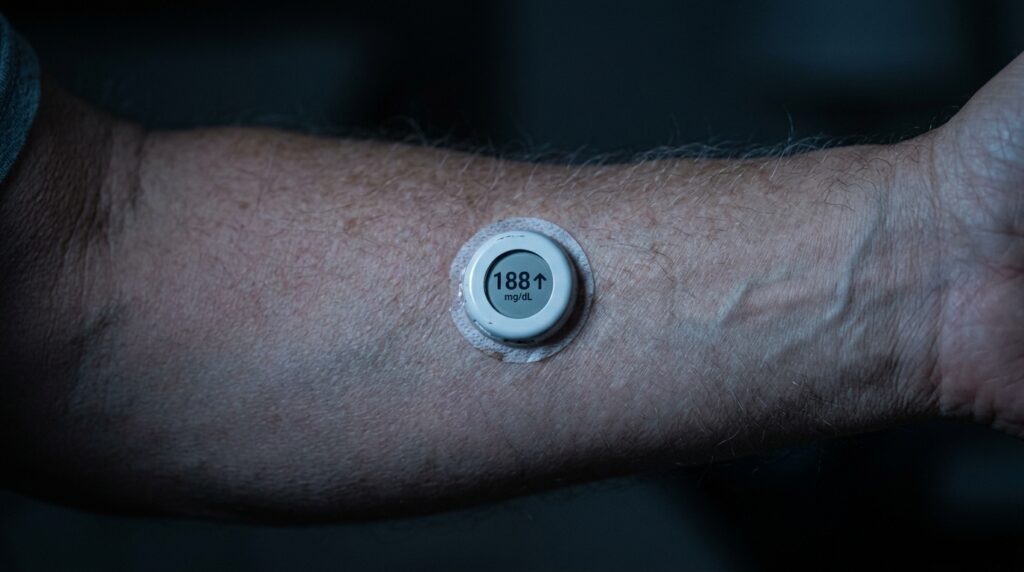
Sleep deprivation blood sugar effects are measurable after a single restricted night. That insulin sensitivity drop of 25% doesn’t require a week of bad sleep. It shows up the morning after. For someone who’s already in the prediabetic range — with fasting glucose between 100 and 125 mg/dL — that 25% reduction in insulin sensitivity isn’t theoretical risk. It’s the difference between a fasting glucose that’s manageable and one that hits 115 or 120 after a rough night.
The honest limitation here: most of the acute-effect studies used healthy subjects, not people with existing type 2 diabetes or prediabetes. The magnitude of the effect may differ for people who are already metabolically compromised — in some cases, the impact could be even more pronounced because baseline insulin sensitivity is already lower. If your fasting glucose is consistently above 150, sleep improvement alone is unlikely to normalize it. But for people in the early stages, this is one of the highest-leverage interventions available. It’s also worth noting that how sleep quality affects metabolism goes well beyond glucose alone — the same mechanisms touch weight regulation, inflammation, and cardiovascular risk simultaneously.
The next section is where most articles stop. That’s the wrong place to stop.
What Most Articles Get Wrong About Sleep Deprivation Blood Sugar Effects
But here’s what nobody tells you about sleep deprivation blood sugar effects: sleep duration and sleep quality are not the same variable, and conflating them leads to the wrong interventions.
Most articles focus exclusively on hours. “Get 7-9 hours.” Fine — technically correct, but incomplete. The metabolically critical stages of sleep are slow-wave sleep (stages 3 and 4) and the later cycles of REM. You can log 7.5 hours and still miss most of your slow-wave sleep if your sleep is fragmented, if you have undiagnosed sleep apnea, or if you’re consuming alcohol within three hours of bedtime (alcohol famously suppresses slow-wave sleep even while it helps people fall asleep faster). The growth hormone disruption I mentioned earlier? It’s specifically tied to slow-wave deprivation, not just total sleep time.
What most people get wrong about this is assuming that if they’re technically in bed for 7 hours, their metabolism is protected. It isn’t — not if that sleep is architecturally poor. Fragmented sleep triggers the same cortisol elevation as short sleep. People with untreated obstructive sleep apnea, for example, show markedly worse glucose tolerance and higher HbA1c than their sleep duration alone would predict, because their sleep is constantly interrupted by micro-arousals that spike cortisol with every episode.
The detail most articles miss entirely: timing matters too. Circadian biology research shows that sleeping from 2 AM to 9 AM produces measurably worse metabolic outcomes than sleeping from 10 PM to 5 AM — even for the same total duration. Your body’s insulin sensitivity naturally peaks in the morning and drops through the evening. Shift workers who sleep during the day consistently show blunted glucose tolerance compared to day workers, even when total sleep is matched. The circadian mismatch is itself a metabolic stressor.
So the target isn’t just hours. It’s hours, sleep architecture, and alignment with your circadian rhythm.
Practical Steps: How to Limit the Damage
If you’ve been focused on the usual sleep hygiene checklist and not seeing results in your glucose numbers, this is probably why — the advice never targeted the right mechanisms.
Protecting slow-wave sleep is the priority. Practically, this means keeping your room temperature between 65–68°F (cooler environments increase slow-wave duration), cutting alcohol at least 3 hours before bed, and avoiding high-glycemic meals within 2 hours of sleep — those produce insulin and blood sugar swings that fragment deep sleep. Magnesium glycinate at 300–400 mg taken 30–60 minutes before bed has some evidence behind it for improving sleep architecture specifically, not just sleep onset. The glycinate form matters here — oxide doesn’t cross the blood-brain barrier effectively, and citrate tends toward laxative effects at therapeutic doses.
For people whose fasting glucose or post-meal numbers are already elevated, the connection between sleep and morning readings can be direct and trackable. A 15-minute morning walk following a night of poor sleep blunts some of the cortisol-driven glucose rise — not because of the calories burned, but because muscle contraction independently moves GLUT-4 transporters to cell surfaces via an insulin-independent pathway (AMPK activation). That’s the same pathway targeted by metformin and by natural compounds like berberine. It’s accessible for free every morning.
Honest limitations to flag here: if fragmented sleep is driven by sleep apnea, no amount of magnesium or circadian optimization is going to solve it. A sleep study — increasingly accessible through at-home testing — is worth the step before spending months optimizing the wrong variable. Sleep apnea is dramatically underdiagnosed in people with type 2 diabetes, and treating it often produces meaningful HbA1c improvements independent of any other intervention.
The challenge, once you understand this mechanism, is finding a formula that actually targets it — rather than just claiming to support blood sugar with the same recycled ingredients. What I kept looking for was something that addressed these interconnected pathways specifically: glucose metabolism, stress response, and sustained energy — not just something with a vague blood sugar claim on the label.

Based on the science above — Sarah’s pick
Look — most people who read articles like this one do exactly what I used to do. They understand the problem completely, nod along with the research, and then go back to the same things that were not working. I was stuck in that loop for months. What finally changed it wasn’t finding something perfect. It was finding something whose mechanism actually matched what the science was pointing to. That’s the bar I use for every recommendation I make here.
Thousands are pairing evidence-based habits with Sugar Defender — a plant-based liquid formula with 8 clinically-studied ingredients designed to support healthy glucose metabolism and sustained natural energy, without stimulants or synthetic additives.
*Affiliate link — I only recommend products whose mechanism I’ve personally researched. Results vary. Always consult your doctor.
Putting It All Together
The research on sleep deprivation blood sugar effects doesn’t leave much room for ambiguity. A single night of restricted sleep reduces insulin sensitivity by up to 25%. Cortisol drives the liver to release glucose you didn’t eat. Appetite hormones push you toward the exact foods that spike blood sugar the hardest the next day. Sleep architecture — not just duration — determines whether the metabolic repair that’s supposed to happen overnight actually happens. And circadian timing adds another layer of complexity that almost no mainstream advice touches.
Real hope here doesn’t look like a perfect sleep score every night. It looks like understanding which variables matter most — slow-wave sleep, cortisol control, circadian alignment — and building toward them systematically. The evidence for people in the prediabetic and early insulin-resistant range is genuinely encouraging. These mechanisms are modifiable. Sleep quality affects metabolism in ways that show up in glucose readings within days, not months. That’s a faster feedback loop than almost any other lifestyle change available.
If your numbers aren’t responding the way you’d expect despite doing the basics right, sleep architecture is one of the first places I’d look. Not because it’s a magic fix. But because it’s the one lever that touches cortisol, insulin signaling, appetite regulation, and inflammation simultaneously — and most people haven’t pulled it all the way yet.
❓ Frequently Asked Questions
How does sleep deprivation affect blood sugar levels?
Sleep deprivation raises cortisol and growth hormone, which trigger the liver to release glucose into the bloodstream through a process called gluconeogenesis. At the same time, muscle cells become less responsive to insulin, meaning that glucose isn’t cleared from the blood efficiently. Even one night of poor sleep can produce measurable changes in glucose metabolism.
Can lack of sleep cause insulin resistance?
Yes, even a single night of insufficient sleep can reduce insulin sensitivity in muscle cells by up to 25%. This means your body needs to produce more insulin to achieve the same blood sugar-lowering effect. Chronic short sleep compounds this effect and is independently linked to a higher risk of type 2 diabetes.
How many nights of bad sleep does it take to raise blood sugar?
Research shows that measurable disruptions to glucose metabolism can occur after just one night of poor sleep. The effect is driven by hormonal shifts, particularly spikes in cortisol, that begin that same night. Chronic sleep restriction amplifies the damage significantly over time.
Does sleep deprivation increase cortisol and how does that affect glucose?
Yes, sleep deprivation raises cortisol levels, which signals the liver to produce and release more glucose through gluconeogenesis even when you haven’t eaten. This mechanism is designed for short-term stress responses but becomes harmful when triggered regularly by poor sleep. The result is persistently elevated fasting blood sugar over time.
Is there a link between poor sleep and type 2 diabetes?
Yes, chronic short sleep is independently associated with a significantly higher risk of developing type 2 diabetes, separate from diet and exercise habits. The connection runs through both elevated cortisol-driven glucose production and reduced insulin sensitivity in peripheral tissues. Studies consistently show this risk increases even after controlling for other lifestyle factors.
📊 naturalbloodsugartips.com
You’ve read the research. You understand the mechanism. Here’s the next step.
🩸 This Is the Blood Sugar Solution You’ve Been Looking For
Sugar Defender’s 8-ingredient liquid formula targets glucose metabolism at the cellular level — supporting insulin sensitivity, reducing post-meal spikes, and boosting natural energy. FTC-compliant, GMP-certified, 60-day money-back guarantee.
“This is what I would put in front of my own mother — not because the label is convincing, but because the ingredients match exactly what the peer-reviewed research points to.” — Sarah
⚠️ High demand — stock availability changes frequently. Check the official page.
*Individual results vary. Affiliate link — clicking supports this blog at no extra cost to you. Sarah is not a medical professional. Always consult your healthcare provider before starting any supplement.

About the Author — Sarah
I’m not a doctor or nutritionist — I’m a daughter who has been caring for my mother since her type 2 diabetes diagnosis. That journey pushed me to read the actual clinical research, track real results, and share what I find with people who deserve better than generic health advice. Everything here comes from that mission. Always consult your healthcare provider before making any changes to your treatment plan.
⚕️ Medical Disclaimer: I am not a medical professional. This blog reflects my personal research caring for a family member with diabetes. For informational purposes only — not medical advice. Always consult a qualified healthcare provider.
📚 Scientific References
- Donga E, et al. A single night of partial sleep deprivation induces insulin resistance in multiple metabolic pathways in healthy subjects. Journal of Clinical Endocrinology & Metabolism. 2010;95(6):2963–2968. PMID: 20337191.
- Spiegel K, Tasali E, Penev P, Van Cauter E. Brief communication: Sleep curtailment in healthy young men is associated with decreased leptin levels, elevated ghrelin levels, and increased hunger and appetite. Annals of Internal Medicine. 2004;141(11):846–850. PMID: 15531540.
- Leproult R, Van Cauter E. Role of sleep and sleep loss in hormonal release and metabolism. Endocrine Development. 2010;17:11–21. PMID: 19955752.
- Reutrakul S, Van Cauter E. Sleep influences on obesity, insulin resistance, and risk of type 2 diabetes. Metabolism. 2018;84:56–66. PMID: 29510179.