
Most Potent Anti Inflammatory Supplement: Top Rated Options Ranked by Evidence in 2026
⚡ Quick Answer
The most potent anti inflammatory supplement based on clinical evidence is curcumin with enhanced absorption (piperine or liposomal delivery) — it inhibits NF-kB, a master inflammatory switch, and rivals some NSAIDs for joint pain in trials. Omega-3 fatty acids (EPA + DHA) are the second most potent for systemic inflammation, followed by boswellia serrata for joint-specific inflammation. The most potent approach combines two or three of these targeting complementary pathways rather than relying on a single supplement.
📋 Table of Contents
- How Mom’s Diagnosis Started My Research Journey
- What Makes an Anti Inflammatory Supplement Truly Potent?
- Most Potent Anti Inflammatory Supplements Ranked by Evidence
- Top Anti Inflammatory Food Supplements Backed by Science
- How to Choose the Right One for You
- Smart Buyer’s Guide: What to Look For
- Conclusion
- ❓ Frequently Asked Questions

How Mom’s Diagnosis Started My Research Journey
Finding the most potent anti inflammatory supplement for my mom wasn’t something I planned — it was something I fell into after her type 2 diabetes diagnosis three years ago. I sat across from her doctor and heard, for the first time, that chronic inflammation wasn’t just a symptom of her condition — it was one of its drivers. That sent me headfirst into research I had never expected to do. I wanted to know: what is actually the most potent anti inflammatory supplement available without a prescription? Not marketing hype — real, clinical evidence.
I’m not a doctor or a pharmacist. I’m a daughter who spent months reading PubMed abstracts and comparing study designs. What I found surprised me — not because the options were exotic, but because several of the most potent anti inflammatory supplements are well-known ingredients that most people buy in low-quality, poorly absorbed forms and then conclude “don’t work.” Form and bioavailability matter enormously. That’s the most important lesson I took away from all of it.
What Makes an Anti Inflammatory Supplement Truly Potent?
Before ranking the most potent anti inflammatory supplements, it’s worth understanding what “potent” actually means in this context — because it’s not just about the strength of an ingredient. It’s about three things working together:
🔬 What Makes the Most Potent Anti Inflammatory Supplement
1. Mechanism Specificity
Does it target a validated inflammatory pathway — NF-kB, COX-2, 5-LOX, or cytokine production? Generic “anti-inflammatory” claims mean nothing without a specific mechanism.
2. Bioavailability
The most potent active compound is useless if your body can’t absorb it. Curcumin without piperine or liposomal delivery absorbs at under 1%. Bioavailability is what separates effective from ineffective supplements.
3. Clinical Evidence
Human randomized controlled trials — not animal studies, not in vitro petri dishes — showing measurable reductions in inflammatory markers like CRP, IL-6, or TNF-α in real people.
With that framework in mind, here is how I ranked the most potent anti inflammatory supplements available in 2026 — and why the ranking looks the way it does. For more context on the broader category, our guide on best natural anti-inflammatory supplements covers additional options worth considering alongside this list.
Most Potent Anti Inflammatory Supplements Ranked by Evidence
| # | Supplement | Primary Pathway | Evidence Level | Best For |
|---|---|---|---|---|
| 1 | Curcumin + Piperine | NF-kB, COX-2 inhibition | ⭐⭐⭐⭐⭐ | Joint pain, systemic inflammation |
| 2 | Omega-3 (EPA + DHA) | Resolvin/protectin production | ⭐⭐⭐⭐⭐ | Systemic, metabolic inflammation |
| 3 | Boswellia Serrata | 5-LOX inhibition | ⭐⭐⭐⭐⭐ | Joint inflammation, arthritis |
| 4 | Resveratrol | SIRT1, NF-kB modulation | ⭐⭐⭐⭐ | Metabolic, oxidative inflammation |
| 5 | Ginger Extract | COX-1, COX-2, prostaglandins | ⭐⭐⭐⭐ | Joint pain, digestive inflammation |
| 6 | Magnesium | CRP reduction, NF-kB modulation | ⭐⭐⭐⭐ | Metabolic, deficiency-driven inflammation |
| 7 | Alpha-Lipoic Acid | Antioxidant, NF-kB inhibition | ⭐⭐⭐⭐ | Nerve-related, oxidative inflammation |
Top Anti Inflammatory Food Supplements Backed by Science
Top Rated Anti Inflammatory Food Supplements 2026
Consult a healthcare provider before starting any supplement, especially with medications.
📊 naturalbloodsugartips.com
After months of research and careful observation, these are the top rated anti inflammatory food supplements that consistently appeared at the top of credible clinical literature — and that we genuinely incorporated into my mom’s routine.
- Curcumin (from Turmeric) — The Most Potent Anti Inflammatory Supplement: Curcumin is the most studied natural anti-inflammatory compound in the world. It inhibits NF-kB — a transcription factor that switches on hundreds of inflammatory genes — and blocks COX-2 enzymes comparably to some NSAIDs. The critical caveat: standard turmeric powder absorbs at under 1%. You need curcumin with piperine (black pepper extract, which boosts absorption by up to 2,000%) or a liposomal/phospholipid formulation. Without this, you’re essentially taking very expensive yellow powder.
- Omega-3 Fatty Acids (EPA + DHA): Fish oil’s EPA and DHA convert into specialized pro-resolving mediators called resolvins and protectins — molecules that don’t just suppress inflammation but actively help the body resolve it. This is fundamentally different from most anti-inflammatory drugs and makes omega-3s uniquely valuable. Choose molecularly distilled fish oil to avoid heavy metal contamination, and look for triglyceride form for better absorption.
- Boswellia Serrata: An ancient Ayurvedic resin extract that targets 5-LOX enzymes — a completely different pathway from curcumin’s COX-2 inhibition. This complementary mechanism makes curcumin + boswellia one of the most potent natural combinations available. Clinical trials in knee osteoarthritis show meaningful improvements in pain and mobility within 4–8 weeks. Look for formulas standardized to AKBA (acetyl-11-keto-β-boswellic acid), the most active boswellic acid.
- Resveratrol: Found naturally in grape skins and Japanese knotweed, resveratrol activates SIRT1 — a longevity-associated protein that downregulates NF-kB and reduces oxidative stress. Particularly interesting for metabolic inflammation connected to blood sugar dysregulation. Bioavailability is a challenge here too — trans-resveratrol is the active form, and liposomal formulations significantly outperform standard capsules.
- Ginger Extract: Gingerols and shogaols in standardized ginger extract suppress both COX-1 and COX-2 — the same enzymes ibuprofen targets — while also inhibiting prostaglandin synthesis. What distinguishes ginger from NSAIDs is the absence of gastrointestinal mucosal damage. My mom noticed the most impact on her morning joint stiffness after about six weeks of consistent daily use.
🦴 Move Freely Again — Try Joint Genesis
Joint Genesis combines Mobilee® hyaluronan matrix with French maritime pine bark, ginger root, boswellia, and BioPerine® — bringing together several of the most potent anti inflammatory ingredients in one research-backed daily capsule.
Check Availability Inside the US →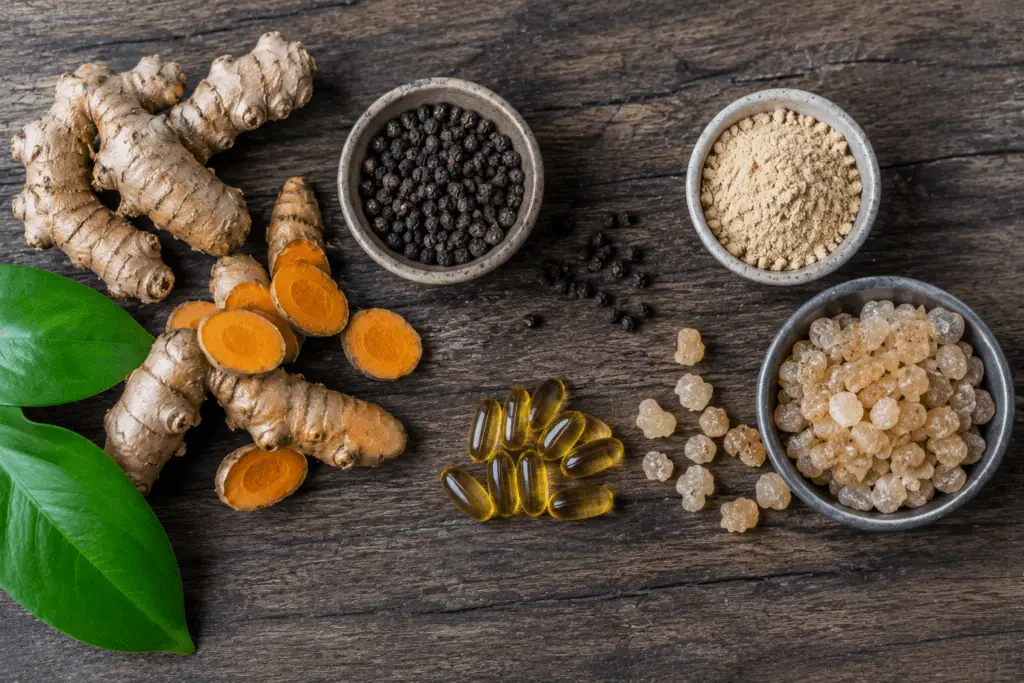
How to Choose the Most Potent Anti Inflammatory Supplement for Your Situation
The most potent anti inflammatory supplement for you depends on what’s driving your inflammation. Here’s how to match the supplement to your specific situation:
- Joint pain and arthritis: Boswellia serrata + curcumin with piperine. These two target complementary pathways and have the most clinical trial evidence specifically for joint conditions. Add omega-3s for systemic support.
- Metabolic inflammation (diabetes, insulin resistance): Omega-3 fatty acids + curcumin + magnesium glycinate. This combination addresses the CRP and IL-6 elevation seen in metabolic conditions while also supporting blood sugar and insulin sensitivity.
- Gut inflammation: Curcumin + ginger extract + omega-3s. Curcumin has shown promise in inflammatory bowel conditions; ginger supports digestive motility and reduces inflammatory prostaglandins in the gut lining.
- General chronic fatigue and brain fog: Omega-3s + resveratrol + magnesium. Neuroinflammation drives much of the fatigue associated with chronic low-grade inflammation. These three address both central and peripheral inflammatory pathways.
Smart Buyer’s Guide: What to Look For in the Most Potent Anti Inflammatory Supplement
Potency starts with quality — and the supplement industry is notoriously under-regulated. Here is exactly what I look for every time when choosing a top rated anti inflammatory supplement:
- Third-party testing: NSF Certified for Sport, USP Verified, or Informed Sport certifications confirm label accuracy and purity. Without these, you’re trusting marketing claims with no independent verification.
- Bioavailability enhancers: Curcumin with BioPerine or C3 Complex, omega-3 in triglyceride form, liposomal resveratrol. The most potent anti inflammatory supplement in the world delivers nothing if your body can’t absorb it.
- Clinically relevant doses: Curcumin benefits start at 500mg curcuminoids daily. Omega-3 effects appear at 1,000–3,000mg combined EPA/DHA. Boswellia studies used 100–400mg standardized AKBA extract. Many budget products underdose significantly.
- Standardized extracts: “Turmeric root powder” is not the same as “curcumin standardized to 95% curcuminoids.” Standardization means consistent, measurable potency matching what was used in clinical trials.
- Clean formulation: No titanium dioxide, artificial colors, unnecessary fillers, or allergens. If you wouldn’t eat those ingredients separately, they shouldn’t be in a health supplement.
Conclusion
After everything I’ve learned and everything we’ve tried, my honest answer to “what is the most potent anti inflammatory supplement?” is: curcumin with enhanced absorption — but almost never in isolation. The most clinically meaningful results come from combining two or three supplements that target different inflammatory pathways simultaneously: curcumin (NF-kB), omega-3s (resolvins), and boswellia (5-LOX) cover the three most important mechanisms with the strongest human evidence.
My mom is doing noticeably better — less morning stiffness, more consistent energy, and inflammation markers that her doctor has commented on. It didn’t happen overnight, and it required patience and consistency. But the right top rated anti inflammatory food supplement combination, paired with the right lifestyle habits, made a real and lasting difference.
💪 Rediscover Pain-Free Movement with Joint Genesis
Joint Genesis brings together Mobilee®, French maritime pine bark, ginger, boswellia, and BioPerine® — five of the most potent anti inflammatory ingredients in one research-backed daily capsule, designed specifically for joint comfort and mobility.
👉 Claim Your Supply With Free Shipping Today⚠️ Update: Due to high demand, stock is limited. Check availability now.
*Results may vary. Affiliate link.
❓ Frequently Asked Questions — Most Potent Anti Inflammatory Supplement

About the Author — Sarah
I’m not a doctor or nutritionist — I’m a daughter who has been caring for my mother since her type 2 diabetes diagnosis. That journey pushed me to research natural alternatives and evidence-based lifestyle changes. Everything I share comes from that personal mission: to help my mom live better, with more energy and less dependence on medication. Always consult your healthcare provider before making any changes to your treatment plan.
⚕️ Medical Disclaimer: I am not a medical professional. This blog reflects my personal research caring for a family member with diabetes. For informational purposes only — not medical advice. Always consult a qualified healthcare provider.
📚 Scientific References
- Hewlings SJ, Kalman DS. Curcumin: A review of its effects on human health. Foods. 2017;6(10):92. PMID: 29065496.
- Calder PC. Omega-3 fatty acids and inflammatory processes: from molecules to man. Biochemical Society Transactions. 2017;45(5):1105-1115. PMID: 28900017.
- Siddiqui MZ. Boswellia serrata, a potential antiinflammatory agent: an overview. Indian Journal of Pharmaceutical Sciences. 2011;73(3):255-261. PMID: 22457547.
- Bhatt JK, Thomas S, Nanjan MJ. Resveratrol supplementation improves glycemic control in type 2 diabetes mellitus. Nutrition Research. 2012;32(7):537-541. PMID: 22901562.