
10 Foods That Reduce Joint Pain and Inflammation Naturally
📋 Table of Contents
I still remember the morning my mom shuffled into the kitchen gripping the counter with both hands, her knuckles white, her face tight with that familiar look of pain she tried so hard to hide from me. She’d been waking up stiff for years, but this particular morning something shifted in me. I’d spent so much time researching foods that reduce joint pain for her diabetes management that I’d almost overlooked the bigger picture — her joints were suffering too, and what she was eating every day might be making things worse, or so much better. That sent me down a research rabbit hole I’m genuinely grateful for, because what I found changed how we both eat and how she feels every single morning now.
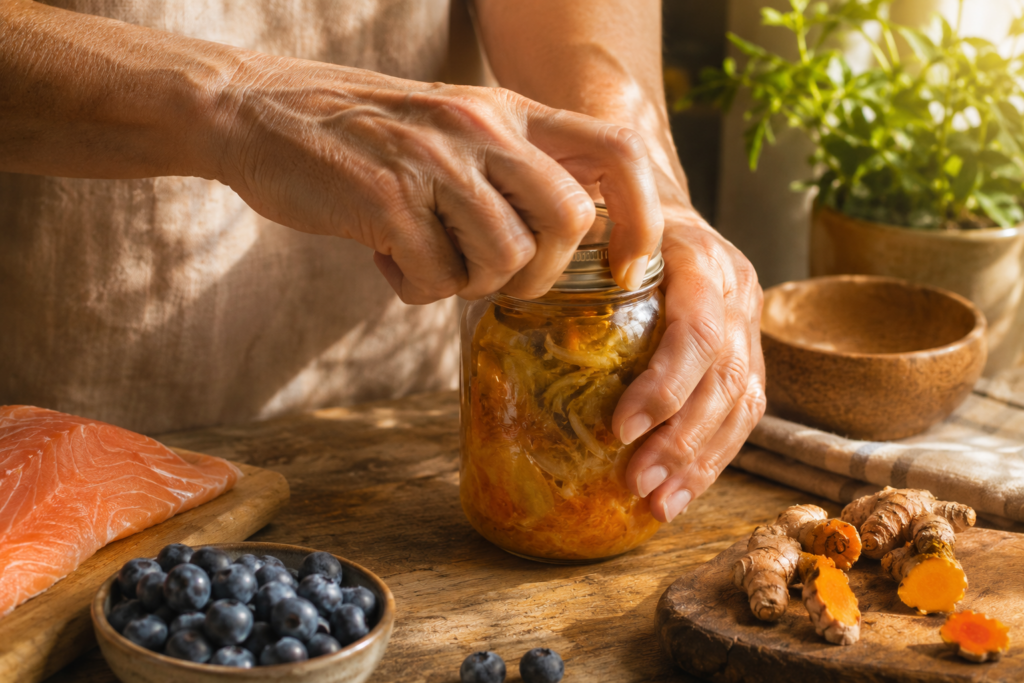
I’m not a doctor — I want to be upfront about that. I’m just a daughter who loves her mom and spends way too many late nights reading nutrition studies. But what I’ve learned about using foods that reduce joint pain naturally has been nothing short of eye-opening, and I want to share it with you today in plain, honest language.
Why Food Can Be Powerful Medicine for Your Joints
Inflammation is the root culprit behind most joint pain — whether it’s osteoarthritis, rheumatoid arthritis, or just that chronic achiness many of us chalk up to “getting older.” When the body is stuck in a constant low-grade inflammatory state, the cartilage that cushions your joints breaks down faster, the synovial fluid that keeps everything moving smoothly thins out, and pain becomes a daily companion. What surprised me most in my research is how directly our diet influences this inflammatory process. Certain foods fan the flames. Others genuinely cool them down.
If you’re also dealing with blood sugar issues alongside joint discomfort — which is common, since both involve inflammatory pathways — you might find it helpful to explore natural pain relief for diabetics, which goes deeper into how inflammation affects people managing diabetes. For my mom, the overlap was huge, and addressing both through food made a meaningful difference in her quality of life.
🦴 Move Freely Again — Try Joint Genesis
Thousands of people over 40 are discovering Joint Genesis — a daily capsule built around Mobilee®, a patented ingredient shown to support the synovial fluid that cushions and lubricates your joints.
Check Availability Inside the US →The exciting thing is you don’t need an overhaul of your entire lifestyle overnight. Adding even a handful of these foods consistently can shift the body’s inflammatory response over time. I’ve seen it happen with my own mom, and I hear it from readers all the time.
Top Foods That Reduce Joint Pain Naturally
10 Foods That Reduce Joint Pain
Consult a healthcare provider before using food as a substitute for prescribed joint pain treatment.
📊 naturalbloodsugartips.com
Let’s get into the good stuff. These are the ten foods I discovered through research and real experience that genuinely seem to make a difference — not as a cure, but as consistent, gentle support for inflamed, aching joints.
- Fatty Fish (Salmon, Sardines, Mackerel): These are packed with omega-3 fatty acids — specifically EPA and DHA — which have been studied extensively for their ability to reduce inflammatory markers like C-reactive protein. Mom started eating canned salmon twice a week and noticed less morning stiffness within about three weeks.
- Turmeric: The active compound curcumin in turmeric is one of the most researched natural anti-inflammatories out there. I add it to warm milk, scrambled eggs, and soups. The key is pairing it with black pepper — it dramatically boosts absorption.
- Ginger: Fresh ginger root contains gingerols and shogaols, which block some of the same inflammatory enzymes as common pain medications. I make a ginger-lemon tea every morning that my mom actually looks forward to.
- Tart Cherries: I was skeptical about this one at first, but the research on tart cherries for joint pain is surprisingly solid. Anthocyanins — the pigments that make them red — have powerful anti-inflammatory properties. Tart cherry juice (unsweetened) a few times a week seems to help.
- Extra Virgin Olive Oil: This was an easy swap — replacing vegetable oils with extra virgin olive oil. It contains oleocanthal, a natural compound that works similarly to ibuprofen at a molecular level. Cold-pressed, high-quality olive oil is what you want.
- Leafy Greens (Spinach, Kale, Swiss Chard): These are loaded with vitamin K, magnesium, and antioxidants that support bone and joint health. I sneak them into smoothies, soups, and stir-fries so mom gets them daily without even thinking about it.
- Walnuts: Another excellent source of plant-based omega-3s (ALA), walnuts are an easy snack that supports reduced inflammation. A small handful a day is all you need.
- Broccoli: Sulforaphane in broccoli has been shown in studies to slow the destruction of cartilage in joints. Steamed or lightly sautéed is best to preserve the active compounds.
- Berries (Blueberries, Strawberries, Raspberries): The antioxidants in berries — especially quercetin and anthocyanins — help neutralize the oxidative stress that contributes to joint inflammation. Fresh or frozen both work beautifully.
- Green Tea: Rich in EGCG (epigallocatechin gallate), green tea has been studied for its ability to reduce inflammatory cytokines. Replacing one or two daily coffees with green tea is a small shift with real potential payoff.
How to Build an Anti-Inflammatory Plate Every Day
Knowing which foods help is one thing — actually getting them into your daily meals consistently is another. What worked for us was thinking less about “dieting” and more about crowding out. When half your plate is leafy greens and colorful vegetables, and your protein is fatty fish or legumes, and your fat source is olive oil or walnuts, you’ve naturally built an anti-inflammatory meal without tracking a single calorie.
I also found it incredibly helpful to explore natural remedies for chronic inflammation beyond just food — things like sleep, stress management, and gentle movement all play a supporting role. But food was the cornerstone for us, the thing we could control three times a day.
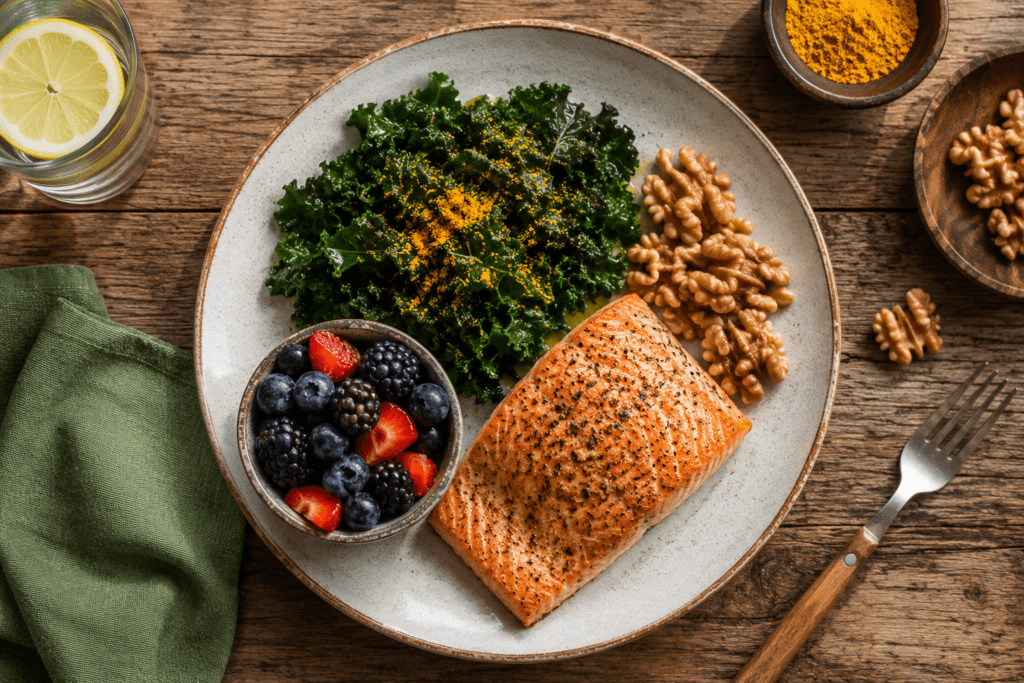
A simple daily template that works for us: a breakfast smoothie with spinach, frozen berries, ground flaxseed, and ginger; a lunch with a big leafy salad dressed in olive oil and lemon; and a dinner built around salmon or sardines with steamed broccoli. It sounds simple because it is — and simple is what sticks.
More Foods That Help Reduce Joint Pain and Stiffness
Beyond the top ten, there are a few honorable mentions I’d be remiss not to include when talking about foods that reduce joint pain naturally. Bone broth, for instance, contains collagen peptides and glycine that may support cartilage repair over time. Garlic contains diallyl disulfide, which has shown promise in limiting pro-inflammatory compounds. And avocado — rich in oleic acid and vitamin E — is another food my mom eats regularly that seems to contribute to her overall comfort.
If you’re curious about going beyond diet to get even more targeted support, reading up on the best anti-inflammatory supplements natural options can help you understand what works alongside these foods. For some people, supplementing with curcumin extract, fish oil capsules, or boswellia in more concentrated forms adds an extra layer of support that diet alone doesn’t fully provide.
The important thing I’ve learned through all of this is that using foods that reduce joint pain naturally is not an overnight fix. It’s a slow, steady, cumulative process. But the results — when you’re consistent — can be genuinely life-changing. My mom is proof of that.
What to Avoid — Foods That Make Inflammation Worse
This part matters just as much as what you add. Some foods actively fuel the inflammatory fire, and if you’re eating them regularly, even the most anti-inflammatory diet in the world can’t fully compensate. The biggest offenders I found in my research are:
- Refined sugars and sweetened beverages: These spike blood sugar and trigger an immediate inflammatory response. Cutting back on soda, candy, and pastries made a noticeable difference for my mom within weeks.
- Processed and ultra-processed foods: Chips, packaged snacks, fast food — these are loaded with refined oils, additives, and sodium, all of which promote inflammation.
- Refined carbohydrates (white bread, white rice): These behave similarly to sugar in the body, triggering the same inflammatory cascade. Swapping to whole grains like brown rice, quinoa, or oats is one of the easiest upgrades.
- Vegetable and seed oils high in omega-6s: Corn oil, sunflower oil, and soybean oil create an imbalanced omega-6 to omega-3 ratio, which tips the body toward inflammation. Extra virgin olive oil is your friend here.
- Alcohol: Even moderate regular drinking can increase inflammatory markers. Occasional is very different from nightly, and the difference shows up in how joints feel in the morning.
What I’ve come to believe — through watching my mom and through everything I’ve read — is that using foods that reduce joint pain naturally is one of the most empowering things a person can do. You don’t need a prescription. You don’t need to spend a fortune. You need a grocery cart full of color, healthy fats, and real whole foods, and the patience to let the body do what it’s designed to do when you stop fighting it with processed junk.
My mom still has hard mornings sometimes. But the days when she grips the counter and winces? Those are rare now. She moves through the kitchen with so much more ease, and I truly believe the food changes we made together are a big part of why. I hope this list gives you the same kind of hope — and the same kind of results — that it gave us.
💪 Rediscover Pain-Free Movement with Joint Genesis
Joint Genesis combines Mobilee® hyaluronan matrix with French maritime pine bark, ginger root, boswellia, and BioPerine® — a research-backed formula to support joint comfort, flexibility, and long-term mobility.
👉 Claim Your Supply With Free Shipping Today⚠️ Update: Due to high demand, stock is limited. Check availability now.
*Results may vary. Affiliate link.

About the Author — Sarah
I’m not a doctor or nutritionist — I’m a daughter who has been caring for my mother since her type 2 diabetes diagnosis. That journey pushed me to research natural alternatives and evidence-based lifestyle changes. Everything I share comes from that personal mission: to help my mom live better, with more energy and less dependence on medication. Always consult your healthcare provider before making any changes to your treatment plan.
⚕️ Medical Disclaimer: I am not a medical professional. This blog reflects my personal research caring for a family member with diabetes. For informational purposes only — not medical advice. Always consult a qualified healthcare provider.
📚 Scientific References
- Calder PC. Omega-3 fatty acids and inflammatory processes: from molecules to man. Biochemical Society Transactions. 2017;45(5):1105-1115. PMID: 28900017.
- Hewlings SJ, Kalman DS. Curcumin: a review of its effects on human health. Foods. 2017;6(10):92. PMID: 29065496.
- Grzanna R, Lindmark L, Frondoza CG. Ginger — an herbal medicinal product with broad anti-inflammatory actions. Journal of Medicinal Food. 2005;8(2):125-132. PMID: 16117603.
- Rausch SM, Wineski LE, Raikos A, et al. Tart cherry juice reduces inflammation and oxidative stress in patients with osteoarthritis. Osteoarthritis and Cartilage. 2012;20(7):734-735. PMID: 22525170.