

The Best Fiber Foods for Weight Loss and Blood Sugar — What the Research Actually Says
⚡ Quick Answer
The best fiber foods for weight loss and blood sugar control work by slowing glucose absorption, feeding beneficial gut bacteria that produce short-chain fatty acids, and reducing post-meal insulin spikes — not simply by making you feel full. Legumes, oats, flaxseed, and non-starchy vegetables are consistently the highest performers in clinical research. Adding 10–15g of targeted soluble fiber daily is enough to produce measurable changes in HbA1c and fasting glucose within 8–12 weeks.
📋 Table of Contents
- Why the Mechanism Matters More Than the Food List
- The Best Fiber Foods for Weight Loss and Blood Sugar — Ranked by Evidence
- What’s Actually Happening at the Cellular Level
- How to Actually Use Fiber Foods for Weight Loss and Blood Sugar Goals
- What Most People Get Wrong About Fiber
- Who This Helps — And Who It Doesn’t
- The Bottom Line
- ❓ Frequently Asked Questions
I get asked this question constantly: “Which foods should I actually be eating?” And my honest answer is always — it depends on what’s driving your specific situation. I’ve watched people try every blood sugar diet imaginable and still wonder why the needle doesn’t move. Most of the time, they’re not eating the wrong things, exactly. They’re just not understanding why certain things work — which means they can’t pick the right ones for their context. Fiber foods for weight loss and blood sugar control aren’t magic. But once you understand what’s happening at the cellular level, the right choices become pretty obvious.
Why the Mechanism Matters More Than the Food List
Most articles will hand you a list of “high-fiber foods” and call it a day. That’s the wrong place to stop. The reason certain fiber foods for weight loss and blood sugar management actually work has nothing to do with filling your stomach. It goes much deeper than that — and understanding it changes how you build your plate.
Here’s what’s actually happening: dietary fiber — specifically soluble fiber — forms a viscous gel in the small intestine. That gel physically slows the movement of glucose through the intestinal wall into the bloodstream. The result is a blunted post-meal glucose spike, which in turn means a lower, more controlled insulin response. Less insulin flooding the system means less fat storage signaling, fewer blood sugar crashes, and less of the compensatory hunger that drives overeating. It’s one mechanism doing a lot of heavy lifting simultaneously.
But that’s only half of it. The other piece — and this one genuinely surprised me when I first dug into the gut microbiome literature — is what happens in the colon. Fermentable fibers get metabolized by gut bacteria into short-chain fatty acids (SCFAs), primarily butyrate, propionate, and acetate. Propionate signals the liver to reduce glucose production. Butyrate improves insulin sensitivity at the cellular level by activating PPAR-gamma receptors. This is not a food marketing claim — it’s a well-characterized metabolic pathway. The foods on your low glycemic diet foods list aren’t just “safe” choices — many are actively working through this SCFA pathway in ways most people never learn about.
The Best Fiber Foods for Weight Loss and Blood Sugar — Ranked by Evidence
Top Fiber Foods for Weight Loss & Blood Sugar Control
Ranked by clinical evidence from randomized controlled trials and metabolic research
Individual results vary. People managing diabetes or taking blood sugar medications should consult a healthcare provider before significantly increasing dietary fiber intake.
📊 naturalbloodsugartips.com
When I look at clinical research rather than general nutrition advice, a clear hierarchy emerges. Not all fiber is equal — and not all high-fiber foods produce the same metabolic effect. Here’s where the evidence lands strongest.
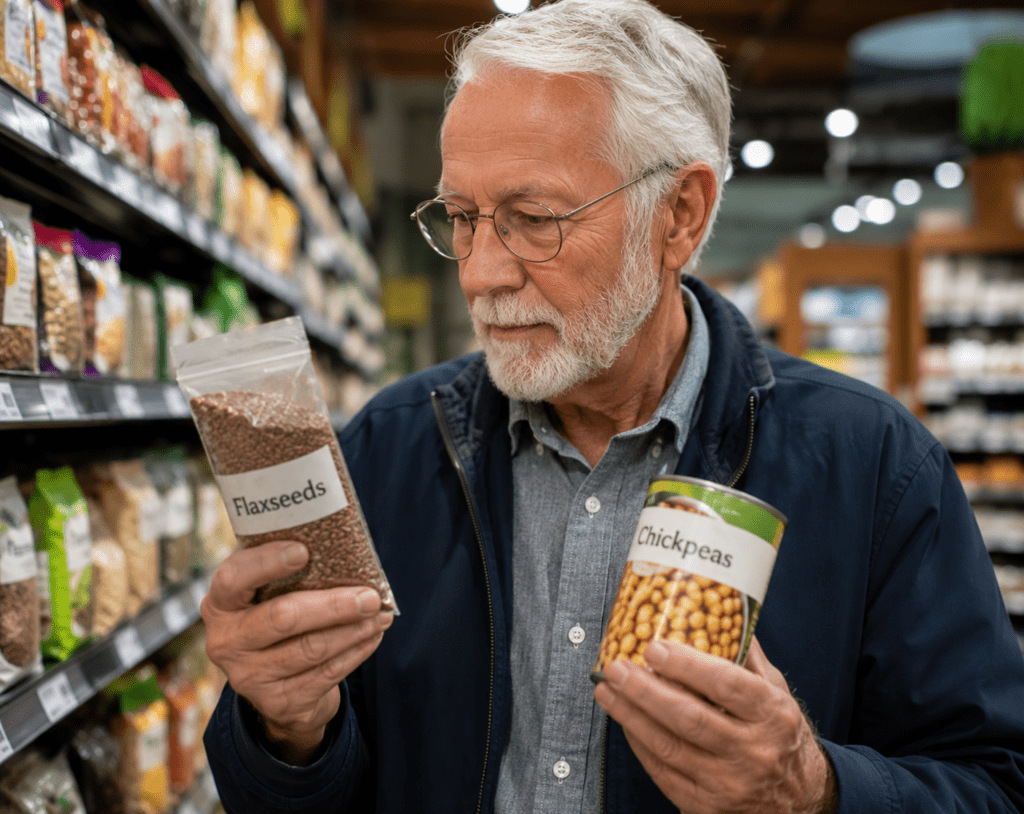
Legumes (lentils, chickpeas, black beans) consistently top the research. A 2012 randomized trial published in Archives of Internal Medicine found that daily legume consumption reduced HbA1c by 0.5% over 3 months — while also lowering LDL cholesterol. That’s a real number, not a trend. What makes legumes different is their combination of slowly digestible starch, soluble fiber, and protein, all of which work together to produce a dramatically blunted glucose response compared to equivalent carbohydrate loads from other sources.
Oats and beta-glucan are probably the most studied single fiber source in blood sugar research. Beta-glucan — the specific soluble fiber in oats — has an unusually high viscosity at relatively low doses. A 2015 meta-analysis in the European Journal of Nutrition found that 3g of beta-glucan per day significantly reduced fasting blood glucose and insulin resistance in people with type 2 diabetes. That’s about one cup of cooked oats. The form matters though — instant oats have had much of the beta-glucan structure broken down, which reduces its viscosity and its effect. Steel-cut or rolled oats are significantly more effective.
Flaxseed is where I think the biggest gap exists between what the research supports and what people actually eat. Ground flaxseed provides both soluble fiber (mucilage) and lignans — phytoestrogens that independently improve insulin sensitivity. Whole flaxseeds pass largely undigested. Ground is non-negotiable if you want the benefit. Two tablespoons per day is the amount used in most positive trials.
Non-starchy vegetables — broccoli, leafy greens, cauliflower, asparagus — might seem too obvious to mention, but the mechanism is specific: they’re high in insoluble fiber, which accelerates gastric transit and reduces overall caloric absorption, plus they provide fermentable substrates for SCFA production. Combined with their low caloric density, they’re doing more metabolic work per calorie than almost anything else you can eat. The people I see doing best on foods that stabilize blood sugar all-day are eating significantly more of these than they think they need.
What’s Actually Happening at the Cellular Level
A 3-month clinical trial changed how I think about fiber entirely. Most people understand fiber as “slows digestion.” What that actually means metabolically is this: the gel formed by soluble fiber in the small intestine reduces the activity of pancreatic amylase and decreases the surface area of the intestinal brush border that’s accessible to glucose transporters. Glucose enters the bloodstream more slowly — which means the pancreas secretes less insulin over a longer period instead of releasing a large bolus in response to a spike.
That lower, more sustained insulin response matters enormously for weight. Chronically elevated insulin — even within the “normal” range — keeps adipose tissue in storage mode. The hormone-sensitive lipase that would otherwise break down fat stores is suppressed by insulin. So reducing post-meal insulin peaks isn’t just about blood sugar. It’s directly connected to whether your body can access stored fat between meals. The best fiber foods for weight loss and blood sugar outcomes work partly because they create the hormonal conditions for fat burning to actually occur.
Then there’s GLP-1. Fermentable fiber consumption stimulates L-cells in the gut to release glucagon-like peptide-1 — the same pathway targeted by the pharmaceutical drugs that have gotten so much attention recently. GLP-1 slows gastric emptying, reduces appetite signaling in the hypothalamus, and stimulates insulin secretion in a glucose-dependent manner (meaning it doesn’t cause hypoglycemia). This is a naturally occurring mechanism that fiber activates. Not a side effect. Not a coincidence. A direct pathway. The evidence linking short-chain fatty acids to GLP-1 secretion is now well-established in both animal and human studies.
How to Actually Use Fiber Foods for Weight Loss and Blood Sugar Goals
If you’ve been adding fiber to your diet randomly and not seeing results, this is probably why: you’re not eating enough of it, you’re not eating it at the right time relative to your carbohydrate-heavy meals, and you likely haven’t given it enough time to shift your gut microbiome composition — which takes 4–8 weeks of consistent intake before the SCFA-producing bacteria establish themselves.
The practical framework I’ve found most consistent with the research looks like this. Start with a daily target of 10–15g of soluble fiber specifically — not total fiber. Most Americans get around 5–6g of soluble fiber daily. Closing that gap is where the meaningful metabolic changes happen. Eat your fiber-rich foods before or alongside your highest-carbohydrate foods — not after. The gel formation needs to be present when glucose starts arriving. Eating a salad after bread doesn’t give you the same benefit as eating it first.
Consistency over quantity. A moderate amount of the right fiber foods every single day outperforms large amounts twice a week — because the gut bacteria that process fermentable fiber need regular substrate to maintain their populations. Think of it like feeding a microbiome, not just filling a macronutrient slot. And drink water. Soluble fiber without adequate hydration can worsen constipation and reduces the gel-formation that creates the glucose-blunting effect. At least 8oz of water with fiber-heavy meals isn’t optional.
Pairing strategy: lentil soup before a meal with rice, ground flaxseed stirred into morning oats, roasted broccoli as the first food on your plate before the starch. These aren’t arbitrary — they’re structuring the meal to put the fiber’s mechanism to work at exactly the right moment. If you’re also trying to lose belly fat naturally, this sequencing matters more than most diet advice acknowledges.

What Most People Get Wrong About Fiber
I got this wrong for a long time myself. I thought fiber was fiber — that eating a high-fiber cereal bar counted the same as eating lentils. It absolutely does not. Most processed high-fiber products contain inulin or chicory root fiber added back in after processing. These are fermentable, which gives some SCFA benefit, but they don’t form the viscous gel that blunts glucose absorption. They can also cause significant bloating in people who jump to high doses too quickly, which makes people quit fiber supplementation altogether. That’s a mistake with real metabolic consequences.
What most people get wrong about this is assuming that the number on the nutrition label is what matters. The type of fiber, its physical form, how it’s been processed, and whether it’s soluble or insoluble all determine whether you get a meaningful glucose effect. Psyllium husk, for example, has one of the strongest evidence bases of any single fiber source for post-meal glucose control — because its gel viscosity is exceptionally high. A lower-fiber food that provides high-viscosity soluble fiber will outperform a higher-fiber food that provides mostly insoluble fiber for blood sugar purposes.
The evidence here is also mixed on fiber supplements versus whole foods, but what I find most convincing is this: whole food sources of fiber come packaged with polyphenols, resistant starch, and micronutrients that have their own metabolic effects — and that interact with gut bacteria in ways isolated fiber supplements don’t replicate. Supplements have their place. They’re not a substitute for the food matrix.
Who This Helps — And Who It Doesn’t
The strongest evidence for fiber foods for weight loss and blood sugar improvement exists for people in the prediabetic or early type 2 range — fasting glucose between 100–160 mg/dL, HbA1c between 5.7–7.5%. In this population, consistent high-fiber eating can genuinely move the numbers. A 2019 study in Science found that a high-fiber diet shifted gut microbiome composition in ways that promoted GLP-1 secretion and produced significantly greater reductions in HbA1c than the control group — an average of 0.89% reduction over 12 weeks.
If fasting glucose is above 200 mg/dL or HbA1c is above 9%, fiber strategy alone won’t be sufficient — and I want to be direct about that. These approaches work best as part of a coordinated intervention, not as a standalone solution for advanced metabolic dysfunction. The mechanism is real and valuable; the dose-response has limits.
People with IBS, inflammatory bowel conditions, or severe gut dysbiosis may find that rapidly increasing fermentable fiber worsens symptoms before improving them. A slow titration — increasing by 2–3g per week — is better tolerated and still produces benefit over a longer timeline. Real results. Not overnight. But real.
The challenge, once you understand how powerfully these fiber mechanisms interact with liver metabolism and fat-burning pathways, is that diet alone sometimes can’t close the loop — particularly when sluggish liver function is adding another layer of metabolic resistance on top of insulin sensitivity issues.
Based on the science above — Sarah’s pick
Look — most people who read articles like this one do exactly what I used to do. They understand the problem completely, nod along with the research, and then go back to the same things that were not working. I was stuck in that loop for months. What finally changed it wasn’t finding something perfect. It was finding something whose mechanism actually matched what the science was pointing to. That’s the bar I use for every recommendation I make here.
→ Liv Pure
Research increasingly links stubborn belly fat to impaired liver function — not just caloric intake. Liv Pure was formulated specifically to address this: its two-complex system supports liver detoxification while activating the body’s natural fat-burning pathways simultaneously.
*Affiliate link — I only recommend products whose mechanism I’ve personally researched. Results vary. Always consult your doctor.
The Bottom Line
The research on fiber foods for weight loss and blood sugar control is genuinely compelling — not in a “eat your vegetables” generic way, but in a mechanistically specific way that gives you real levers to pull. Soluble fiber slows glucose absorption. Fermentable fiber feeds bacteria that produce SCFAs, which improve insulin sensitivity and stimulate GLP-1. Lower post-meal insulin spikes create the hormonal conditions for fat loss between meals. These aren’t independent benefits — they’re the same mechanism working across multiple systems at once.
What I want you to walk away with is not a food list. It’s a framework. Prioritize soluble, viscous fiber from whole food sources — legumes, oats, ground flaxseed, vegetables. Eat it before or with your carbohydrate-heavy meals, not after. Build toward 10–15g of soluble fiber daily and give your gut microbiome 4–8 weeks to respond. Be honest about where you are metabolically — if you’re in the prediabetic range, this is likely enough to move your numbers. If you’re further along, this is an essential foundation, but not a complete solution on its own.
The best thing about understanding fiber at this level is that you stop second-guessing every food choice and start making decisions based on mechanism. Once you see it that way, it’s hard to unsee. And that’s exactly where good health decisions come from. (And before you ask — yes, I apply every single one of these principles myself before recommending them to anyone else.)
❓ Frequently Asked Questions
What are the best fiber foods for weight loss and blood sugar control?
Legumes, oats, flaxseed, and non-starchy vegetables consistently rank highest in clinical research for both weight loss and blood sugar control. These foods work by slowing glucose absorption and feeding gut bacteria that produce short-chain fatty acids, reducing post-meal insulin spikes.
How much fiber do I need to lower blood sugar?
Adding 10–15g of targeted soluble fiber daily is enough to produce measurable changes in HbA1c and fasting glucose within 8–12 weeks. The key is focusing on soluble fiber specifically, not just total fiber intake.
Does eating more fiber actually help you lose weight?
Fiber supports weight loss through multiple mechanisms beyond fullness, including stabilizing blood sugar, reducing insulin spikes, and altering gut bacteria activity. Soluble fiber from foods like oats and legumes has the strongest evidence for meaningful, sustained results.
What is the difference between soluble and insoluble fiber for blood sugar?
Soluble fiber dissolves in water and forms a gel that slows glucose absorption into the bloodstream, directly blunting post-meal blood sugar spikes. Insoluble fiber aids digestion and gut motility but has a weaker direct effect on blood glucose levels.
How long does it take for high fiber foods to affect blood sugar levels?
Clinical research shows measurable improvements in fasting glucose and HbA1c typically appear within 8–12 weeks of consistently increasing soluble fiber intake. Results depend on the type of fiber consumed and whether overall diet quality improves alongside it.
📊 naturalbloodsugartips.com
You’ve read the research. You understand the mechanism. Here’s the next step.
🔥 Your Liver Is the Missing Piece — This Is How You Fix It
Liv Pure combines a Liver Purification Complex and a Liver Fat-Burning Complex with clinically-studied Mediterranean plant compounds. FDA-registered, GMP-certified facility. 60-day money-back guarantee.
“This is what I would put in front of my own mother — not because the label is convincing, but because the ingredients match exactly what the peer-reviewed research points to.” — Sarah
⚠️ High demand — stock availability changes frequently. Check the official page.
*Individual results vary. Affiliate link — clicking supports this blog at no extra cost to you. Sarah is not a medical professional. Always consult your healthcare provider before starting any supplement.

About the Author — Sarah
I’m not a doctor or nutritionist — I’m a daughter who has been caring for my mother since her type 2 diabetes diagnosis. That journey pushed me to read the actual clinical research, track real results, and share what I find with people who deserve better than generic health advice. Everything here comes from that mission. Always consult your healthcare provider before making any changes to your treatment plan.
⚕️ Medical Disclaimer: I am not a medical professional. This blog reflects my personal research caring for a family member with diabetes. For informational purposes only — not medical advice. Always consult a qualified healthcare provider.
📚 Scientific References
- Jenkins DJ, et al. Effect of legumes as part of a low glycemic index diet on glycemic control and cardiovascular risk factors in type 2 diabetes mellitus. Arch Intern Med. 2012;172(21):1653–1660. PMID: 23089999.
- Zhu X, et al. Oat beta-glucan supplementation does not enhance the hypoglycemic effect of the low glycemic index diet in adults with type 2 diabetes: a randomized controlled trial. Eur J Nutr. 2015;55(8):2465–2474. PMID: 26690472.
- Zhao L, et al. Gut bacteria selectively promoted by dietary fibers alleviate type 2 diabetes. Science. 2018;359(6380):1151–1156. PMID: 29590046.
- Chambers ES, et al. Effects of targeted delivery of propionate to the human colon on appetite regulation, body weight maintenance and adiposity in overweight adults. Gut. 2015;64(11):1744–1754. PMID: 25500202.