
How Meditation Lowers Blood Pressure — Proven by Science
⚡ Quick Answer
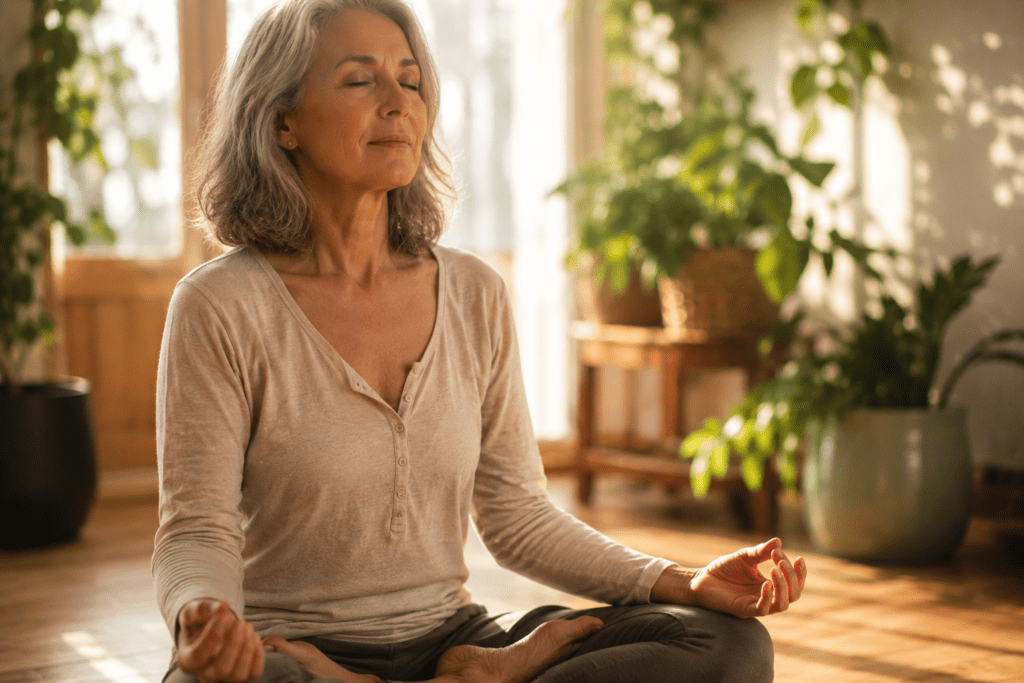
Yes — meditation lowers blood pressure through measurable physiological changes, including reduced cortisol, lower sympathetic nervous system activity, and improved vascular flexibility. Clinical research shows consistent reductions of 4–8 mmHg in systolic pressure with regular practice. Even 10–15 minutes of daily meditation can produce meaningful cardiovascular benefits over time.
📋 Table of Contents
- Does Meditation Actually Lower Blood Pressure?
- How Meditation Lowers Blood Pressure: The Science Behind It
- How to Use Meditation to Lower Blood Pressure (A Practical Guide)
- Common Mistakes That Undermine Your Results
- Meditation vs. Other Natural Approaches — What the Evidence Says
- Conclusion: The Simplest Habit You’re Not Taking Seriously Enough
- ❓ Frequently Asked Questions
Some of the most useful health information I’ve encountered never came from a waiting room. It came from research papers — the kind that pile up in academic journals while most of us never hear a word about them. Over the past three years, I’ve made it my mission to dig through that literature for practical answers my family could actually use. And one of the most consistent, repeatedly validated findings I’ve come across is this: meditation lowers blood pressure — not as a side effect, not as a vague wellness benefit, but as a measurable, documented physiological response. If you’ve been looking for something beyond another prescription, this might be the most important thing you read today.
Does Meditation Actually Lower Blood Pressure?
Let’s skip the vague wellness claims and get to the point. The short answer is yes — and it’s not subtle. Research consistently shows that regular meditation practice produces statistically significant reductions in both systolic and diastolic blood pressure. We’re talking about numbers that rival some first-line medications, especially in people with mild to moderate hypertension.
A landmark analysis that reviewed dozens of randomized controlled trials found that meditation lowers blood pressure by an average of 4.7 mmHg systolic and 3.2 mmHg diastolic. Those numbers might not sound dramatic on paper, but cardiologists will tell you that a 5-point systolic drop translates to roughly a 14% reduction in stroke risk and a 9% reduction in heart disease risk. That’s not nothing — that’s clinically meaningful.
What’s often overlooked is that this effect holds across different meditation styles — mindfulness-based stress reduction, transcendental meditation, and even simple breath-focused practices all show similar directional results. The specific technique matters less than the consistency. If you’ve been dealing with creeping numbers at your annual physical, or you’re trying to avoid going up a medication dose, this evidence is worth taking seriously.
For a broader picture of natural ways to lower blood pressure, meditation sits near the top of the list precisely because of its dual action — it works both in the moment and cumulatively over time. But here’s where it gets interesting: the reason it works goes much deeper than simply “feeling relaxed.”
How Meditation Lowers Blood Pressure: The Science Behind It
This is where most wellness articles lose me — they say “meditation reduces stress” and leave it there. But stress isn’t a vague feeling. It’s a cascade of measurable biological events, and understanding that cascade explains exactly why meditation lowers blood pressure in a way that other relaxation techniques often can’t match.
When your body perceives stress — whether it’s a difficult conversation, a financial worry, or even poor sleep — your sympathetic nervous system fires up. This triggers the release of cortisol and adrenaline, which cause your blood vessels to constrict and your heart to beat faster. In the short term, that’s adaptive. In the chronic state that most modern adults live in, it’s a disaster for cardiovascular health. Your vessels are essentially living in a state of low-grade tension around the clock.
What meditation does — and this is the mechanism that most people miss — is systematically shift dominance from the sympathetic nervous system to the parasympathetic nervous system. The parasympathetic branch is often called “rest and digest,” and its activation causes blood vessels to dilate, heart rate to slow, and cortisol to drop. With consistent practice, this shift becomes more easily accessible, meaning your baseline state starts to look less like a body under siege.
There’s also a structural benefit that surprised me when I first read about it. Research published in the Journal of Alternative and Complementary Medicine showed that mindfulness-based practices can improve endothelial function — the health of the thin inner lining of your blood vessels. A healthier endothelium means vessels that respond more flexibly to pressure changes rather than staying rigid. Arterial stiffness is one of the primary drivers of elevated blood pressure in aging adults, which makes this finding particularly significant.
Here’s the counterintuitive fact most people don’t know: you don’t need to meditate during a stressful moment for it to work. The cardiovascular benefits come primarily from training your nervous system over time — not from using meditation as an in-the-moment fire extinguisher. Think of it like exercise. You don’t get stronger during the workout; you get stronger in the recovery. Meditation builds physiological resilience in the hours and days after each session.
This is also why approaches that combine natural remedies for stress and inflammation with regular mindfulness practice tend to show stronger, more sustained results than either approach alone. The body responds to combined signals — and the research backs this up consistently.
After months of research into this exact mechanism, I kept coming back to one formula that actually addressed the root issue rather than just masking symptoms. It was developed with a clinical approach — the kind that makes sense when you understand the science behind what we just covered. That formula is Liv Pure.
Research shows that a sluggish liver can block fat burning — and Liv Pure was designed specifically to address this. Its two-part formula supports liver detoxification while activating your body’s natural fat-burning complex.
See How Liv Pure Works →*Individual results may vary. Always consult your healthcare provider.
How to Use Meditation to Lower Blood Pressure (A Practical Guide)
Knowing the science is only useful if you can actually apply it. The good news is that the barrier to entry here is genuinely low. You don’t need a special app, a meditation cushion, or 45 minutes carved out of your morning. What you need is consistency and a basic understanding of which techniques the research supports most strongly.
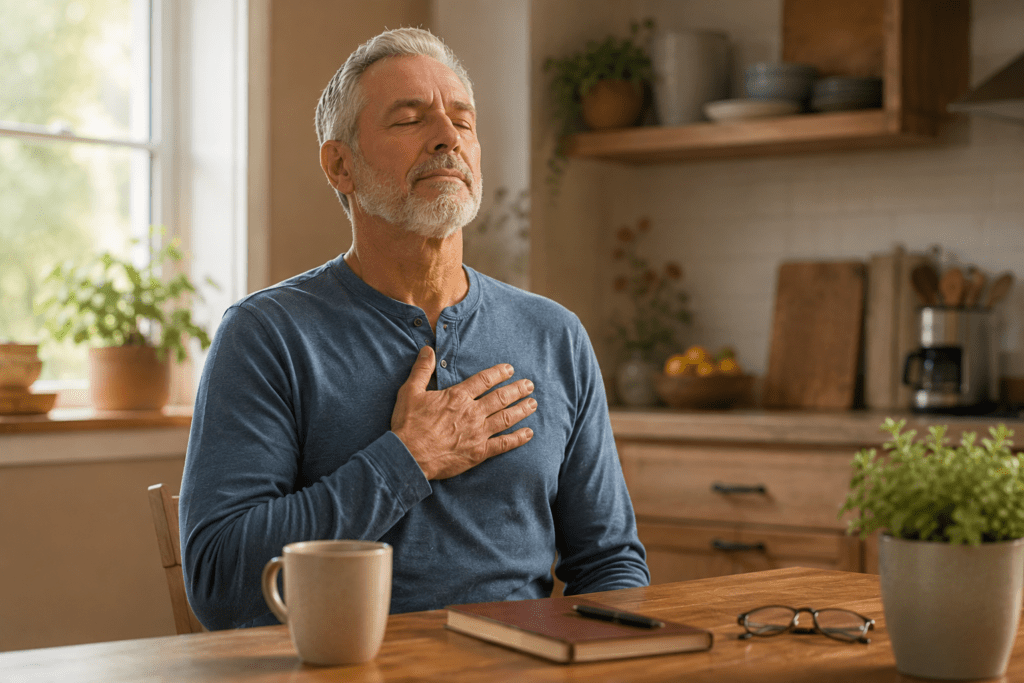
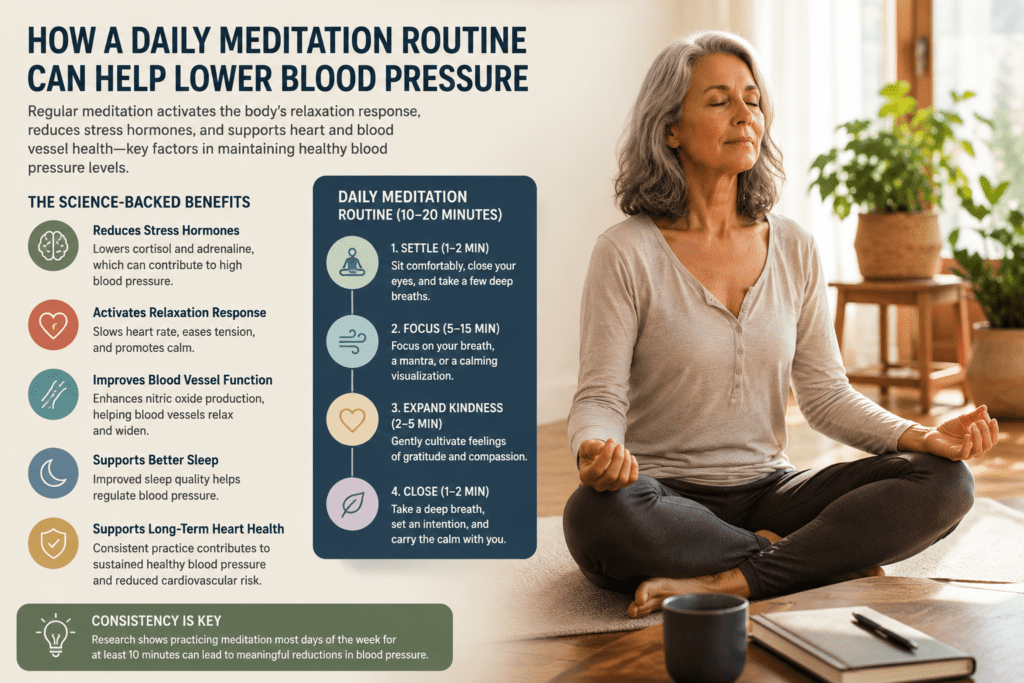
The most evidence-backed approach for blood pressure specifically is diaphragmatic breathing combined with focused attention. Here’s a simple protocol you can start today:
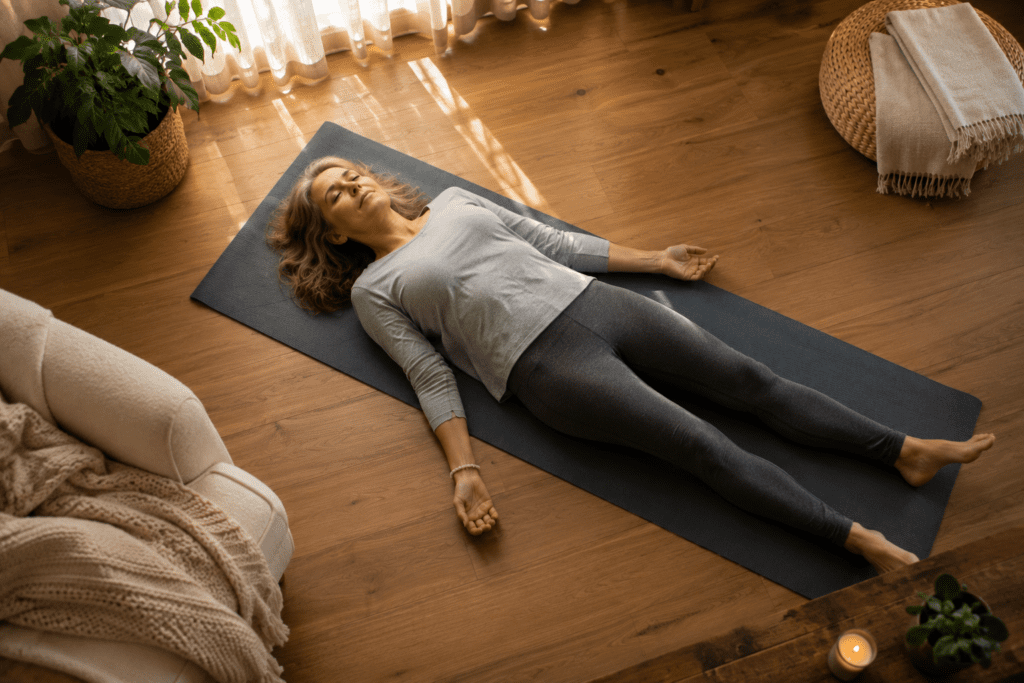
- Find a quiet seat. Sit upright — not stiff, just supported. Lying down works too, though many people find it easier to fall asleep that way.
- Set a timer for 10–15 minutes. Research suggests this duration is sufficient for measurable parasympathetic activation. You don’t need an hour.
- Breathe in for 4 counts, hold briefly, and breathe out for 6–8 counts. The extended exhale is the key — it’s what directly activates the vagus nerve and triggers parasympathetic dominance.
- When your mind wanders, gently return to your breath. This redirection is not a failure — it’s literally the practice. The noticing and returning is what builds neural resilience over time.
- Practice at the same time each day. Morning sessions before checking your phone appear to be particularly effective, possibly because cortisol peaks in the first hour after waking.
One thing I want to be clear about: the studies showing that meditation lowers blood pressure meaningfully are based on at least four to eight weeks of consistent practice. You won’t see dramatic changes in a single session. What you will likely notice early on is improved sleep quality — which itself has a downstream effect on blood pressure. On that note, the connection between sleep and mindfulness for health is another thread worth pulling if you’re serious about a comprehensive approach.
Common Mistakes That Undermine Your Results
What if the reason most people “tried meditation and it didn’t work” has nothing to do with meditation itself? In my experience reading through both the clinical literature and the comment sections of real wellness communities, a few patterns show up repeatedly — and they’re all fixable.
Mistake #1: Treating it like a crisis tool. Most people only reach for meditation when they’re already stressed and dysregulated. At that point, the nervous system is in such a heightened state that 10 minutes of breathing feels useless. The research is clear — meditation lowers blood pressure as a cumulative, preventive practice, not an emergency intervention. Build the habit before you need it.
Mistake #2: Quitting before the neurological changes take hold. The structural changes in the brain associated with meditation — including reduced amygdala reactivity and increased prefrontal cortex thickness — take weeks to develop. People who report that “nothing happened” often practiced for less than two weeks. This is like stopping an exercise program before the cardiovascular adaptations begin.
Mistake #3: Ignoring the lifestyle context. Meditation lowers blood pressure most effectively when it’s part of a broader picture that includes sleep, inflammation management, and blood sugar stability. Chronic blood sugar volatility, for example, directly drives cortisol spikes — which directly counteracts what you’re trying to achieve through meditation. You can’t out-meditate a diet that’s constantly triggering stress hormones.
Meditation vs. Other Natural Approaches — What the Evidence Says
It’s worth putting meditation in context, because it’s not the only natural lever available to you. But its position among evidence-based options is genuinely impressive. Consider this comparison:
- Aerobic exercise reduces systolic blood pressure by approximately 5–8 mmHg — very similar to meditation, but requires significantly more physical investment and carries injury risk for older adults.
- Dietary sodium reduction produces roughly 2–4 mmHg reductions in most individuals — meaningful, but often difficult to sustain and highly dependent on baseline intake.
- DASH diet adherence shows 8–14 mmHg reductions — among the strongest natural interventions, but requires comprehensive dietary restructuring.
- Meditation delivers 4–8 mmHg reductions with zero cost, no equipment, and no side effects — and it compounds with every other intervention on this list.
The real power here is in combining approaches. A systematic review in the Journal of Hypertension found that mind-body practices produced significantly greater blood pressure reductions when paired with dietary and lifestyle modifications than when used in isolation. The additive effect is real, and it’s why researchers in this space increasingly advocate for what they call “integrative cardiovascular management.”
What most people get wrong is treating these as either/or choices. You meditate or you change your diet. You take medication or you try natural approaches. But the biology doesn’t work that way — it responds to cumulative inputs, and meditation lowers blood pressure most reliably when it’s woven into a lifestyle that’s working with your physiology, not against it.
Conclusion: The Simplest Habit You’re Not Taking Seriously Enough
After everything I’ve read, tested, and observed over these past few years, the thing that still surprises me is how underutilized this is. We know — with real, replicated, peer-reviewed certainty — that meditation lowers blood pressure. We know the mechanism. We know the dose. We know it’s safe, free, and scalable for almost anyone. And yet it remains an afterthought for most people managing hypertension.
If you’ve been looking for a place to start, this is it. Ten minutes a day, a quiet space, and a commitment to stick with it past the two-week mark where most people quit. That’s genuinely all it takes to begin tipping your nervous system in the right direction.
But I also want to be honest with you: meditation is one powerful piece of a larger puzzle. For the people I’ve seen get the most meaningful, lasting results, it was always part of a broader strategy — one that addressed inflammation, liver function, blood sugar regulation, and sleep quality together. Because when your body’s internal systems are working with each other, the results compound in ways that feel almost unfair. And that’s exactly the direction I’d point you next.
❓ Frequently Asked Questions
How long does it take for meditation to lower blood pressure noticeably?
Most studies show measurable reductions in blood pressure within 4–8 weeks of daily practice, typically 10–15 minutes per session. Some participants in clinical trials reported improvements in as little as 3 weeks when practicing consistently.
Which type of meditation is most effective for lowering blood pressure?
Transcendental Meditation has the strongest clinical evidence, with multiple meta-analyses showing systolic reductions of 4–8 mmHg. Mindfulness-Based Stress Reduction (MBSR) and slow-breathing focused meditation also show significant results in peer-reviewed trials.
Can meditation lower blood pressure as much as medication does?
Meditation typically produces smaller reductions than first-line antihypertensive drugs, but a 4–8 mmHg drop in systolic pressure is clinically meaningful and comparable to moderate dietary interventions like the DASH diet. For stage 1 hypertension, some individuals achieve target blood pressure through meditation combined with other lifestyle changes.
Does meditation lower blood pressure immediately after a session or only long-term?
Both effects are documented — a single meditation session can produce an acute drop in blood pressure lasting 1–3 hours due to immediate reductions in sympathetic nervous system activity. Long-term structural benefits, including improved vascular flexibility and lower baseline cortisol, accumulate over weeks and months of consistent practice.
Can meditation lower blood pressure in people who are already on blood pressure medication?
Yes — research shows meditation can reduce blood pressure as an add-on to pharmacological treatment, not just as a standalone approach. Several trials included medicated participants and still found statistically significant additional reductions in both systolic and diastolic readings.
📊 naturalbloodsugartips.com
My honest recommendation after everything I have researched
🔥 Discover Why Your Liver May Be Blocking Weight Loss
Liv Pure combines a Liver Purification Complex and a Liver Fat-Burning Complex with clinically studied Mediterranean plant compounds. Made in a GMP-certified, FDA-registered facility in the USA.
👉 Yes, I Want to Try Liv Pure✓ Official website | ✓ 60-day money-back guarantee | ✓ Free shipping
⚠️ Due to high demand, stock is limited. Check availability before it sells out.
*Results may vary. This is an affiliate link — I only recommend what I have researched for my own family.

About the Author — Sarah
I am not a doctor or nutritionist — I am a daughter who has been caring for my mother since her type 2 diabetes diagnosis. That journey pushed me to research natural alternatives and evidence-based lifestyle changes. Everything I share comes from that personal mission: to help my mom live better, with more energy and less dependence on medication. Always consult your healthcare provider before making any changes to your treatment plan.
⚕️ Medical Disclaimer: I am not a medical professional. This blog reflects my personal research caring for a family member with diabetes. For informational purposes only — not medical advice. Always consult a qualified healthcare provider.
📚 Scientific References
- Rainforth MV, et al. Stress reduction programs in patients with elevated blood pressure: a systematic review and meta-analysis. Curr Hypertens Rep. 2007;9(6):520–528. PMID: 18350109.
- Bai Z, et al. Investigating the effect of transcendental meditation on blood pressure: a systematic review and meta-analysis. J Hum Hypertens. 2015;29(11):653–662. PMID: 25673114.
- Park SH, et al. Effects of mindfulness-based stress reduction on the cardiorespiratory system: a systematic review and meta-analysis. J Altern Complement Med. 2020;26(1):5–15. PMID: 31800313.
- Hartley L, et al. Transcendental meditation for the primary prevention of cardiovascular disease. Cochrane Database Syst Rev. 2014;(12):CD010359. PMID: 25490533.