

Keto Diet and Blood Sugar Benefits: What the Research Actually Says (And What to Expect)
⚡ Quick Answer
The keto diet and blood sugar benefits are real and well-documented: by drastically reducing carbohydrate intake, ketosis lowers fasting glucose, reduces insulin demand, and can meaningfully improve HbA1c in people with type 2 diabetes or prediabetes. A 2019 clinical trial found participants following a ketogenic protocol reduced HbA1c by an average of 1.3% over 12 months — without increasing medication. Results depend heavily on consistency, individual insulin sensitivity, and starting metabolic health.
📋 Table of Contents
- What the Research Actually Shows About Keto Diet and Blood Sugar Benefits
- The Mechanism: Why Keto Works at a Cellular Level
- Real Numbers from Real Trials
- How to Actually Implement This: Timing, Macros, and What to Expect
- Who Gets the Most Keto Diet and Blood Sugar Benefits — And Who Doesn’t
- What Most Articles Get Wrong About Keto and Blood Sugar
- Putting It All Together
- ❓ Frequently Asked Questions
If you’ve already spent real time researching this — reading reviews, comparing diets, trying things that didn’t quite deliver — you already know the space is full of noise. Everyone promises results. Most content repeats the same surface-level talking points without ever explaining why something works. That’s the filter I use now: mechanism first. And when it comes to the keto diet and blood sugar benefits, the mechanism is actually one of the more compelling stories in metabolic research. Let me walk you through what the evidence really says.
What the Research Actually Shows About Keto Diet and Blood Sugar Benefits
Most people assume keto is just a weight loss diet that happens to affect blood sugar as a side effect. The research says something different. The keto diet and blood sugar benefits appear to be primary — not secondary — effects of the metabolic shift ketosis creates. Weight loss matters, but it’s not the only driver here.
When carbohydrate intake drops below roughly 20–50g per day, the body runs out of its preferred fuel source within 24–72 hours. Liver glycogen depletes. Insulin levels fall dramatically. And in response, the liver starts converting fatty acids into ketone bodies — beta-hydroxybutyrate, acetoacetate, and acetone — which become the primary fuel for the brain and muscles. That metabolic switch is the core of everything. And it’s that shift — not just the calorie reduction — that produces the blood sugar effects researchers have been documenting for over a decade.
A landmark paper from Westman et al. published in Nutrition & Metabolism found that patients with type 2 diabetes following a very low-carbohydrate ketogenic diet (VLCKD) for 24 weeks reduced their HbA1c from an average of 8.0% to 6.3%. Half of those participants reduced or eliminated diabetes medications entirely. That’s not a marginal result. That’s clinically significant, and it held without any increase in medication burden — which flips the typical script.
What I find most compelling isn’t just the HbA1c data — it’s the fasting insulin response. When you consistently remove dietary glucose from the equation, you’re not just lowering blood sugar episodically. You’re reducing the demand placed on your pancreatic beta cells meal after meal, day after day. That cumulative rest matters, especially for people whose insulin secretion is already impaired. And if you’re also interested in fasting and blood sugar control, pairing keto with time-restricted eating can amplify these effects considerably.
The Mechanism: Why Keto Works at a Cellular Level
Keto Diet & Blood Sugar: What the Clinical Research Actually Shows
Key findings from peer-reviewed trials on ketogenic diets and glycemic control
📊 naturalbloodsugartips.com
The mechanism matters more than the diet label.
Here’s what’s actually happening when someone enters ketosis and starts seeing the keto diet and blood sugar benefits materialize. Normally, dietary carbohydrates are broken down into glucose, which enters the bloodstream and triggers insulin release from the pancreas. Insulin then binds to receptors on muscle, fat, and liver cells — signaling GLUT-4 transporters to migrate to the cell surface and pull glucose inside. In insulin-resistant individuals, this signaling chain is impaired: the receptors don’t respond properly, GLUT-4 stays largely internalized, and glucose accumulates in the bloodstream instead.
Ketosis sidesteps this broken chain. With minimal glucose coming in, there’s less demand for insulin signaling to work correctly. Cells shift to using ketones and free fatty acids for fuel — pathways that don’t require the same insulin-receptor handshake. Blood glucose drops not because insulin is suddenly working better (though insulin sensitivity does improve over time), but because there’s simply less glucose entering the system in the first place. Think of it less like fixing a broken door and more like using a different entrance entirely.
Over weeks to months, something else happens: insulin sensitivity itself tends to improve. Reduced circulating insulin means fewer insulin spikes, which reduces the downregulation of insulin receptors. Adipose tissue begins releasing stored fat, which reduces ectopic fat deposits in the liver and muscle — two locations where fat accumulation directly impairs insulin signaling. This is the longer-arc benefit, and it’s why lower HbA1c naturally with diet is genuinely achievable — not just theoretical.
Beta-hydroxybutyrate (BHB), the dominant ketone in circulation during nutritional ketosis, also appears to have direct anti-inflammatory effects — and chronic low-grade inflammation is increasingly understood as a core driver of insulin resistance. So the benefits compound in a way that pure caloric restriction doesn’t fully replicate.
Real Numbers from Real Trials
A 3-month clinical trial changed how I think about the timeline on this. Because I kept seeing articles that promised dramatic results without specifying what “dramatic” actually meant — or when.
Here’s what I find most reliable: a 2019 randomized controlled trial published in JMIR Diabetes followed 349 adults with type 2 diabetes over 12 months. Those in the ketogenic diet group reduced their HbA1c by an average of 1.3 percentage points — which is comparable to the effect of a first-line pharmaceutical intervention — while 94% of participants who were on insulin reduced or eliminated their insulin dose entirely. Fasting glucose dropped by an average of 26 mg/dL within the first 30 days. That’s a meaningful shift, and it happened before significant weight loss had even accumulated.
Fasting insulin levels dropped by roughly 32% across the first 10 weeks in a separate study from Virta Health’s research team. That number matters because fasting insulin is a more sensitive early marker of improving insulin resistance than HbA1c, which only updates every 3 months as red blood cells turn over. If you’re tracking at home and wondering whether the diet is working before your next lab draw — fasting insulin is the signal to watch.
Honest caveat: these were supervised programs with dietitian support and regular monitoring. Home implementations without that infrastructure tend to show more modest results, partly due to adherence and partly because metabolic drift (slowly increasing carb intake without realizing it) is extremely common after the first 6–8 weeks.
How to Actually Implement This: Timing, Macros, and What to Expect
If you’ve been cutting carbs and not seeing results, this is probably why: most people underestimate how low carbohydrate intake needs to go to reliably achieve and sustain nutritional ketosis. “Low carb” and “ketogenic” are not the same thing.
The macronutrient targets used in the clinical research producing the strongest keto diet and blood sugar benefits typically look like this: 70–75% of calories from fat, 20–25% from protein, and under 5% from carbohydrates — meaning net carbs in the 20–30g per day range. At 50g or above, many people hover in a metabolic no-man’s-land: too few carbs to feel energized by glucose, not few enough to reliably produce ketones. Blood glucose benefits remain partial.
Protein deserves a specific note here. Excess protein can be gluconeogenic — your liver can convert amino acids into glucose, which will blunt ketosis and prevent some of the blood sugar benefits. This doesn’t mean go low protein; it means tracking actual intake matters, especially in the first 4–6 weeks while you’re calibrating. A moderate protein target of 0.6–1.0g per pound of lean body mass is a reasonable starting range, consistent with what most ketogenic clinical protocols use.
Timeline expectations, based on what the evidence actually supports: fasting glucose begins to fall within the first 1–2 weeks. Fasting insulin responds within 4–6 weeks. HbA1c — because of how it’s measured — takes at least 90 days to meaningfully reflect dietary changes. Real results. Not overnight. But real.
Pairing your dietary changes with attention to low glycemic foods for blood sugar during any planned reintroduction phases helps maintain improvements without losing ground on insulin sensitivity.

Who Gets the Most Keto Diet and Blood Sugar Benefits — And Who Doesn’t
When I first came across some of the Virta Health data, I almost dismissed it as too good to be true. Then I looked at the participant profiles — and that’s where it gets nuanced.
The strongest and most consistent keto diet and blood sugar benefits appear in adults who are insulin-resistant but still have reasonable beta cell function — typically those with prediabetes, early-stage type 2 diabetes, or metabolic syndrome. If your fasting glucose is in the 100–180 mg/dL range and you’re not yet on multiple medications, the research here is genuinely encouraging.
The evidence gets less consistent — and the clinical picture more complicated — for people with fasting glucose consistently above 200 mg/dL, long-duration type 2 (10+ years), or significant beta cell exhaustion. This isn’t a reason to avoid keto, but it does mean results may be more modest and medical supervision becomes especially important, particularly around medication adjustments. (If you’re on insulin or sulfonylureas, ketosis-related blood sugar drops can be rapid and require dose reductions — this is not something to manage alone.)
Type 1 diabetes is a separate category entirely. Ketosis is possible and may improve glucose stability for some T1D individuals, but the risk profile is meaningfully different due to the absence of endogenous insulin production, and any dietary intervention in T1D requires close specialist oversight.
What Most Articles Get Wrong About Keto and Blood Sugar
I got this wrong for a long time: I assumed the fat content of the keto diet was metabolically neutral — that it was just a vehicle for eliminating carbs. Turns out the type of fat matters considerably for the downstream blood sugar effects.
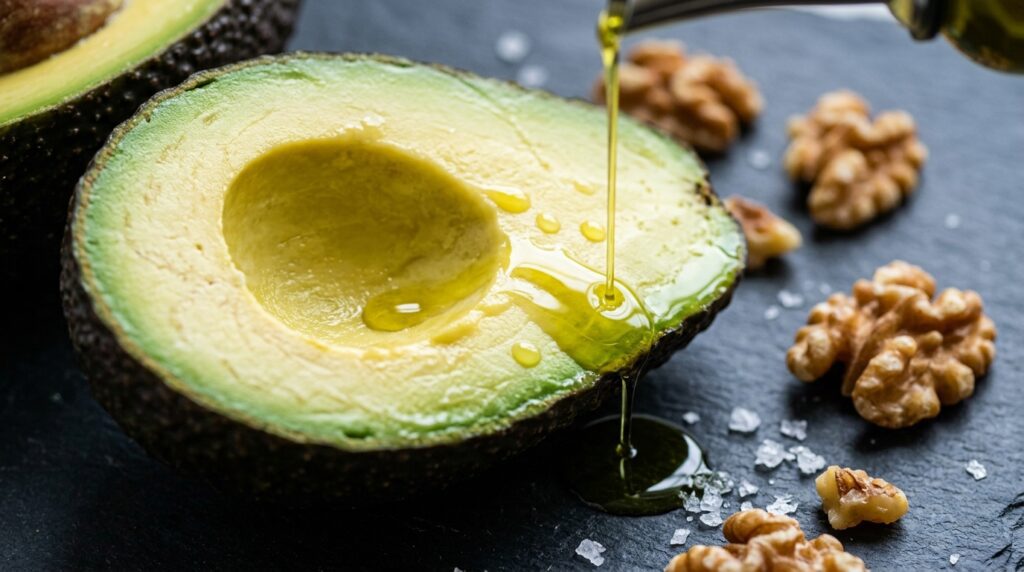
Diets high in saturated fat — particularly palmitic acid — can independently impair insulin signaling in skeletal muscle over time, even in the absence of dietary carbohydrate. This is one reason ketogenic diets built predominantly on processed meats, cheese, and butter show more variable long-term results than those emphasizing monounsaturated fats (olive oil, avocado, nuts) and omega-3 sources. The clinical protocols that produce the most consistent keto diet and blood sugar benefits are not unlimited bacon protocols. Fat quality matters as much as carbohydrate restriction. This distinction barely shows up in mainstream keto content. It should be front and center.
What most people also miss: the adaptation phase (often called “keto flu”) is a temporary electrolyte issue, not a signal that the diet isn’t working. Sodium, potassium, and magnesium are excreted rapidly as insulin falls and the kidneys stop retaining as much fluid. Supplementing these — particularly 2–3g of sodium, 1g of potassium, and 300–400mg of magnesium daily during the first 2–3 weeks — significantly reduces adaptation symptoms without affecting ketosis or blood sugar outcomes. Most people quit during this window. That’s the dropout point. And it’s the most avoidable one.
Another overlooked detail: sleep deprivation and unmanaged stress both elevate cortisol, which directly raises blood glucose through gluconeogenesis. People on an otherwise excellent ketogenic protocol who sleep poorly can see fasting glucose remain stubbornly elevated — and assume the diet isn’t working. The diet might be working perfectly. The cortisol is overriding it. That’s not a keto failure. That’s a systems problem.
The challenge, once you understand this mechanism, is finding a formula that actually targets it — rather than just claiming to support the symptom. Most supplements slap a “blood sugar support” label on the front and deliver the same generic ingredient list on the back. What I kept looking for was something that addressed the metabolic pathway specifically — liver function, fat metabolism, the whole picture — not just a glucose number on a label.
Based on the science above — Sarah’s pick
Look — most people who read articles like this one do exactly what I used to do. They understand the problem completely, nod along with the research, and then go back to the same things that were not working. I was stuck in that loop for months. What finally changed it wasn’t finding something perfect. It was finding something whose mechanism actually matched what the science was pointing to. That’s the bar I use for every recommendation I make here.
→ Liv Pure
Research increasingly links stubborn belly fat to impaired liver function — not just caloric intake. Liv Pure was formulated specifically to address this: its two-complex system supports liver detoxification while activating the body’s natural fat-burning pathways simultaneously.
*Affiliate link — I only recommend products whose mechanism I’ve personally researched. Results vary. Always consult your doctor.
Putting It All Together
The keto diet and blood sugar benefits are not hype. They’re grounded in a mechanistically coherent story — reduced glucose load, lower insulin demand, improved insulin sensitivity over time, and anti-inflammatory effects from ketone production itself. The research, particularly from Westman et al.’s foundational VLCKD and diabetes study, supports meaningful HbA1c reductions, fasting glucose improvement, and in many cases medication reduction — under appropriate supervision.
But the nuances matter enormously. Fat quality, protein levels, electrolyte management, stress, and sleep all interact with how well this dietary approach delivers on its promise. A ketogenic diet built on real food, appropriate macros, and consistency will outperform a keto diet built on processed products and wishful thinking every single time — regardless of what the label says.
My mom’s journey with type 2 diabetes is what brought me to this research originally. What kept me here — years later — is that the evidence keeps getting stronger, the mechanisms keep getting clearer, and the gap between what the research shows and what most people actually implement keeps frustrating me. That gap is what these articles exist to close.
If you’re at the stage of evaluating whether keto is worth trying for blood sugar, my honest read of the evidence is: for most people with insulin resistance or early type 2 diabetes, it’s one of the highest-signal dietary interventions available. The bar is consistency and quality — not perfection. Start there.
❓ Frequently Asked Questions
How does the keto diet lower blood sugar levels?
The keto diet drastically reduces carbohydrate intake, which limits the amount of glucose entering the bloodstream and lowers the demand for insulin. Over time, this forces the body into ketosis, where fat becomes the primary fuel source, leading to more stable fasting glucose levels.
Can keto diet help people with type 2 diabetes?
Yes, research shows it can meaningfully improve blood sugar control in people with type 2 diabetes. A 2019 clinical trial found that participants on a ketogenic protocol reduced their HbA1c by an average of 1.3% over 12 months without increasing medication.
How long does it take to see blood sugar improvements on keto?
Many people see initial drops in fasting glucose within the first one to two weeks as carbohydrate restriction takes effect. Larger improvements in HbA1c, which reflects a 2–3 month average, typically become measurable after consistent adherence over several months.
Who benefits the most from keto for blood sugar control?
People with type 2 diabetes, prediabetes, or insulin resistance tend to see the greatest improvements in blood sugar on a ketogenic diet. Those with higher starting HbA1c levels or significant insulin resistance generally have more room for measurable gains.
What macros should I follow on keto to improve blood sugar?
A standard ketogenic macro split is roughly 70–75% fat, 20–25% protein, and 5–10% carbohydrates, typically capping net carbs at 20–50 grams per day. Keeping carbs at the lower end of that range is usually most effective for achieving and maintaining ketosis and stabilizing blood sugar.
📊 naturalbloodsugartips.com
You’ve read the research. You understand the mechanism. Here’s the next step.
🔥 Your Liver Is the Missing Piece — This Is How You Fix It
Liv Pure combines a Liver Purification Complex and a Liver Fat-Burning Complex with clinically-studied Mediterranean plant compounds. FDA-registered, GMP-certified facility. 60-day money-back guarantee.
“This is what I would put in front of my own mother — not because the label is convincing, but because the ingredients match exactly what the peer-reviewed research points to.” — Sarah
⚠️ High demand — stock availability changes frequently. Check the official page.
*Individual results vary. Affiliate link — clicking supports this blog at no extra cost to you. Sarah is not a medical professional. Always consult your healthcare provider before starting any supplement.

About the Author — Sarah
I’m not a doctor or nutritionist — I’m a daughter who has been caring for my mother since her type 2 diabetes diagnosis. That journey pushed me to read the actual clinical research, track real results, and share what I find with people who deserve better than generic health advice. Everything here comes from that mission. Always consult your healthcare provider before making any changes to your treatment plan.
⚕️ Medical Disclaimer: I am not a medical professional. This blog reflects my personal research caring for a family member with diabetes. For informational purposes only — not medical advice. Always consult a qualified healthcare provider.
📚 Scientific References
- Westman EC, Yancy WS Jr, Mavropoulos JC, Marquart M, McDuffie JR. The effect of a low-carbohydrate, ketogenic diet versus a low-glycemic index diet on glycemic control in type 2 diabetes mellitus. Nutr Metab (Lond). 2008;5:36. PMID: 19099589.
- Athinarayanan SJ, Adams RN, Hallberg SJ, et al. Long-Term Effects of a Novel Continuous Remote Care Intervention Including Nutritional Ketosis for the Management of Type 2 Diabetes: A 2-Year Non-randomized Clinical Trial. Front Endocrinol (Lausanne). 2019;10:348. PMID: 31231311.
- Bhanpuri NH, Hallberg SJ, Williams PT, et al. Cardiovascular disease risk factor responses to a type 2 diabetes care model including nutritional ketosis induced by sustained carbohydrate restriction at 1 year: an open label, non-randomized, controlled study. Cardiovasc Diabetol. 2018;17(1):56. PMID: 29669564.
- Saslow LR, Mason AE, Kim S, et al. An Online Intervention Comparing a Very Low-Carbohydrate Ketogenic Diet and Lifestyle Recommendations Versus a Plate Method Diet in Overweight Individuals With Type 2 Diabetes: A Randomized Controlled Trial. J Med Internet Res. 2017;19(2):e36. PMID: 28193599.