
Inflammation Diet for Beginners: Easy Anti-Inflammatory Diet Meals to Start This Week
⚡ Quick Answer
An inflammation diet for beginners focuses on whole foods like leafy greens, berries, fatty fish, nuts, and olive oil while reducing processed foods, refined sugar, and seed oils. The easiest way to start is the swap method — replace one inflammatory food at a time. Beginner-friendly anti-inflammatory diet meals include a salmon bowl, lentil soup, turmeric oatmeal, and a quinoa Buddha bowl. Consistency with these food choices reduces chronic inflammation over 4–12 weeks.
📋 Table of Contents
- How My Mom’s Diagnosis Changed the Way We Eat
- Inflammation Diet for Beginners: What It Actually Means
- What Are Anti-Inflammatory Diet Meals, Really?
- Easy Anti-Inflammatory Diet Meals You Can Make This Week
- Foods That Make Inflammation Worse
- Simple Meal Planning Tips for Long-Term Success
- Final Thoughts
- ❓ Frequently Asked Questions

How My Mom’s Diagnosis Changed the Way We Eat
Starting an inflammation diet for beginners was not something I planned — it was something I stumbled into out of desperation. Three years ago, my mom sat across from her doctor and heard the words “type 2 diabetes” for the first time. I remember the car ride home — the silence, the fear, the pamphlets with generic advice that felt impossible to follow. I wasn’t ready to just accept that her future meant more medications and declining energy. So I started researching. And one phrase kept coming up everywhere I looked: anti-inflammatory diet meals. It became my starting point, my obsession, and honestly — the thing that turned everything around for us.
I want to be upfront: I’m not a doctor or a registered dietitian. I’m a daughter who spent hundreds of hours reading studies, testing recipes in our kitchen, and watching my mom slowly feel better. What I’m sharing here is what worked for us, and what the research I came across consistently supported. Always check in with your own healthcare provider — especially if you’re managing a chronic condition like my mom does.
If you’re brand new to this way of eating, welcome. I’m going to walk you through the inflammation diet for beginners in a way that feels manageable, not overwhelming. Because the truth is, eating to reduce inflammation doesn’t have to be complicated or expensive. It just takes a little knowledge and a willingness to start.

Inflammation Diet for Beginners: What It Actually Means
Before diving into specific meals, it helps to understand what an inflammation diet for beginners is actually trying to do — because once you understand the why, the food choices make intuitive sense.
Inflammation is your body’s natural defense system. Acute inflammation is good — it’s what helps a cut heal. The problem is chronic, low-grade inflammation that persists silently for months or years without a clear injury. This kind of inflammation is now linked to type 2 diabetes, heart disease, joint pain, brain fog, and fatigue. And what you eat is one of the most powerful levers you have to either fuel it or fight it.
🔥 What Drives Chronic Inflammation — and What Fights It
❌ Fuels Inflammation
- Refined sugar & HFCS
- Industrial seed oils (corn, soy)
- Refined carbohydrates
- Ultra-processed foods
- Excess alcohol
- Trans fats
✅ Fights Inflammation
- Omega-3 fatty acids (fish, flax)
- Antioxidants (berries, greens)
- Polyphenols (olive oil, green tea)
- Fiber (legumes, whole grains)
- Turmeric, ginger, garlic
- Fermented foods
The inflammation diet for beginners is simply about shifting the balance — eating more from the right column and less from the left.
The Mediterranean and DASH diets are two of the most well-studied frameworks that naturally align with anti-inflammatory eating. They don’t require counting macros or giving up flavor. They are just a way of centering your plate around foods that nourish rather than irritate. And as a beginner, you don’t have to follow any named diet — just use the principles above as your guide.
What Are Anti-Inflammatory Diet Meals, Really?
Top Anti-Inflammatory Diet Meals for Beginners
Consult a healthcare provider before making major dietary changes, especially if managing a chronic condition.
📊 naturalbloodsugartips.com
Anti-inflammatory diet meals are built around foods that calm the body’s chronic inflammatory response — a process linked to type 2 diabetes, heart disease, joint pain, and fatigue. Think of inflammation like a slow-burning fire inside the body. The foods we eat can either fuel that fire or help put it out. The cornerstone ingredients include colorful vegetables, antioxidant-rich fruits, omega-3 fatty acids from fish and seeds, whole grains, legumes, and anti-inflammatory spices like turmeric and ginger.
For a deeper look at specific supplements that work alongside this approach, I found this guide on best anti-inflammatory food supplements really helpful when first researching for my mom.
🦴 Move Freely Again — Try Joint Genesis
Thousands of people over 40 are discovering Joint Genesis — a daily capsule built around Mobilee®, a patented ingredient shown to support the synovial fluid that cushions and lubricates your joints.
Check Availability Inside the US →Easy Anti-Inflammatory Diet Meals You Can Make This Week
When I first tried to overhaul our kitchen, I made the mistake of trying to change everything at once. Don’t do that. Instead, pick two or three of these beginner-friendly anti-inflammatory diet meals and rotate them into your week. These are the ones my mom and I genuinely enjoy and keep coming back to — simple enough for a weeknight but satisfying enough that you won’t miss the old stuff.
Breakfast — Inflammation Diet for Beginners:
- Turmeric oatmeal — Steel-cut oats cooked with a pinch of turmeric, cinnamon, and a handful of fresh blueberries. Drizzle with a little raw honey if needed. The combination of oats (beta-glucan fiber) and berries (anthocyanins) is one of the most research-backed anti-inflammatory breakfasts available.
- Avocado and egg on whole grain toast — Healthy fats from avocado plus protein from eggs keeps blood sugar steady and inflammation low. Add a sprinkle of red pepper flakes for extra anti-inflammatory benefit.
- Green smoothie with spinach, frozen mango, flaxseed, and ginger — Takes five minutes and packs a serious anti-inflammatory load into one glass. Frozen fruit works just as well as fresh — and often has higher antioxidant content.
Lunch & Dinner — Inflammation Diet for Beginners:
- Wild salmon with roasted sweet potato and steamed broccoli — Our weekly staple. Wild salmon is one of the richest sources of EPA and DHA omega-3s, which directly lower inflammatory cytokines. Broccoli adds sulforaphane, one of the most potent anti-inflammatory plant compounds studied.
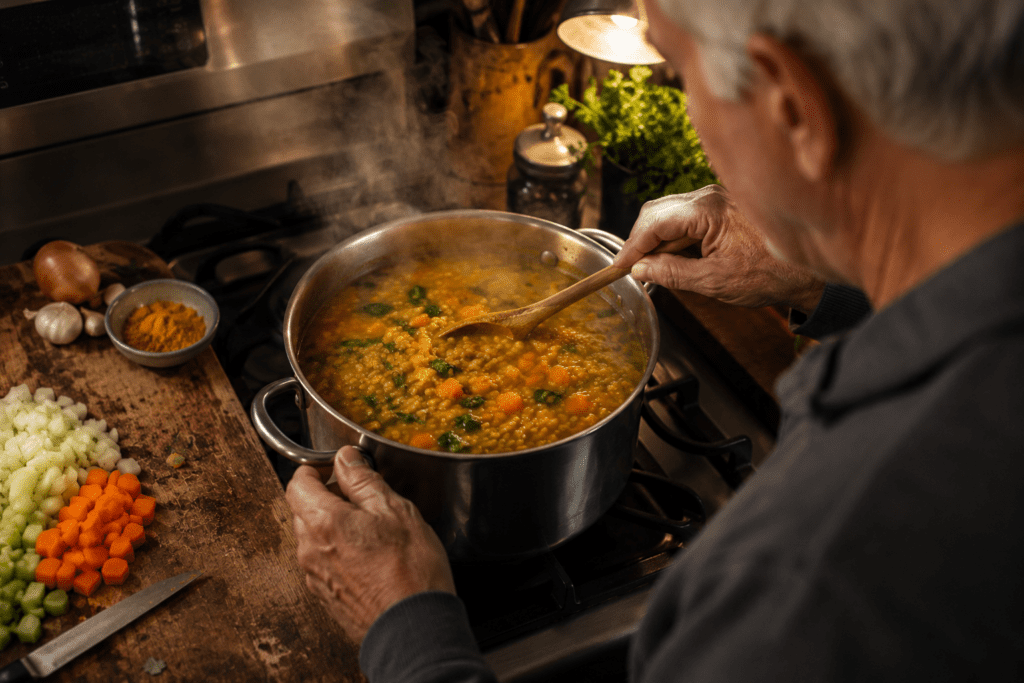
- Lentil and vegetable soup — Lentils are an underrated powerhouse. High in fiber, plant-based protein, and polyphenols. Make a large pot on Sunday and eat it across the week — it gets better as the flavors develop.
- Quinoa Buddha bowl — Cooked quinoa topped with roasted chickpeas, sliced cucumber, cherry tomatoes, shredded kale, and a tahini-lemon dressing. Beautiful, filling, and genuinely delicious. Chickpeas and quinoa together provide all essential amino acids.
- Ginger chicken stir-fry with bok choy and brown rice — Quick on a weeknight and surprisingly satisfying. Fresh ginger inhibits the same inflammatory COX enzymes that ibuprofen targets — without the stomach lining concerns.
- Walnut and kale salad with olive oil dressing — Kale provides vitamins K and C along with sulforaphane. Walnuts add ALA omega-3s. Extra virgin olive oil provides oleocanthal — a compound with documented anti-inflammatory effects comparable to low-dose ibuprofen.
If you’re also managing blood sugar alongside inflammation — as my mom is — pairing these meals with a thoughtful diabetic diet meal plan can help you structure your week in a way that supports both goals simultaneously.
Foods That Make Inflammation Worse
Understanding what to eat is only half the picture. Knowing what to reduce matters just as much on any inflammation diet for beginners. I was surprised when I first learned how many everyday foods actively promote inflammation — some of which we were eating daily without thinking twice.
- Refined sugar and high-fructose corn syrup — Found in sodas, packaged snacks, flavored yogurts, and most cereals. These spike blood sugar and trigger inflammatory cytokines like TNF-α and IL-6.
- Refined carbohydrates — White bread, white rice, and most commercial pastries rapidly convert to sugar in the bloodstream, driving the same inflammatory response as sugar itself.
- Industrial seed oils — Corn oil, soybean oil, and sunflower oil are extremely high in omega-6 fatty acids. In excess, they disrupt the omega-3 to omega-6 balance and directly promote inflammation through the arachidonic acid pathway.
- Processed and ultra-processed foods — Fast food, packaged chips, deli meats, and frozen dinners typically contain trans fats, additives, and excessive sodium — all documented inflammatory triggers.
- Excess alcohol — More than moderate amounts increase inflammatory markers and stress the liver, which plays a central role in regulating the inflammatory response.
The goal on any inflammation diet for beginners isn’t perfect elimination — it’s honest, gradual reduction. When we started simply cooking more meals at home using whole ingredients, the processed food almost naturally fell away. For more context on root causes of chronic inflammation, this guide on natural remedies for chronic inflammation was eye-opening for us.

Simple Meal Planning Tips for Long-Term Success
One of the biggest reasons people fall off an inflammation diet for beginners is lack of preparation. Life gets busy, you come home tired, and if there’s nothing ready to eat, you grab whatever’s convenient. Here’s what made everything sustainable for us:
- Batch cook grains and legumes on Sundays. Having cooked quinoa, brown rice, or lentils ready in the fridge means anti-inflammatory meals come together in minutes on busy weeknights. Lentil soup especially gets better after 2–3 days.
- Keep a produce-forward grocery list. Shop the perimeter of the store first — produce, fish, and eggs — before venturing into packaged aisles. What you don’t buy, you can’t eat.
- Stock anti-inflammatory pantry staples. Extra virgin olive oil, canned wild salmon or sardines, dried lentils, canned chickpeas, turmeric, ginger, cinnamon, and a variety of nuts and seeds should always be on hand. These form the backbone of dozens of quick meals.
- Embrace simple meals. A piece of baked salmon, a pile of roasted vegetables with olive oil, and some quinoa is a complete, healing meal with virtually no effort. You don’t need elaborate recipes to follow an inflammation diet for beginners.
- Use herbs and spices generously. Turmeric, garlic, rosemary, oregano, and ginger all have documented anti-inflammatory properties and transform simple ingredients into something genuinely flavorful. We now use turmeric in nearly everything — soups, oatmeal, stir-fries, even scrambled eggs.
- Freeze anti-inflammatory staples. Frozen wild salmon fillets, frozen spinach, frozen berries, and frozen edamame are as nutritious as fresh and always available. We keep a full freezer for the nights when there’s no time to shop.
Final Thoughts
Starting an inflammation diet for beginners doesn’t have to feel like a complete overhaul of your life. It can start with one meal — one bowl of oatmeal with blueberries, one pot of lentil soup, one piece of wild salmon instead of a burger. That’s how it started for us, and over months, those small shifts compounded into something remarkable. My mom has more energy, her inflammation markers have improved, and she genuinely looks forward to eating now instead of dreading it.
If you’re a beginner, I hope this gave you a real, practical place to start. The science behind anti-inflammatory diet meals is solid, the food is genuinely delicious, and the benefits go far beyond any single condition. You don’t need to be perfect — you just need to start. And you’ve already done that by reading this far.
💪 Rediscover Pain-Free Movement with Joint Genesis
Joint Genesis combines Mobilee® hyaluronan matrix with French maritime pine bark, ginger root, boswellia, and BioPerine® — a research-backed formula to support joint comfort, flexibility, and long-term mobility.
👉 Claim Your Supply With Free Shipping Today⚠️ Update: Due to high demand, stock is limited. Check availability now.
*Results may vary. Affiliate link.
❓ Frequently Asked Questions — Inflammation Diet for Beginners

About the Author — Sarah
I’m not a doctor or nutritionist — I’m a daughter who has been caring for my mother since her type 2 diabetes diagnosis. That journey pushed me to research natural alternatives and evidence-based lifestyle changes. Everything I share comes from that personal mission: to help my mom live better, with more energy and less dependence on medication. Always consult your healthcare provider before making any changes to your treatment plan.
⚕️ Medical Disclaimer: I am not a medical professional. This blog reflects my personal research caring for a family member with diabetes. For informational purposes only — not medical advice. Always consult a qualified healthcare provider.
📚 Scientific References
- Calder PC. Omega-3 fatty acids and inflammatory processes: from molecules to man. Biochemical Society Transactions. 2017;45(5):1105-1115. PMID: 28900017.
- Schwingshackl L, Hoffmann G. Mediterranean dietary pattern, inflammation and endothelial function: a systematic review and meta-analysis of intervention trials. Nutrition, Metabolism and Cardiovascular Diseases. 2014;24(9):929-939. PMID: 25151780.
- Beauchamp GK, et al. Phytochemistry: ibuprofen-like activity in extra-virgin olive oil. Nature. 2005;437(7055):45-46. PMID: 16136122.
- Hewlings SJ, Kalman DS. Curcumin: A review of its effects on human health. Foods. 2017;6(10):92. PMID: 29065496.