
7-Day Diabetic Diet Meal Plan for Stable Blood Sugar
⚡ Quick Answer
A diabetic diet meal plan for stable blood sugar focuses on low-glycemic whole foods, consistent meal timing, and balanced macronutrients — especially pairing carbohydrates with fiber, protein, and healthy fats to slow glucose absorption. The 7-day plan below emphasizes vegetables, lean proteins, legumes, and controlled portions to help prevent blood sugar spikes throughout the day. Following this structure consistently can support more predictable glucose readings without extreme dietary restriction.

📋 Table of Contents
How I Started Managing Mom’s Blood Sugar Naturally
Three years ago, I sat across from my mom at the kitchen table watching her cry over a glucose reading of 214 mg/dL — again. She had been diagnosed with type 2 diabetes two years before that, and despite following her doctor’s general advice, her numbers just wouldn’t stabilize. I’m not a doctor, not a nutritionist, not any kind of medical professional. I’m just her daughter, and I was scared. So I did what any stubborn, determined daughter would do: I dove headfirst into research. I read studies, joined online diabetes communities, watched hours of nutrition content, and slowly pieced together a diabetic diet meal plan that actually made sense for our family’s real life.
What I discovered surprised me. It wasn’t about eating less or suffering through bland food. It was about understanding how different foods affect blood sugar and building meals around that knowledge. Once I started applying those principles consistently — specifically following a structured weekly plan — Mom’s morning readings started dropping. Not overnight, but within a couple of weeks, we both started to feel hopeful again.
I want to share exactly what that plan looks like, because I know there are other daughters, sons, spouses, and patients out there who feel just as lost as I did. This is our experience — what worked for us — and I hope it gives you a solid, practical starting point too.

The Foundation of a Strong Diabetic Diet Meal Plan
7-Day Diabetic Diet Meal Plan Guide
Consult your healthcare provider or dietitian before starting any new diabetic meal plan.
📊 naturalbloodsugartips.com
Before I share the actual week of meals, I want to explain the “why” behind the plan — because understanding these principles helped me make smart swaps on the fly, not just follow a rigid script. The core idea is this: blood sugar rises when glucose enters the bloodstream faster than the body can manage it. So every meal decision is really about slowing that process down. The main tools for doing that are fiber, protein, and fat — all of which slow digestion and blunt glucose spikes. When I focused on foods that stabilize blood sugar, the difference in Mom’s readings was honestly remarkable.
Here are the key principles we built everything around:
- Pair every carb with protein or fat — never eat starchy foods alone. A slice of whole grain toast with almond butter hits your bloodstream very differently than toast with jam.
- Prioritize non-starchy vegetables — leafy greens, broccoli, cauliflower, zucchini, bell peppers, and cucumbers should fill at least half the plate at every meal.
- Choose low-glycemic carbohydrates — think lentils, chickpeas, quinoa, sweet potato, and steel-cut oats rather than white rice, white bread, or sugary cereals.
- Eat at consistent times — spacing meals 4-5 hours apart and avoiding long fasting periods helped Mom avoid the reactive highs and lows that would throw her numbers off.
- Watch portions, not just food type — even healthy carbs can push blood sugar up if the portion is too large. A quarter-plate rule for grains worked really well for us.
I also learned that fruit doesn’t have to be off the table — it just needs to be the right fruit, in reasonable amounts. We started including low-glycemic fruits for diabetics like berries, cherries, and green apples, always paired with a protein source to keep spikes minimal.
⚡ Try Gluco6 — The GLUT-4 Blood Sugar Formula
Many people are switching to Gluco6 — created by Dr. Molly Leavitt and built around Sukre, an ingredient that targets the GLUT-4 transport system to move glucose from your bloodstream into your cells more efficiently.
Check Availability Inside the US →The Complete 7-Day Diabetic Diet Meal Plan
This is the actual diabetic diet meal plan I put together for my mom — simple, real-food meals that don’t require hours in the kitchen. Each day includes breakfast, lunch, dinner, and one optional snack. Portions are designed for one person; adjust as needed.
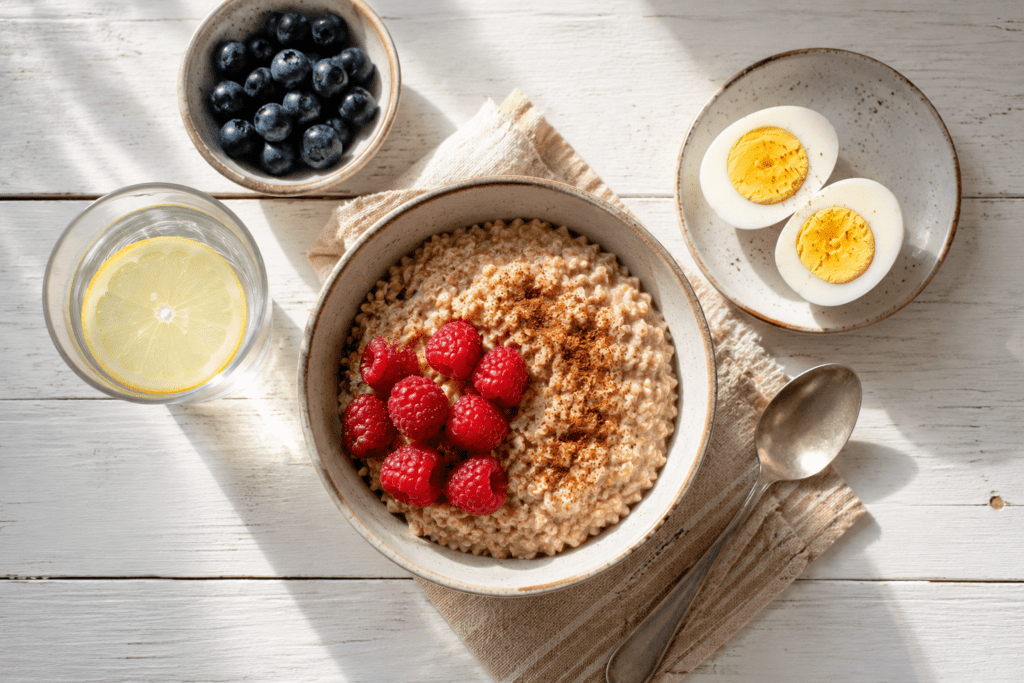
- Day 1: Breakfast — scrambled eggs with spinach and a small handful of blueberries. Lunch — large green salad with grilled chicken, avocado, olive oil, and lemon dressing. Dinner — baked salmon with roasted broccoli and ½ cup quinoa. Snack — 1 oz almonds.
- Day 2: Breakfast — steel-cut oats topped with cinnamon, chia seeds, and ¼ cup raspberries. Lunch — lentil soup with a side of cucumber and tomato slices. Dinner — turkey-stuffed bell peppers with cauliflower rice. Snack — plain Greek yogurt with a few walnuts.
- Day 3: Breakfast — 2 boiled eggs with half an avocado and a small green apple. Lunch — grilled chicken wrap in a whole wheat tortilla with shredded lettuce, salsa, and plain Greek yogurt instead of sour cream. Dinner — beef and vegetable stir-fry over ½ cup brown rice. Snack — celery with natural almond butter.
- Day 4: Breakfast — veggie omelet (zucchini, onion, mushrooms) with 1 slice sprouted whole grain toast. Lunch — chickpea and kale salad with olive oil and red wine vinegar dressing. Dinner — baked cod with asparagus and a small sweet potato. Snack — a small handful of mixed seeds.
- Day 5: Breakfast — chia seed pudding made with unsweetened almond milk, topped with strawberries. Lunch — black bean and vegetable soup with half a whole wheat pita. Dinner — grilled chicken thighs with sautéed green beans and roasted cherry tomatoes. Snack — 1 small pear with a string cheese.
- Day 6: Breakfast — plain Greek yogurt parfait with granola (low-sugar), flaxseed, and mixed berries. Lunch — tuna salad (made with olive oil mayo) over a big bed of arugula. Dinner — turkey meatballs with zucchini noodles and marinara sauce. Snack — 1 oz walnuts with a few cherry tomatoes.
- Day 7: Breakfast — 2 eggs any style with sautéed kale and ½ cup cottage cheese. Lunch — quinoa bowl with roasted vegetables and tahini dressing. Dinner — slow-cooked chicken with white beans, tomatoes, and spinach. Snack — sliced cucumber with hummus.
For Mom, we found that planning evening snacks thoughtfully made a big difference in her morning fasting readings. If you’re navigating that same challenge, check out these ideas for bedtime snacks for type 2 diabetes — some of them genuinely surprised us.
Practical Tips to Make Your Diabetic Diet Meal Plan Work

Having a great plan on paper is one thing — actually sticking to it in real life is another. Here’s what helped us move from “we’ll try this” to “this is just how we eat now.”
- Batch cook on Sundays — I’d spend about 90 minutes prepping proteins, roasting vegetables, and cooking a big pot of lentils or quinoa. Having those building blocks ready meant putting together a blood-sugar-friendly plate took 10 minutes on a Tuesday night.
- Keep a simple food log — Mom used a small notebook to jot down what she ate and her glucose reading 2 hours later. After a couple of weeks, we could clearly see which meals caused spikes and which ones kept things steady. It was incredibly empowering.
- Don’t skip meals — I know this sounds counterintuitive, but skipping lunch consistently led to higher dinner spikes for Mom. Regular, moderate meals kept her metabolism more predictable.
- Drink water before meals — this simple habit actually helped with portion control and reduced post-meal readings slightly. We aimed for a full glass about 20 minutes before eating.
- Walk after dinner — even a 10-15 minute stroll around the block after dinner made a measurable difference in Mom’s post-meal numbers. Movement is a natural blood sugar regulation tool that’s completely free.
What We Noticed After One Week
After the first full week following this structured plan, Mom’s fasting glucose dropped from her typical range of 190-210 mg/dL down to the 150-170 range. That was huge for us — not perfect, but meaningful progress that told us we were on the right track. She also said she felt less tired in the afternoons, which had always been a problem. The energy crashes that used to hit her around 3 PM became noticeably less severe. I attribute that largely to eliminating the blood sugar rollercoaster that comes with unplanned eating.
Around this time, I also started looking into whether there was a natural supplement that could support what we were doing with food. I came across Gluco6, formulated around a patented ingredient called Sukre that works with the body’s GLUT-4 transporters to help cells absorb glucose more efficiently. It felt like a sensible complement to the dietary changes we were already making — and the results over the following weeks gave us even more confidence we were on the right path.
❓ Frequently Asked Questions
What should a diabetic eat for breakfast to avoid blood sugar spikes?
The best diabetic breakfasts combine protein, healthy fat, and fiber with minimal refined carbohydrates. Options like scrambled eggs with vegetables, Greek yogurt with berries, or steel-cut oats with chia seeds and cinnamon all help slow glucose absorption and prevent morning spikes.
How quickly can a diabetic diet meal plan lower blood sugar?
Many people notice improved post-meal readings within the first week of following a structured low-glycemic meal plan. Fasting glucose levels typically begin dropping within 2 to 4 weeks of consistent dietary changes, though more significant HbA1c improvements are measured over 3 months.
Can type 2 diabetics eat fruit on a meal plan?
Yes — low-glycemic fruits like berries, cherries, green apples, and pears are generally well-tolerated when eaten in moderate portions and paired with a protein source. The key is avoiding fruit juices and dried fruits, which concentrate sugar and spike glucose rapidly.
Is a 7-day meal plan enough to see results for diabetes?
One week is enough to see early positive signals in daily readings and energy levels. However, lasting blood sugar improvement requires repeating these patterns consistently over weeks and months. The 7-day plan serves best as a repeatable template rather than a one-time experiment.
Do diabetics need to count calories on a meal plan?
Strict calorie counting is not necessary for most people with type 2 diabetes. Focusing on food quality, carbohydrate type, portion size, and meal timing tends to produce better blood sugar outcomes with less mental burden than tracking every calorie.
📊 naturalbloodsugartips.com
🔬 See Why Gluco6’s Sukre Ingredient Is Different
Gluco6 is a daily blood sugar capsule with a unique mechanism most supplements completely overlook. Manufactured by Good Mix Naturals in Colorado, sold exclusively through the official site with a ClickBank-backed money-back guarantee.
👉 Claim Your Supply With Free Shipping Today⚠️ Update: Due to high demand, stock is limited. Check availability now.
*Results may vary. Affiliate link.

About the Author — Sarah
I’m not a doctor or nutritionist — I’m a daughter who has been caring for my mother since her type 2 diabetes diagnosis. That journey pushed me to research natural alternatives and evidence-based lifestyle changes. Everything I share comes from that personal mission: to help my mom live better, with more energy and less dependence on medication. Always consult your healthcare provider before making any changes to your treatment plan.
⚕️ Medical Disclaimer: I am not a medical professional. This blog reflects my personal research caring for a family member with diabetes. For informational purposes only — not medical advice. Always consult a qualified healthcare provider.
📚 Scientific References
- Evert AB, Dennison M, Gardner CD, et al. Nutrition therapy for adults with diabetes or prediabetes: a consensus report. Diabetes Care. 2019;42(5):731-754. PMID: 31000505.
- Ley SH, Hamdy O, Mohan V, Hu FB. Prevention and management of type 2 diabetes: dietary components and nutritional strategies. The Lancet. 2014;383(9933):1999-2007. PMID: 24877058.
- Jenkins DJ, Kendall CW, Augustin LS, et al. Glycemic index: overview of implications in health and disease. American Journal of Clinical Nutrition. 2002;76(1):266S-273S. PMID: 12081850.