
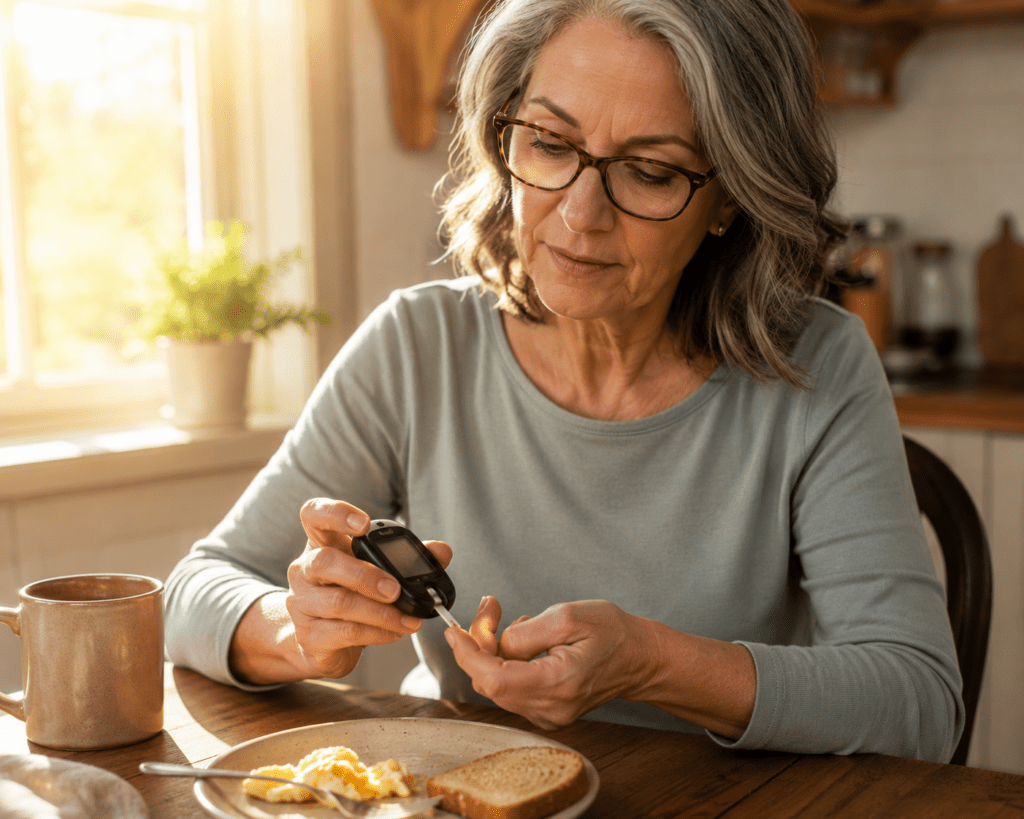
Blood Sugar Levels After Eating: What’s Normal & What’s Not
⚡ Quick Answer
For most healthy adults, blood sugar levels after eating should rise to no higher than 140 mg/dL one to two hours after a meal, then return to baseline within two to three hours. A reading between 140–199 mg/dL may indicate prediabetes, while 200 mg/dL or above can signal type 2 diabetes. People managing diabetes may see higher post-meal spikes, but the goal is to keep those numbers as close to normal range as possible through diet, movement, and targeted support.
📋 Table of Contents
- My Mom’s Wake-Up Call — And Mine
- What Are Normal Blood Sugar Levels After Eating?
- Warning Signs: When Blood Sugar Levels After Eating Are Too High
- What Causes Post-Meal Blood Sugar Spikes?
- Natural Ways to Keep Blood Sugar Stable After Meals
- The One Extra Step That Made the Biggest Difference for Us
- ❓ Frequently Asked Questions
My Mom’s Wake-Up Call — And Mine
I still remember the afternoon my mom called me, voice quieter than usual, to tell me her doctor had mentioned “borderline” numbers at her last checkup. She didn’t fully understand what that meant yet — and honestly, neither did I. That one conversation sent me down a months-long rabbit hole of research, glucose monitors, meal logs, and late-night reading. What I kept coming back to again and again was this: blood sugar levels after eating — that critical two-hour window after a meal — were the real window into what was happening inside her body every single day.
I’m not a doctor, a nurse, or a nutritionist. I’m just a daughter who got scared and started paying attention. And what I found genuinely surprised me — in some ways reassuring, in other ways eye-opening. I want to share everything I’ve learned, because I know there are so many of us out there quietly worrying about someone we love, or about ourselves, and just trying to understand what the numbers actually mean.
If you’ve ever looked at a blood sugar reading after a meal and wondered whether it was fine or something to be concerned about, you’re in exactly the right place. Let’s break it all down together — no intimidating medical jargon, just real information you can actually use.
What Are Normal Blood Sugar Levels After Eating?
This was the first thing I tried to nail down, because every article I read seemed to give slightly different numbers. After cross-referencing several sources and talking to my mom’s care team, here’s the clearest picture I could put together. Blood sugar levels after eating — also called postprandial glucose — follow a predictable pattern in a healthy body. When you eat, your digestive system breaks down carbohydrates into glucose, which enters your bloodstream. Your pancreas responds by releasing insulin to help move that glucose into your cells for energy.
Here’s what the numbers typically look like for different situations, measured in milligrams per deciliter (mg/dL):
- Healthy adults (no diabetes): 1 hour after eating — typically under 140 mg/dL; 2 hours after eating — under 120 mg/dL; back to fasting range (70–100 mg/dL) within 2–3 hours.
- Prediabetes range: 2-hour post-meal readings between 140–199 mg/dL suggest impaired glucose tolerance and deserve attention.
- Type 2 diabetes: A reading of 200 mg/dL or higher two hours after eating is a diagnostic marker for diabetes according to ADA guidelines.
- Managed diabetes goal: The American Diabetes Association recommends aiming for under 180 mg/dL two hours after starting a meal for people already diagnosed with diabetes.
I was surprised to learn that the peak of the spike usually happens around 45–60 minutes after eating — not immediately. That timing matters a lot, especially when you’re trying to figure out which foods are causing problems. Learning to track the foods that stabilize blood sugar levels versus the ones that cause rapid spikes was genuinely one of the most valuable things I did for my mom’s routine.

Warning Signs: When Blood Sugar Levels After Eating Are Too High
One of the trickiest things about high blood sugar levels after eating is that they don’t always feel dramatic. My mom described it as just feeling “off” — a little foggy, slightly tired, maybe a bit thirsty. It’s easy to write those things off as just being full or tired after a meal. But over time, consistently elevated post-meal glucose takes a real toll on the body.
⚡ Try Gluco6 — The GLUT-4 Blood Sugar Formula
Many people are switching to Gluco6 — created by Dr. Molly Leavitt and built around Sukre, an ingredient that targets the GLUT-4 transport system to move glucose from your bloodstream into your cells more efficiently.
Check Availability Inside the US →Here are some symptoms that may suggest your post-meal blood sugar is running too high, too often:
- Unusual fatigue or sleepiness shortly after eating, especially after carbohydrate-heavy meals
- Increased thirst or frequent urination in the hours following a meal
- Difficulty concentrating or a noticeable “brain fog” after lunch or dinner
- Headaches that seem to appear predictably after eating
- Blurred vision or a slight visual disturbance following large meals
- Feeling hungry again surprisingly soon after eating — a sign of a crash following a sharp spike
If these sound familiar, it doesn’t automatically mean something serious is wrong — but it does mean the pattern is worth tracking. Knowing how to prevent blood sugar crashes after eating became one of the most practical skills I built into my mom’s daily routine, and the difference it made in her energy and mood was remarkable.
What Causes Post-Meal Blood Sugar Spikes?
Understanding the “why” behind elevated readings helped me make smarter decisions for my mom rather than just reacting to the numbers. There are several common culprits behind those unwanted post-meal spikes, and some of them genuinely caught me off guard.
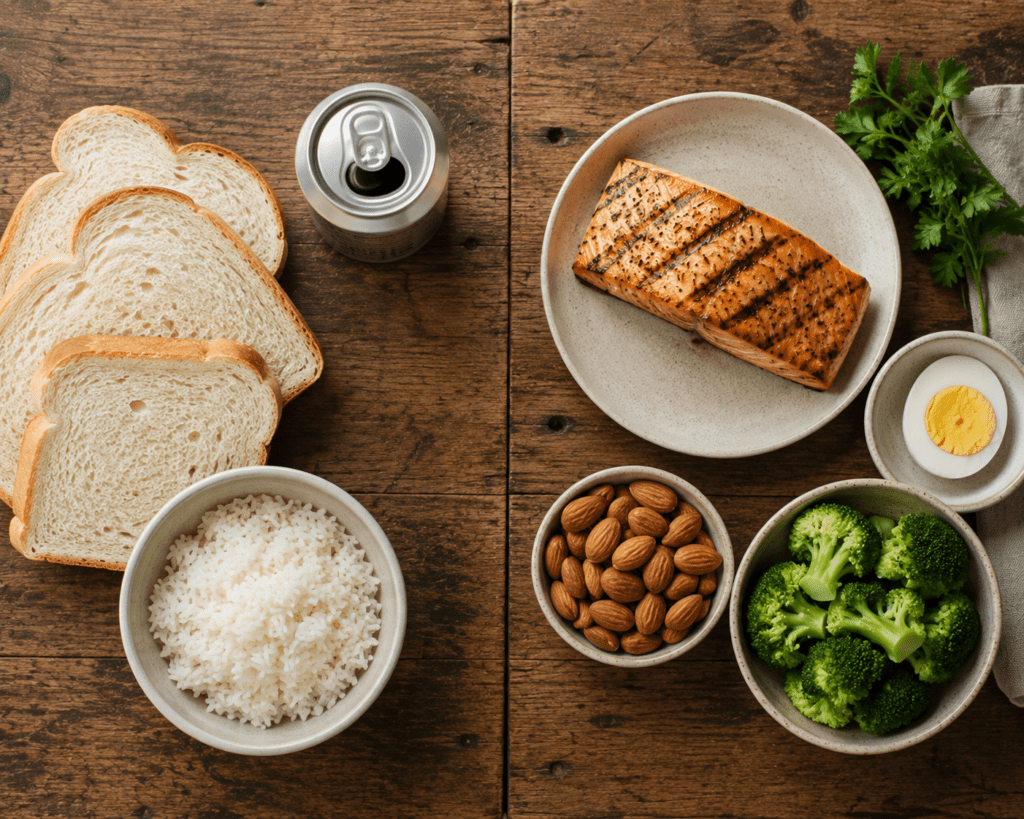
- Refined carbohydrates and added sugars: White bread, white rice, sugary drinks, and pastries digest rapidly and dump glucose into the bloodstream quickly, creating a sharp spike.
- Eating too fast: When you eat quickly, your body doesn’t have time to signal satiety, and you may eat more than intended — plus faster eating may accelerate glucose absorption.
- Large portion sizes: Even healthy foods cause bigger glucose responses when eaten in large quantities. Portion control turned out to matter more than my mom expected.
- Low fiber intake: Fiber slows glucose absorption. A meal low in fiber — even if not high in sugar — can produce a faster, sharper spike than a high-fiber meal.
- Sedentary behavior after eating: Sitting still after a meal means muscles aren’t actively taking up glucose. Even a short walk can meaningfully reduce post-meal blood sugar.
- Stress and poor sleep: These raise cortisol, which signals the liver to release extra glucose into the blood — even without eating anything at all.
Natural Ways to Keep Blood Sugar Stable After Meals
This is where things started to feel empowering rather than overwhelming. Once I understood what was causing the spikes, I could actually do something about it. These are the strategies that have genuinely made a measurable difference for my mom over the past year — and they’re all things you can start exploring right away.
- Build a balanced plate: Combining protein, healthy fat, and fiber with every meal slows digestion and flattens the glucose curve. Think grilled salmon with roasted vegetables and a small portion of quinoa rather than pasta alone.
- Apple cider vinegar before meals: I was skeptical at first, but several small studies suggest that taking diluted apple cider vinegar before eating can reduce the post-meal glucose rise. We do one tablespoon in a glass of water before lunch and dinner.
- The 10-minute walk: This is probably the single easiest intervention we found. A brisk 10-minute walk within 30 minutes after eating consistently brings post-meal numbers down. Muscles actively absorb glucose during movement.
- Eat vegetables and protein first: The order you eat foods in a meal actually matters. Starting with non-starchy vegetables and protein before touching carbohydrates blunts the spike significantly.
- Stay well hydrated: Dehydration concentrates blood glucose. Drinking water consistently throughout the day — not just at meals — helps keep levels more stable.
Putting together a structured, repeatable eating routine was a game-changer. If you want to see exactly how we organized her meals week by week, this diabetic meal plan for stable blood sugar is one of the most practical resources I’ve found and closely mirrors what we actually do at home.

The One Extra Step That Made the Biggest Difference for Us
After all the meal adjustments and lifestyle changes, we still noticed that some days my mom’s blood sugar levels after eating were more stubborn than others — even when she’d done everything “right.” That’s when I started researching targeted nutritional support, specifically formulas designed to help the body use insulin more efficiently at the cellular level.
What I kept coming back to was the concept of glucose transport — the process by which your cells actually pull glucose out of the bloodstream. Even when insulin is present, if the cellular receptors and transport mechanisms aren’t working well, glucose just sits in the blood. That’s the gap I wanted to address. After a lot of reading, we decided to try Gluco6, and I noticed changes in her two-hour post-meal readings within the first couple of weeks. I’m not going to claim it’s a miracle — nothing replaces diet, movement, and good sleep — but as a complement to everything else we were already doing, it genuinely moved the needle for us in a way I hadn’t expected.
Understanding your blood sugar levels after eating isn’t about living in fear of every meal. It’s about having the information you need to make small, consistent choices that add up to real, lasting change. My mom’s numbers today look nothing like they did when she called me that quiet afternoon. That’s not luck — it’s the result of learning, experimenting, and not giving up. And if you’re here reading this, I already know you have that same willingness. That matters more than you know.
❓ Frequently Asked Questions
How long does it take for blood sugar to go back to normal after eating?
For most healthy adults, blood sugar returns to pre-meal baseline within two to three hours after eating. People with insulin resistance or prediabetes may take four hours or longer to fully normalize.
What blood sugar level is too high 2 hours after eating?
A reading at or above 200 mg/dL two hours after a meal is considered diabetic range, while 140–199 mg/dL falls in the prediabetes zone. Consistently staying above 140 mg/dL post-meal warrants further evaluation even without a formal diagnosis.
Does the type of food you eat affect how high your blood sugar spikes?
Yes — refined carbohydrates, sugary drinks, and high-glycemic foods like white rice or bread cause faster and higher spikes than meals rich in fiber, protein, or healthy fats. Pairing carbs with protein or fat is one of the most effective ways to blunt post-meal glucose rises.
Can you have high blood sugar after eating without being diabetic?
Absolutely — postprandial (after-meal) blood sugar spikes can occur in people who are prediabetic, insulin resistant, or simply eating large portions of high-carb foods. These transient spikes are common and often go undetected without continuous glucose monitoring or targeted testing.
What is a normal blood sugar level 1 hour after eating?
One hour after eating, blood sugar in healthy adults typically peaks between 110–140 mg/dL, though it can briefly touch 160 mg/dL after a large or high-carb meal. The key indicator of metabolic health is not the peak itself but how quickly levels drop back toward the 80–100 mg/dL fasting range.
📊 naturalbloodsugartips.com
🔬 See Why Gluco6’s Sukre Ingredient Is Different
Gluco6 is a daily blood sugar capsule with a unique mechanism most supplements completely overlook. Manufactured by Good Mix Naturals in Colorado, sold exclusively through the official site with a ClickBank-backed money-back guarantee.
👉 Claim Your Supply With Free Shipping Today⚠️ Update: Due to high demand, stock is limited. Check availability now.
*Results may vary. Affiliate link.

About the Author — Sarah
I’m not a doctor or nutritionist — I’m a daughter who has been caring for my mother since her type 2 diabetes diagnosis. That journey pushed me to research natural alternatives and evidence-based lifestyle changes. Everything I share comes from that personal mission: to help my mom live better, with more energy and less dependence on medication. Always consult your healthcare provider before making any changes to your treatment plan.
⚕️ Medical Disclaimer: I am not a medical professional. This blog reflects my personal research caring for a family member with diabetes. For informational purposes only — not medical advice. Always consult a qualified healthcare provider.
📚 Scientific References
- Ceriello A, Esposito K, Piconi L, et al. Oscillating glucose is more deleterious to endothelial function and oxidative stress than mean glucose in normal and type 2 diabetic patients. Diabetes. 2008;57(5):1349-1354. PMID: 18299315.
- Monnier L, Lapinski H, Colette C. Contributions of fasting and postprandial plasma glucose increments to the overall diurnal hyperglycemia of type 2 diabetic patients. Diabetes Care. 2003;26(3):881-885. PMID: 12610053.
- Jakicic JM, Rogers RJ, Davis KK, Collins KA. Role of physical activity and exercise in treating patients with overweight and obesity. Clinical Chemistry. 2018;64(1):99-107. PMID: 29246950.
- Johnston CS, Kim CM, Buller AJ. Vinegar improves insulin sensitivity to a high-carbohydrate meal in subjects with insulin resistance or type 2 diabetes. Diabetes Care. 2004;27(1):281-282. PMID: 14694010.