
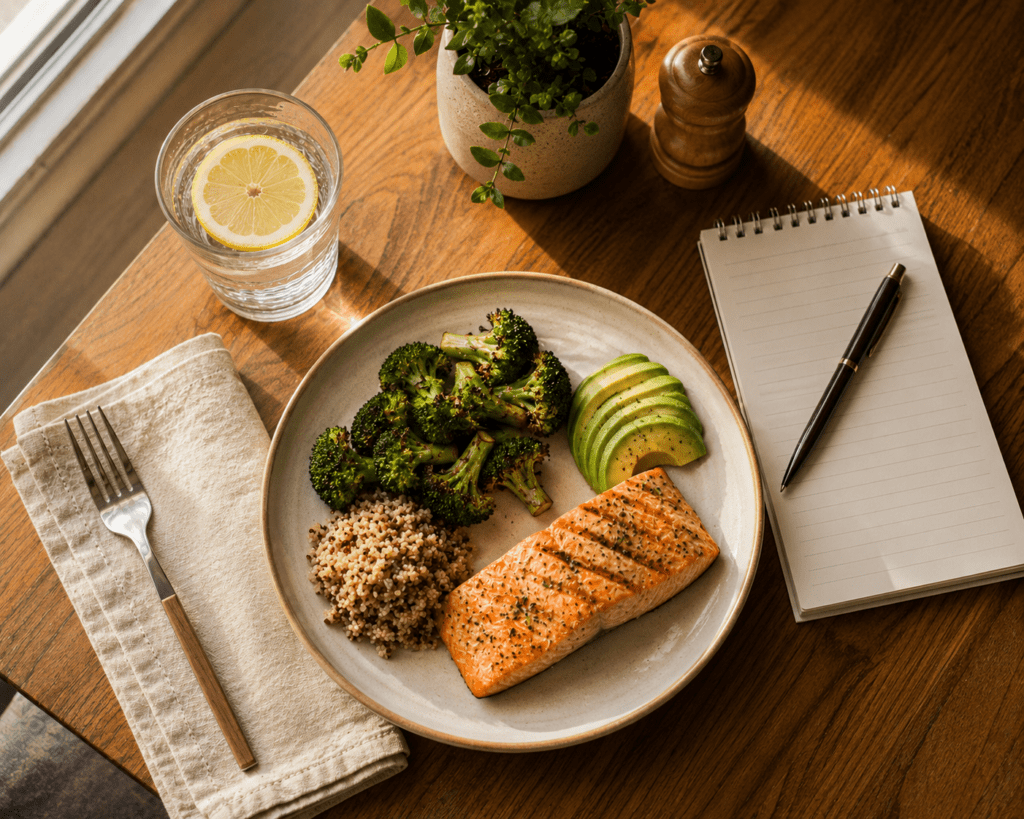
The Proper Diet for Diabetics: A Practical Daily Guide
⚡ Quick Answer
The proper diet for diabetics focuses on low-glycemic whole foods, controlled portions, and consistent meal timing to keep blood sugar levels stable throughout the day. Prioritize non-starchy vegetables, lean proteins, healthy fats, and high-fiber carbohydrates while limiting refined sugars, white flour, and processed foods. Building meals around these principles helps reduce blood sugar spikes and supports long-term metabolic health.
📋 Table of Contents
My Mom’s Diagnosis and What Changed Everything
I still remember the afternoon my mom called me with her diagnosis. She was sitting at her kitchen table, test results in hand, and all she kept saying was, “I don’t even know where to begin with food anymore.” That call sent me straight to my laptop, and I spent the next several weeks buried in research, nutrition studies, and real-life accounts from people managing type 2 diabetes every day. What I found surprised me — the proper diet for diabetics isn’t about suffering through bland meals or giving up everything you love. It’s actually about eating smarter, not less.
We’ve now been on this journey together for over two years. My mom’s numbers have improved significantly, her energy is better, and she actually enjoys eating again. What I’m sharing here is everything I’ve learned along the way — the research, the practical tips, and the honest mistakes we made so you don’t have to.
What a Proper Diet for Diabetics Actually Looks Like
Proper Diet for Diabetics: Daily Meal Plan
Always consult your healthcare provider or registered dietitian before making significant dietary changes.
📊 naturalbloodsugartips.com
One of the biggest misconceptions I ran into early on was that diabetic eating meant zero carbs or a completely restrictive menu. That’s simply not accurate. A proper diet for diabetics is really about balance — choosing foods that release glucose slowly into the bloodstream, pairing nutrients thoughtfully, and keeping meal timing consistent. The goal is to prevent those dramatic blood sugar highs and lows that can leave a person feeling exhausted, foggy, or unwell.
The American Diabetes Association emphasizes a plate method that many people find easier than calorie counting. You fill half your plate with non-starchy vegetables, one quarter with lean protein, and the remaining quarter with quality carbohydrates like brown rice, quinoa, or legumes. It sounds simple, but it works — and once you build the habit, it becomes completely second nature. I also found that following a structured diabetic meal plan for stable blood sugar helped us stay consistent without having to make complicated decisions every single day.
⚡ Balance Your Blood Sugar with Sugar Defender
Thousands of people are combining these habits with Sugar Defender — a plant-based liquid formula designed to support healthy blood sugar levels and natural energy, without stimulants.
Check Availability Inside the US →The Best Foods to Eat Every Day
When I started compiling what actually belonged in a diabetic-friendly kitchen, I was honestly relieved. The list of helpful foods is long, colorful, and genuinely delicious. For a thorough breakdown, the best foods for type 2 diabetes cover a wide range of options that are both nutritious and satisfying. Here’s a general overview of what we focused on:
- Leafy greens and non-starchy vegetables — spinach, kale, broccoli, zucchini, peppers, and cauliflower are low in carbs and loaded with fiber, vitamins, and minerals that support metabolic function.
- Fatty fish — salmon, sardines, and mackerel provide omega-3 fatty acids that support heart health, which is especially important for people with type 2 diabetes.
- Legumes — beans, lentils, and chickpeas are high in fiber and protein, and they have a remarkably low glycemic index compared to many other carbohydrate sources.
- Whole grains — oats, quinoa, brown rice, and barley digest more slowly than their refined counterparts, leading to a more gradual rise in blood sugar.
- Nuts and seeds — almonds, walnuts, chia seeds, and flaxseeds offer healthy fats, protein, and fiber that help slow glucose absorption after a meal.
- Berries — blueberries, strawberries, and raspberries satisfy a sweet craving while delivering antioxidants and fiber with relatively low sugar content.

Building a Proper Daily Diet for Diabetics: Meal by Meal
Structure matters more than I initially realized. Skipping meals or eating at irregular intervals can cause blood sugar swings that are hard to recover from. A proper diet for diabetics isn’t just about what you eat — it’s also about when and how consistently you eat. Here’s a practical daily framework that worked well for my mom:
- Breakfast: A protein-anchored meal like eggs with sautéed spinach, or plain Greek yogurt topped with berries and a sprinkle of chia seeds. Avoid sugary cereals, white toast, and flavored yogurts with added sugar.
- Mid-morning snack (if needed): A small handful of almonds or a few celery sticks with natural almond butter. The key is keeping portions controlled and pairing carbs with protein or fat.
- Lunch: A large salad with leafy greens, grilled chicken or canned salmon, half a cup of chickpeas, olive oil, and lemon dressing. Add a slice of whole grain bread if more energy is needed.
- Afternoon snack: A small apple with a piece of cheese, or a boiled egg. Again — pairing matters for blood sugar stability.
- Dinner: Baked salmon or grilled turkey with roasted vegetables and a half-cup serving of quinoa or lentils. A vegetable soup with legumes also works beautifully here.
For even more day-by-day guidance, I’d recommend checking out this daily healthy eating guide for diabetics — it helped us build a rhythm that felt sustainable rather than like a punishment.
Foods to Limit or Avoid
Knowing what to include is only half the equation. Understanding which foods work against blood sugar control is equally important for maintaining a proper diet for diabetics. This wasn’t about never having anything enjoyable — it was about making informed choices most of the time. We focused on consistently minimizing:
- Sugary beverages including sodas, fruit juices, sweetened teas, and energy drinks, which cause rapid blood sugar spikes without providing meaningful nutrition.
- Refined carbohydrates like white bread, white rice, pastries, and most crackers, which digest quickly and raise glucose levels faster than the body can manage smoothly.
- Processed snack foods such as chips, cookies, and packaged baked goods that are typically high in refined flour, added sugars, and unhealthy fats.
- Fried foods and fast food, which combine poor-quality fats with high-glycemic ingredients in a way that strains blood sugar regulation and cardiovascular health alike.
- High-sugar condiments like ketchup, barbecue sauce, and sweetened salad dressings — these are easy to overlook but can add surprising amounts of sugar to otherwise healthy meals.

Small Habits That Made a Big Difference for Us
Beyond food choices, I discovered that a few consistent daily habits made a real difference in how well the proper diet for diabetics translated into actual blood sugar results for my mom. Drinking water before and during meals, taking a short 10-minute walk after eating, and keeping a simple food log all contributed to more predictable glucose readings. I was surprised by how much the walk helped — even light movement after a meal improves how the body uses glucose in the short term.
Sleep and stress management also turned out to be far more connected to blood sugar than I’d expected. High cortisol from poor sleep or chronic stress can raise fasting blood sugar even when you’re eating well. So we worked on all of it together — the food, the movement, the rest. It’s a whole-person approach, and it’s made a real difference in our quality of life.
Living with type 2 diabetes doesn’t have to mean living in fear of food. With the right information, a solid daily plan, and some patience, eating becomes empowering rather than stressful. The proper diet for diabetics is ultimately about nourishment — giving the body what it needs to function well, day after day. If you’re just starting out, be kind to yourself through the process. Small, consistent changes build into lasting results, and every good choice adds up.
❓ Frequently Asked Questions
What foods should diabetics eat every day to keep blood sugar stable?
Diabetics should build daily meals around non-starchy vegetables like leafy greens and broccoli, lean proteins such as chicken, fish, and eggs, and high-fiber carbs like legumes and whole grains. Healthy fats from avocado, nuts, and olive oil also help slow glucose absorption and reduce post-meal blood sugar spikes.
What is the best meal timing schedule for a diabetic diet?
Eating at consistent times every day — typically 3 balanced meals spaced 4 to 5 hours apart — helps the body regulate insulin response more predictably. Skipping meals or eating irregularly can cause blood sugar swings, so consistency in timing matters as much as food choice.
Which carbs are safe for diabetics to eat without spiking blood sugar?
Low-glycemic carbs like oats, lentils, sweet potatoes, quinoa, and most berries are generally safe for diabetics because they digest slowly and cause a gradual rise in blood sugar. Portion size still matters — even healthy carbs can spike glucose if eaten in large amounts.
What foods should diabetics avoid or strictly limit?
Diabetics should limit refined sugars, white bread, white rice, sugary beverages, processed snack foods, and anything made with white flour, as these cause rapid blood sugar spikes. Packaged foods labeled “low fat” are also worth scrutinizing because they often replace fat with added sugar.
Is fruit allowed on a proper diabetic diet, or does it raise blood sugar too much?
Most whole fruits are allowed in moderate portions because their fiber slows sugar absorption, but high-glycemic options like watermelon, pineapple, and overripe bananas should be eaten sparingly. Pairing fruit with a protein or fat — such as berries with Greek yogurt — further blunts any blood sugar response.
📊 naturalbloodsugartips.com
🩸 Support Healthy Blood Sugar with Sugar Defender
Sugar Defender combines 8 carefully selected plant-based ingredients to support glucose metabolism, reduce cravings, and boost energy naturally. FTC-compliant, made in a GMP-certified facility.
👉 Claim Your Supply With Free Shipping Today⚠️ Update: Due to high demand, stock is limited. Check availability now.
*Results may vary. Affiliate link.

About the Author — Sarah
I’m not a doctor or nutritionist — I’m a daughter who has been caring for my mother since her type 2 diabetes diagnosis. That journey pushed me to research natural alternatives and evidence-based lifestyle changes. Everything I share comes from that personal mission: to help my mom live better, with more energy and less dependence on medication. Always consult your healthcare provider before making any changes to your treatment plan.
⚕️ Medical Disclaimer: I am not a medical professional. This blog reflects my personal research caring for a family member with diabetes. For informational purposes only — not medical advice. Always consult a qualified healthcare provider.
📚 Scientific References
- Salas-Salvadó J, Bulló M, Babio N, et al. Reduction in the incidence of type 2 diabetes with the Mediterranean diet. Diabetes Care. 2011;34(1):14–19. PMID: 20929998.
- Bhupathiraju SN, Tobias DK, Malik VS, et al. Glycemic index, glycemic load, and risk of type 2 diabetes: results from 3 large US cohorts and an updated meta-analysis. The American Journal of Clinical Nutrition. 2014;100(1):218–232. PMID: 24787494.
- Jenkins DJ, Kendall CW, Augustin LS, et al. Effect of legumes as part of a low glycemic index diet on glycemic control and cardiovascular risk factors in type 2 diabetes mellitus. Archives of Internal Medicine. 2012;172(21):1653–1660. PMID: 23089999.
- Ley SH, Hamdy O, Mohan V, Hu FB. Prevention and management of type 2 diabetes: dietary components and nutritional strategies. The Lancet. 2014;383(9933):1999–2007. PMID: 24910231.